

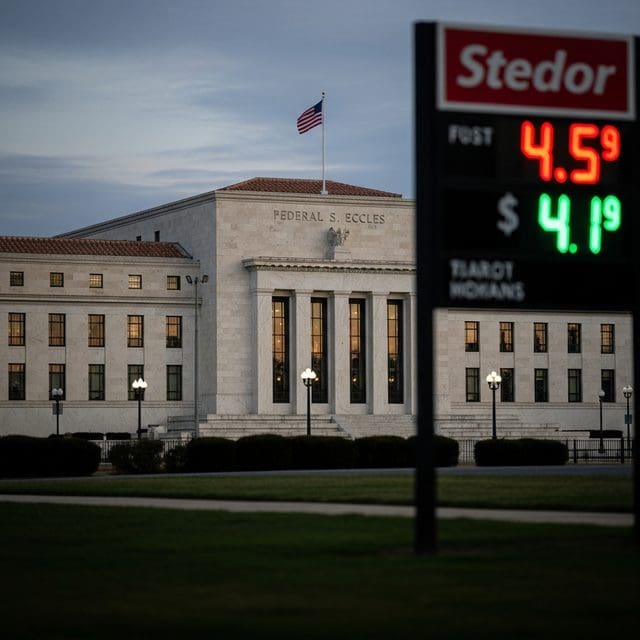
The Federal Reserve is expected to maintain current interest rates as Jerome Powell prepares to exit, leaving American households to navigate high borrowing costs and energy-driven inflation.
The Federal Reserve is poised to maintain its current interest rate benchmark during this week’s policy meeting, a move that signals continuity even as the central bank prepares for a significant leadership transition. With futures markets pricing in a near-certainty that rates will remain unchanged, the decision underscores the Fed’s cautious stance against a 3.3% inflation rate bolstered by recent geopolitical instability.
This meeting marks the likely conclusion of Jerome Powell’s tenure as Chair. The path for his successor, Kevin Warsh, cleared significantly after the Department of Justice dropped its investigation into Powell, prompting Senator Thom Tillis to end his opposition to Warsh’s nomination. Warsh, who testified before the Senate Banking Committee last week, has committed to prioritizing price stability despite the economic pressures introduced by the ongoing conflict with Iran.
For the American household, the Fed’s decision to hold steady offers no immediate relief from the high cost of debt. Average credit card rates remain stuck near 19.57%, a direct consequence of the Fed’s elevated overnight lending rate. While the Consumer Financial Protection Bureau faces a proposed 85% reduction in its supervision staff, consumers continue to manage trillions in debt without the prospect of lower monthly payments in the near term.
The energy sector remains a primary driver of fiscal anxiety on Main Street. Brent crude has surged over 55% since late February, peaking near $120 per barrel and pushing national gasoline averages above $4 per gallon. This energy-led inflation has contributed to a decline in the LSEG/Ipsos Primary Consumer Sentiment Index, which fell to 50.0 points as households grapple with the compounding costs of fuel and financing.
In the housing market, the 30-year fixed mortgage rate averaged 6.277% as of late April. These rates, which track long-term Treasury yields rather than the Fed’s short-term benchmark, remain volatile as investors weigh the impact of the Iran conflict and President Trump’s fiscal policies. Although the President has publicly advocated for lower interest rates to boost American competitiveness, the current Fed leadership appears resolute in maintaining restrictive levels until inflation is tamed.
One of the few advantages of the current rate environment remains with savers. With the federal funds rate held high, yields on savings accounts continue to outpace inflation, providing a modest hedge for those with liquid capital. However, for the majority of Americans relying on credit for vehicles and daily expenses, the ‘regime change’ at the Fed has yet to translate into tangible relief at the bank or the pump.

Jordan Lee serves as the Senior Correspondent for Wall Street, Finance, and Monetary Systems at Just Right News. Based in the heart of the world’s financial capital, New York City, Lee brings a sharp, principled eye to the complex mechanisms that drive the global economy. His reporting is defined by a commitment to fiscal responsibility, the defense of the free market, and a deep-seated belief that a transparent monetary system is the bedrock of a free society.
Raised in Portland, Oregon, Lee’s perspective was forged in a city that has undergone significant cultural and economic shifts. His upbringing in the Pacific Northwest instilled in him a profound appreciation for the industriousness of small business owners and the importance of local economic stability. Watching the evolution of his hometown’s landscape sparked an early interest in how federal fiscal policy and large-scale financial trends eventually trickle down to the average citizen. This background provides him with a unique vantage point; he understands the growing disconnect between the policy-making elite and the reality of Main Street, a theme that frequently resonates throughout his work.
Now operating from his base in New York City, Lee bridges the gap between the high-stakes trading floors of Manhattan and the households of everyday Americans. He views the financial sector not merely as a collection of numbers and tickers, but as a vital engine of American prosperity that requires constant vigilance and accountability. His reporting often highlights the dangers of centralized financial control and the necessity of maintaining a system that rewards merit, risk-taking, and innovation.
As the creator and lead of the featured series, “The Invisible Economy,” Lee pulls back the curtain on the often-opaque world of monetary systems. He specializes in translating the dense jargon of central banking and international finance into actionable insights for the Just Right News audience. His work explores the “invisible” forces—such as inflationary pressures, regulatory creep, and the expansion of the administrative state—that erode the purchasing power of American families. By focusing on these systemic issues, Lee empowers readers to understand the hidden forces shaping their financial independence.
Lee’s journalistic philosophy is rooted in a steadfast commitment to traditional American values. As an Asian American professional who has navigated the competitive corridors of the financial world, he is a vocal advocate for meritocracy and the preservation of the American Dream. He believes that a stable currency and a predictable regulatory environment are essential for national sovereignty and individual liberty. His reporting frequently warns against the risks of government overreach in the private sector, arguing that the most effective solutions to economic challenges arise from competition and individual enterprise rather than bureaucratic mandates.
At Just Right News, Jordan Lee remains dedicated to providing a clear-eyed defense of the taxpayer. Whether he is analyzing market volatility or investigating the long-term implications of national debt, his mission is to provide the truth about where the money is going and what it means for the future of the country. Through his rigorous analysis and principled stance, Lee has become a trusted voice for those who value a strong, sovereign, and fiscally sound America.