

Nigeria’s shift toward sovereign infrastructure and localized law enforcement signals a move away from the centralized global health mandates often championed by international bureaucratic institutions.
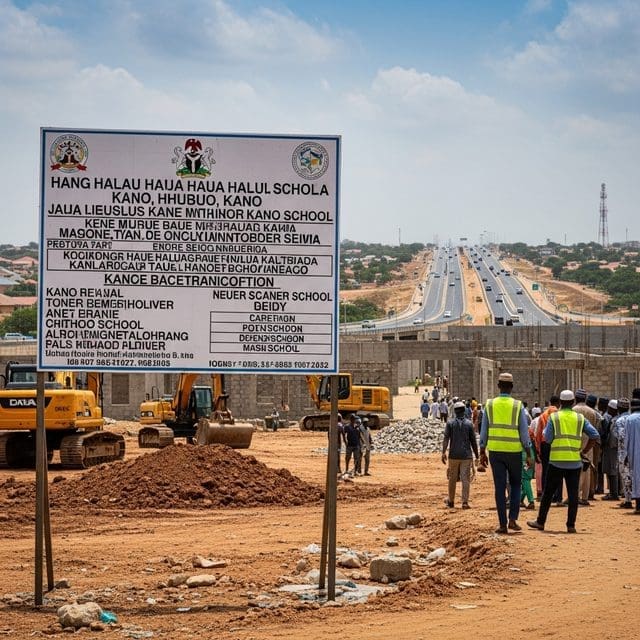
In the northern Nigerian hub of Kano, a shift toward localized development and domestic security is providing a counter-narrative to the centralized global health and climate mandates often issued from Geneva or Washington. Governor Abba Yusuf recently laid the foundation for a N1.3 billion secondary school in Kaura Goge, a move that emphasizes tangible domestic infrastructure over the abstract policy goals frequently tied to international aid packages.
This focus on internal resilience is mirrored in the state’s aggressive law enforcement actions. The National Drug Law Enforcement Agency (NDLEA) recently arrested 21 individuals in a targeted crackdown, seizing nearly 1,500 bottles of codeine. While global health bodies like the World Health Organization often approach substance issues through the lens of broad social determinants, the Kano operations represent a more traditional, sovereignty-focused application of the rule of law to protect public health.
On the national stage, President Bola Tinubu is navigating the friction between international fiscal expectations and domestic necessity. Tinubu has sought Senate approval for a $516 million loan dedicated to the Soto Badagry highway, while simultaneously approving a N334 billion road project connecting Kano to Kongolom. These massive infrastructure investments suggest a pivot toward market-driven connectivity as the primary engine for development, rather than the climate-adaptation grants that often come with restrictive strings attached.
However, this move toward self-sufficiency is not without internal political friction. The Kano State Assembly has initiated impeachment proceedings against Deputy Governor Aminu Gwarzo, and opposition figures like Omoyele Sowore continue to critique the establishment. Sowore recently declined an invitation to an opposition summit in Ibadan, arguing against the recycling of political actors and calling for a more fundamental shift in how the nation manages its resources.
For American observers and taxpayers, these developments in Nigeria offer a vital lesson in the limitations of global governance. As Senator Natasha Akpoti-Uduaghan defends local parental rights against controversial educational materials, she echoes a sentiment growing worldwide: that local values and national sovereignty must take precedence over standardized global agendas. The American stake in these regions is best served by stable, self-reliant partners who prioritize infrastructure and law enforcement over the bureaucratic expansion of international health and climate bodies.

Rachel Vaughn serves as a Senior Correspondent for Just Right News, where she leads the network’s coverage of Global Health, Climate, and Development. With a career defined by intellectual rigor and a commitment to principled reporting, Rachel provides a vital conservative perspective on some of the most complex and high-stakes issues facing the world today. Her work is characterized by a refusal to accept bureaucratic narratives at face value, focusing instead on how international policies impact national sovereignty, individual liberty, and the American taxpayer.
Raised in New Haven, Connecticut, Rachel grew up in an environment dominated by elite academic discourse. This upbringing provided her with a front-row seat to the inner workings of the American establishment, but it also instilled in her a healthy skepticism of the “ivory tower” consensus. She learned early on that while academic theories may sound promising in a lecture hall, they often fail to account for the practical realities of the working class. This background drives her to bridge the gap between high-level policy discussions and the common-sense concerns of everyday citizens, ensuring that her reporting remains grounded and accessible.
Now based in Burlington, Vermont, Rachel operates from a unique vantage point within one of the nation’s most progressive political landscapes. Living and working in a region that often serves as a testing ground for radical social and environmental experiments allows her to witness the real-world consequences of these policies firsthand. From her base in the Green Mountain State, she provides Just Right News readers with essential “boots on the ground” reporting, documenting the friction between local mandates and the constitutional freedoms of the individual. Her presence in Burlington ensures that her critiques of globalist agendas are informed by a direct understanding of how those ideologies manifest at the local level.
In her acclaimed feature series, “Planetary Stakes,” Rachel explores the intersection of international development and environmental stewardship. She rejects the alarmism often found in mainstream media, opting instead for a sober analysis of the economic and geopolitical costs of global climate agreements. Her reporting frequently highlights the importance of market-driven innovation and the role of American leadership in fostering global health without ceding authority to unelected international bodies. Through “Planetary Stakes,” she has become a leading voice for those who believe that true conservation and public health are best achieved through transparency, accountability, and the protection of private property rights.
Throughout her tenure at Just Right News, Rachel has distinguished herself as a journalist who is unafraid to ask difficult questions of global institutions. Whether she is investigating the influence of non-governmental organizations on domestic policy or analyzing the fiscal transparency of international health initiatives, her goal remains the same: to provide her audience with the facts necessary to navigate an increasingly interconnected world. Her blend of East Coast intellectual heritage and her current immersion in the political heart of the Northeast makes her an indispensable asset to the newsroom and a trusted source for readers seeking a principled, conservative take on the issues that define our era.