

Scientists on an Arctic expedition have discovered a novel antibiotic compound produced by deep-sea actinobacteria. This molecule effectively inhibits the virulence of Gram-negative bacteria like E. coli without damaging human cells, offering a new pathway for treating drug-resistant infections.
TLDR: Researchers exploring the Arctic Ocean’s depths have isolated a unique compound from marine actinobacteria that neutralizes harmful E. coli strains. By targeting bacterial virulence rather than survival, this discovery provides a promising new strategy in the global fight against antimicrobial resistance and the rise of superbugs.
In the frigid, high-pressure environment of the Arctic Ocean’s Fram Strait, a team of international researchers has uncovered a biological breakthrough that could reshape the future of medicine. Scientists from the Arctic University of Norway and the University of Helsinki recently completed a series of field expeditions aimed at bioprospecting the deep-sea floor. Their efforts have resulted in the discovery of a novel compound produced by marine actinobacteria that demonstrates potent activity against drug-resistant pathogens. This discovery comes at a time when the global pipeline for new antibiotics has largely dried up, leaving healthcare systems vulnerable to increasingly resilient bacterial strains.
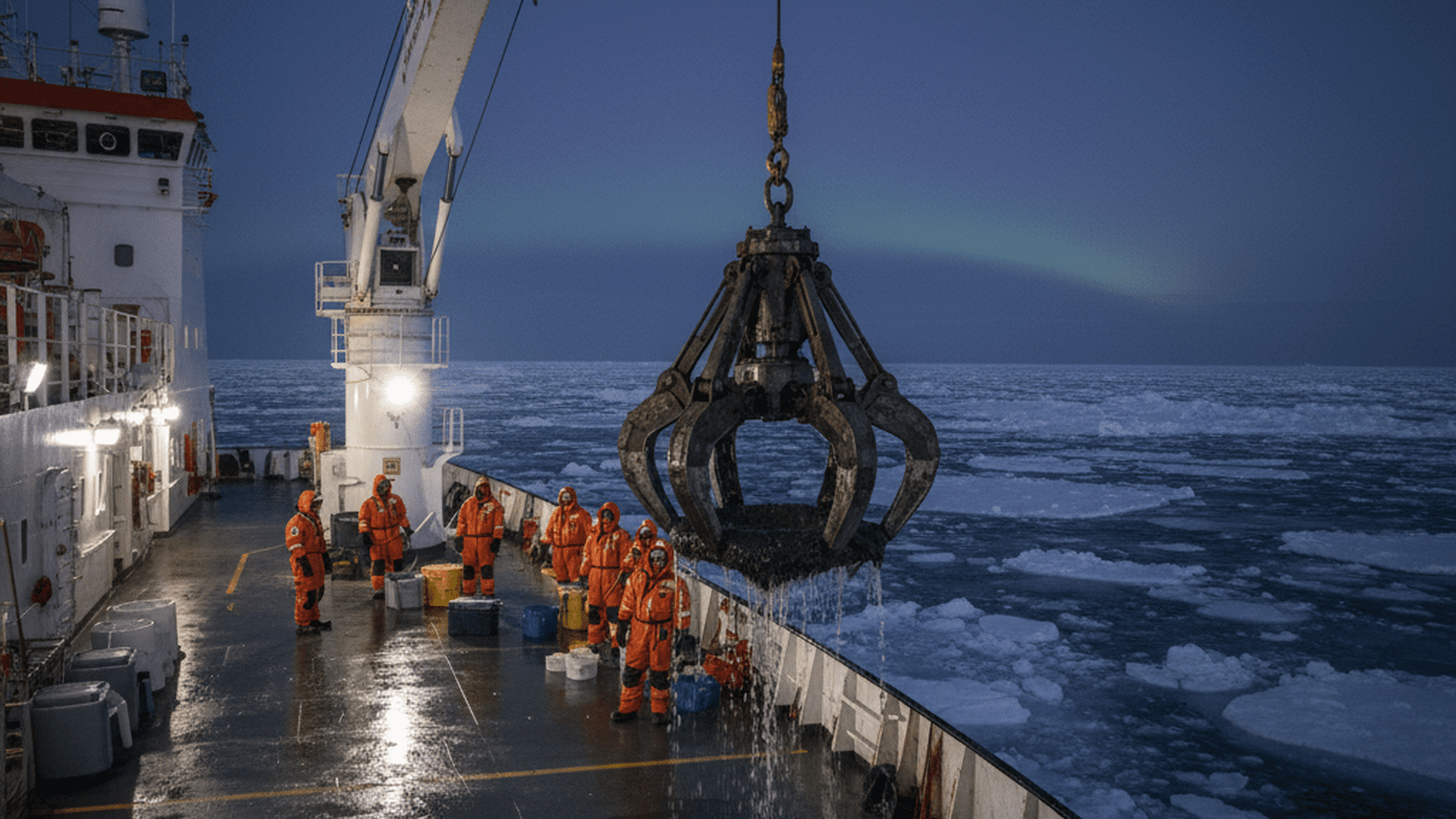
The expedition utilized the research vessel Helmer Hanssen, deploying specialized benthic samplers to retrieve sediment from depths exceeding 2,000 meters. These extreme environments are home to extremophiles, organisms that have adapted to survive where light is absent and temperatures hover near freezing. To thrive in these conditions, marine microbes have evolved unique metabolic pathways, producing complex secondary metabolites that are not found in their terrestrial counterparts. The chemical diversity found in these depths offers a new frontier for pharmacological research, as many land-based microbial sources have been exhausted by decades of intensive study.
The focus of the study was a specific strain of actinobacteria, a group known for producing over half of the world’s current antibiotics. The researchers isolated a molecule that specifically targets the virulence factors of Enteropathogenic Escherichia coli (EPEC), a major cause of severe gastrointestinal disease worldwide. Unlike traditional antibiotics that attempt to kill the bacteria, this Arctic compound employs an anti-virulence strategy. It interferes with the bacteria’s Type III secretion system, a molecular machinery that EPEC uses to inject effector proteins into host cells. By disabling this system, the compound prevents the bacteria from adhering to the intestinal lining, effectively neutralizing the infection.
This mechanism is particularly significant because it does not exert the same selective pressure as bactericidal drugs. When a drug kills a bacterium, it encourages the survival of mutant strains that can resist the treatment. By simply disarming the pathogen, the Arctic compound may slow the development of resistance, extending the lifespan of the potential treatment. Laboratory analysis involved sophisticated high-throughput screening and liquid chromatography-mass spectrometry to identify the active fractions within the bacterial extracts. The team discovered that the compound was highly selective, leaving the beneficial bacteria of the human microbiome unharmed while specifically disarming the pathogen.
Initial toxicity assays conducted on human cell lines showed no adverse effects, suggesting a high degree of safety for potential therapeutic use. Gram-negative bacteria, characterized by a robust outer membrane, are notoriously difficult to penetrate with existing drugs, but the discovery of a marine-derived molecule capable of bypassing these defenses offers a new template for drug design. The researchers noted that the unique chemical structure of the molecule would have been difficult to predict or synthesize without the biological blueprint provided by the Arctic microbes.
The next phase of the research involves synthesizing the compound in a laboratory setting to avoid the logistical challenges and environmental impact of deep-sea harvesting. Once synthesized, the molecule will undergo rigorous testing in animal models to evaluate its efficacy and pharmacokinetics. This expedition highlights the vital role of ocean exploration in addressing global health crises and the necessity of protecting marine biodiversity. As antimicrobial resistance continues to rise, the deep ocean remains one of the most promising reservoirs for the next generation of life-saving medicines.

Rachel Vaughn serves as a Senior Correspondent for Just Right News, where she leads the network’s coverage of Global Health, Climate, and Development. With a career defined by intellectual rigor and a commitment to principled reporting, Rachel provides a vital conservative perspective on some of the most complex and high-stakes issues facing the world today. Her work is characterized by a refusal to accept bureaucratic narratives at face value, focusing instead on how international policies impact national sovereignty, individual liberty, and the American taxpayer.
Raised in New Haven, Connecticut, Rachel grew up in an environment dominated by elite academic discourse. This upbringing provided her with a front-row seat to the inner workings of the American establishment, but it also instilled in her a healthy skepticism of the “ivory tower” consensus. She learned early on that while academic theories may sound promising in a lecture hall, they often fail to account for the practical realities of the working class. This background drives her to bridge the gap between high-level policy discussions and the common-sense concerns of everyday citizens, ensuring that her reporting remains grounded and accessible.
Now based in Burlington, Vermont, Rachel operates from a unique vantage point within one of the nation’s most progressive political landscapes. Living and working in a region that often serves as a testing ground for radical social and environmental experiments allows her to witness the real-world consequences of these policies firsthand. From her base in the Green Mountain State, she provides Just Right News readers with essential “boots on the ground” reporting, documenting the friction between local mandates and the constitutional freedoms of the individual. Her presence in Burlington ensures that her critiques of globalist agendas are informed by a direct understanding of how those ideologies manifest at the local level.
In her acclaimed feature series, “Planetary Stakes,” Rachel explores the intersection of international development and environmental stewardship. She rejects the alarmism often found in mainstream media, opting instead for a sober analysis of the economic and geopolitical costs of global climate agreements. Her reporting frequently highlights the importance of market-driven innovation and the role of American leadership in fostering global health without ceding authority to unelected international bodies. Through “Planetary Stakes,” she has become a leading voice for those who believe that true conservation and public health are best achieved through transparency, accountability, and the protection of private property rights.
Throughout her tenure at Just Right News, Rachel has distinguished herself as a journalist who is unafraid to ask difficult questions of global institutions. Whether she is investigating the influence of non-governmental organizations on domestic policy or analyzing the fiscal transparency of international health initiatives, her goal remains the same: to provide her audience with the facts necessary to navigate an increasingly interconnected world. Her blend of East Coast intellectual heritage and her current immersion in the political heart of the Northeast makes her an indispensable asset to the newsroom and a trusted source for readers seeking a principled, conservative take on the issues that define our era.