

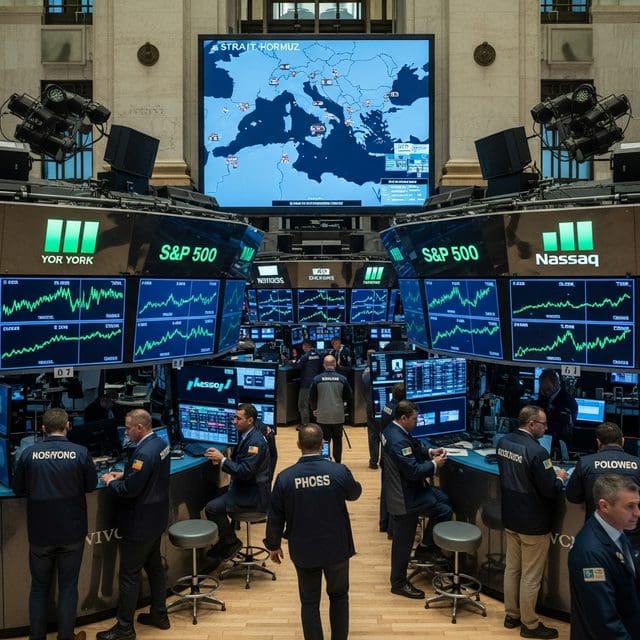
U.S. equity futures climbed Friday as strong corporate earnings from Procter & Gamble countered rising volatility and continued energy supply concerns stemming from the Strait of Hormuz.
Wall Street futures signaled a positive open on Friday as investors balanced a robust start to the corporate earnings season against a backdrop of heightened geopolitical tension. S&P 500 futures rose 0.4% to 7,140, while Nasdaq 100 futures gained 0.74%, buoyed by a significant earnings beat from consumer staple giant Procter & Gamble. The company reaffirmed its fiscal year 2026 outlook, providing a rare anchor of stability for a market grappling with volatile energy prices.
Despite the upward trajectory in equities, the Cboe Volatility Index (VIX) remained uncharacteristically elevated, hovering near the 20-point mark. This divergence suggests that while investors are chasing earnings growth, they are simultaneously hedging against tail risks. The primary catalyst for this anxiety remains the Strait of Hormuz, which saw multiple closures by Iranian forces earlier this week. Although oil futures rose approximately 6% following these disruptions, the U.S. military’s seizure of three Iranian tankers, including the M/T Majestic X, has added a layer of tactical uncertainty to global trade routes.
Monetary policy remains a critical secondary front. The Bank of England reported that British firms expect price increases of 4.4% over the next year, a sharp jump from previous estimates. Similarly, the Reserve Bank of India has warned of upside inflation risks linked to Middle Eastern conflict. These international signals suggest that the Federal Reserve may face a more stubborn inflationary environment than domestic data alone might indicate, potentially delaying any pivot toward lower interest rates.
On the regulatory front, the Federal Reserve finalized changes to enhance community bank leverage ratios on April 23. This move aims to provide a buffer for smaller institutions as the broader financial system navigates a period of high bond yields and tightening credit conditions. While the ‘Invisible Economy’ of small-town banking receives this structural support, the high-stakes world of corporate finance saw Warner Bros. Discovery shareholders approve a massive merger with Paramount Skydance, though notably rejecting the proposed executive compensation package.
As the trading day progresses, the focus shifts to the 31 companies reporting before the bell. The ability of these firms to maintain margins in the face of rising input costs will determine if the current rally is sustainable or if the ‘fear gauge’ is correctly predicting a looming correction. For the American taxpayer, the stability of the monetary system remains tethered to these global energy corridors and the Fed’s ability to maintain discipline amid fiscal expansion.

Jordan Lee serves as the Senior Correspondent for Wall Street, Finance, and Monetary Systems at Just Right News. Based in the heart of the world’s financial capital, New York City, Lee brings a sharp, principled eye to the complex mechanisms that drive the global economy. His reporting is defined by a commitment to fiscal responsibility, the defense of the free market, and a deep-seated belief that a transparent monetary system is the bedrock of a free society.
Raised in Portland, Oregon, Lee’s perspective was forged in a city that has undergone significant cultural and economic shifts. His upbringing in the Pacific Northwest instilled in him a profound appreciation for the industriousness of small business owners and the importance of local economic stability. Watching the evolution of his hometown’s landscape sparked an early interest in how federal fiscal policy and large-scale financial trends eventually trickle down to the average citizen. This background provides him with a unique vantage point; he understands the growing disconnect between the policy-making elite and the reality of Main Street, a theme that frequently resonates throughout his work.
Now operating from his base in New York City, Lee bridges the gap between the high-stakes trading floors of Manhattan and the households of everyday Americans. He views the financial sector not merely as a collection of numbers and tickers, but as a vital engine of American prosperity that requires constant vigilance and accountability. His reporting often highlights the dangers of centralized financial control and the necessity of maintaining a system that rewards merit, risk-taking, and innovation.
As the creator and lead of the featured series, “The Invisible Economy,” Lee pulls back the curtain on the often-opaque world of monetary systems. He specializes in translating the dense jargon of central banking and international finance into actionable insights for the Just Right News audience. His work explores the “invisible” forces—such as inflationary pressures, regulatory creep, and the expansion of the administrative state—that erode the purchasing power of American families. By focusing on these systemic issues, Lee empowers readers to understand the hidden forces shaping their financial independence.
Lee’s journalistic philosophy is rooted in a steadfast commitment to traditional American values. As an Asian American professional who has navigated the competitive corridors of the financial world, he is a vocal advocate for meritocracy and the preservation of the American Dream. He believes that a stable currency and a predictable regulatory environment are essential for national sovereignty and individual liberty. His reporting frequently warns against the risks of government overreach in the private sector, arguing that the most effective solutions to economic challenges arise from competition and individual enterprise rather than bureaucratic mandates.
At Just Right News, Jordan Lee remains dedicated to providing a clear-eyed defense of the taxpayer. Whether he is analyzing market volatility or investigating the long-term implications of national debt, his mission is to provide the truth about where the money is going and what it means for the future of the country. Through his rigorous analysis and principled stance, Lee has become a trusted voice for those who value a strong, sovereign, and fiscally sound America.