

As Tamil Nadu heads to the polls, cash seizures and organized boycotts highlight the persistent tension between democratic participation and the integrity of the electoral process.
The machinery of democracy in Tamil Nadu is operating at full capacity this week, revealing a complex landscape where technological novelty and celebrity influence clash with systemic corruption and civic disillusionment. As voters across the state cast their ballots, the administrative infrastructure is being tested by both the promise of modernization and the reality of localized unrest.
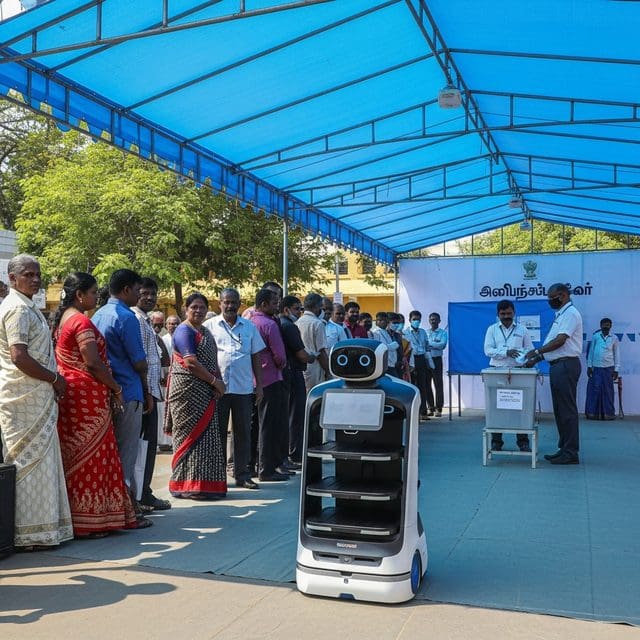
In Vellore, election officials have deployed robots at select polling booths to assist voters, an attempt to streamline the experience and perhaps signal a forward-looking electoral process. This technological push coincides with the high-profile entry of actor C. Joseph Vijay, founder of the TVK party, into the political arena. In the Tiruchi East constituency, where Vijay is contesting, polling reached 17.72% within the first two hours, demonstrating the significant draw of star power in mobilizing the electorate. This surge in participation highlights the persistent intersection of entertainment and governance in the region’s political culture.
However, the integrity of the process remains under scrutiny by those monitoring the flow of illicit capital. In the Erode (West) constituency, an election flying squad seized ₹8.20 lakh in unaccounted cash from the office of a construction company linked to a DMK functionary and real estate businessman. The seizure sparked immediate protests from local partisans, serving as a stark reminder of the persistent role of liquid assets in regional contests. Such incidents highlight the ongoing struggle for election authorities to maintain a level playing field against the influence of entrenched political interests and the administrative challenge of enforcing campaign finance laws in real-time.
Legal boundaries regarding the privacy of the booth are also being tested by the voters themselves. In Tirupattur, a TVK supporter was arrested after filming himself casting his vote and sharing the footage on social media. The incident underscores the tension between modern digital expression and the constitutional requirement for ballot secrecy—a cornerstone of a fair democratic system designed to protect the individual from intimidation. While technology is being used by the state to assist voters in Vellore, its unauthorized use by citizens in the booth presents a novel threat to institutional protocols.
Perhaps the most stark indictment of the institutional framework is found in Vengaivayal. Residents of the Scheduled Caste hamlet have initiated a total boycott of the polls, stemming from a 2022 incident where a drinking water tank was contaminated with human faeces. Four years later, with the investigation still pending under the CB-CID, the community has chosen to withdraw from the democratic process entirely. This collective refusal to participate serves as a powerful signal that for some, the promise of the ballot is insufficient when the state fails to provide basic dignity and justice. It represents a total breakdown of the social contract in a region otherwise characterized by high civic engagement.
While traffic congestion on Chennai’s GST Road and brisk polling in the central region suggest a robust turnout, these localized fractures in the electoral facade tell a more nuanced story. The data suggests that while the mechanics of voting—robots, booths, and ballots—are functioning, the deeper infrastructure of trust and accountability remains a work in progress. The preservation of individual civic duty is increasingly caught between the spectacle of celebrity politics and the hard realities of administrative overreach and neglect.

Sophie Carter serves as a Staff Writer for Just Right News, where she anchors the outlet’s critical coverage of Elections, Influence, and Democracy Infrastructure. In an era where the mechanics of voting and the flow of political capital are under constant scrutiny, Sophie provides a steady, principled voice dedicated to the preservation of American institutional integrity and the rule of law.
Raised in Charlotte, North Carolina, Sophie’s perspective was forged in a community that balances rapid modern growth with a deep respect for tradition and civic duty. Growing up in the Queen City, she witnessed firsthand how a robust local culture depends on the trust between the citizen and the state. This upbringing instilled in her a foundational belief that the right to vote is a sacred trust—one that must be protected from both administrative overreach and the encroaching influence of special interest groups. Her reporting reflects these North Carolina roots, emphasizing the importance of community-led governance and the preservation of the individual’s voice in the face of nationalized political movements.
Now based in Atlanta, Georgia, Sophie operates from the heart of one of the nation’s most pivotal and contested political landscapes. Her location allows her to report from the front lines of the debate over election security, legislative reform, and the modernization of voting systems. For Sophie, the “infrastructure” of democracy is not merely a matter of machines and ballots; it is the collection of laws, people, and transparent processes required to maintain public confidence. Her work often highlights the necessity of clear, enforceable standards that ensure every legal vote is counted fairly and that the machinery of our republic remains accountable to the taxpayers who fund it.
Central to her work at Just Right News is her acclaimed feature series, “The Price of a Vote.” Through this ongoing project, Sophie explores the complex web of influence that shapes modern campaigns and policy decisions. She delves into how high-level lobbying, non-governmental organizations, and shifting bureaucratic regulations impact the weight of an individual citizen’s ballot. By examining the financial and structural pressures placed on the electoral process, she provides readers with a comprehensive look at the forces vying for control over the American political system.
Sophie’s approach to journalism is rooted in a commitment to the constitutional framework. She views her role as a watchdog for the voter, ensuring that the systems meant to serve the public remain transparent and free from corruption. Whether she is analyzing the implementation of new voting technologies or investigating the influence of outside money on state-level policy, her work is characterized by a rigorous adherence to facts and a refusal to succumb to the sensationalism that often plagues modern political reporting.
At Just Right News, Sophie Carter continues to be a vital resource for readers who value clarity, conviction, and a defense of traditional American values. Her deep ties to the Southeast and her specialized focus on the mechanics of our republic make her an essential voice in the ongoing conversation about the future of American self-governance. Through her reporting, she remains dedicated to the idea that a secure and honest electoral system is the bedrock of a free and prosperous society.