

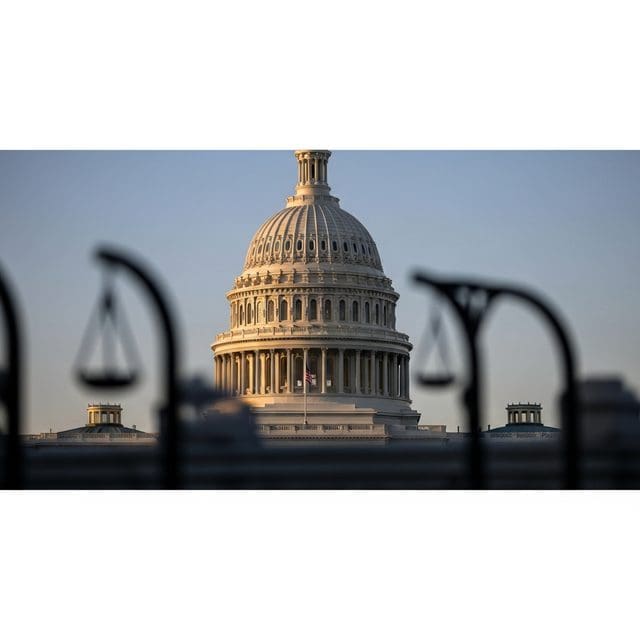
A narrow 50-48 Senate vote secures $70 billion for immigration enforcement, signaling an end to the two-month Department of Homeland Security shutdown.
In a late-night session that concluded at 3:30 a.m. ET on April 23, the United States Senate passed a pivotal budget resolution aimed at ending the two-month shutdown of the Department of Homeland Security. The 50-48 vote, largely along party lines, authorizes a $70 billion surge in funding for Immigration and Customs Enforcement (ICE) and U.S. Customs and Border Protection (CBP).
The resolution, introduced by Senator Lindsey Graham (R-SC), utilizes the budget reconciliation process to bypass the 60-vote filibuster threshold. This legislative maneuver is designed to provide sustained enforcement funding through the end of the current presidential term in 2029. The passage followed a grueling six-hour “vote-a-rama,” during which several Democratic amendments related to healthcare and housing costs were defeated.
The fiscal package arrives as the Department of Homeland Security faces a critical shortfall in employee payroll. While the resolution provides a path to reopening the department, it also highlights deep divisions within the chamber. Republican Senators Rand Paul and Lisa Murkowski broke ranks to vote against the measure alongside the Democratic caucus, citing concerns over the specific allocation of funds and the reconciliation process itself.
Attention now shifts to the House of Representatives, where Speaker Mike Johnson faces internal pressure from his caucus to prioritize a GOP-only enforcement bill. This stands in contrast to ongoing discussions regarding a bipartisan DHS funding package. The legislative timeline is further compressed by a June 1 deadline set by the White House for a final bill to be signed into law.
This funding surge is expected to significantly alter the operational capacity of border agencies. By securing $70 billion specifically for enforcement, the resolution prioritizes the expansion of detention facilities and the hiring of additional field agents. These resources are intended to address the logistical challenges of managing migrant populations and maintaining the integrity of the nation’s ports of entry.
While the resolution focuses on enforcement infrastructure, it does not address broader visa reform or the status of existing migrant populations such as DACA recipients. Instead, the policy remains grounded in the administration’s commitment to border security and the rule of law as the primary mechanisms for demographic and social stability. The focus on ICE and CBP funding reflects a strategic shift toward prioritizing deterrence and removal capacity as the cornerstone of national immigration policy.

Julie Harris serves as a Staff Writer for Just Right News, where she tackles some of the most pressing and complex issues facing the nation today. As the lead reporter for the Migration, Demographics & Cultural Shifts beat, Julie provides a grounded, principled perspective on how the movement of people and the changing makeup of communities are reshaping the American landscape. Her work is defined by a commitment to exploring the long-term consequences of social change, prioritizing the stability of local institutions and the preservation of national identity.
Her deep understanding of these issues is rooted in her upbringing in Tucson, Arizona. Growing up in a prominent border state, Julie witnessed firsthand the intricate realities of migration and the profound impact it has on local infrastructure, law enforcement, and the social fabric. This early exposure instilled in her a respect for the rule of law and a keen awareness of the challenges that arise when federal policies fail to align with the needs of border communities. Her reporting often reflects this lived experience, bringing a necessary level of nuance to topics that are often treated with abstraction in coastal newsrooms.
Now based in Santa Fe, New Mexico, Julie continues to report from the heart of the American Southwest. Her location provides a unique vantage point to observe the intersection of traditional regional cultures and the modern shifts brought about by both internal and external migration. In Santa Fe, a city defined by its rich history and distinct cultural heritage, she finds a perfect environment to explore how communities strive to maintain their character while navigating the pressures of a rapidly changing world. This perspective allows her to bridge the gap between policy debates in Washington and the reality of life in the high desert.
At Just Right News, Julie’s work is characterized by a dedication to examining the data and the human stories that define the “New Mosaic” of America. Her signature feature series, “The New Mosaic,” has become a cornerstone of her reporting. Through this series, Julie explores the evolving social architecture of the United States, documenting how shifts in population affect everything from local economies to the political landscape. She brings a critical eye to the narrative of demographic inevitability, instead asking how these shifts impact the average citizen’s sense of belonging and the integrity of the American social contract.
Julie’s background and her dedication to conservative principles make her a vital voice in contemporary journalism. She understands that demographics are more than just numbers on a spreadsheet; they represent the future of the American family and the nation’s enduring legacy. Through her diligent reporting and insightful analysis, Julie Harris ensures that her readers are informed about the forces shaping their world, providing a perspective that is as thoughtful as it is necessary for the modern era.