


In 1935, Senator Hugo Black led a high-profile United States Senate investigation into the deceptive lobbying tactics used by utility companies to oppose New Deal legislation. The committee exposed a massive fraud involving thousands of fake telegrams sent to Congress, ultimately leading to the passage of the Public Utility Holding Company Act.
TLDR: Senator Hugo Black’s 1935 investigation exposed a fraudulent “fake telegram” campaign orchestrated by utility monopolies to influence the United States Congress. The scandal discredited corporate lobbyists and secured the passage of the Public Utility Holding Company Act, establishing new standards for federal oversight of corporate political influence.
In the summer of 1935, the United States Senate launched one of the most aggressive and consequential anti-corruption investigations of the New Deal era. At the center of this political storm was Senator Hugo Black of Alabama, a fierce proponent of President Franklin D. Roosevelt’s reforms. Black chaired the Special Committee to Investigate Lobbying, a body tasked with peeling back the layers of corporate influence that threatened to derail the administration’s legislative agenda. The primary focus of the investigation was the intense, well-funded opposition to the Public Utility Holding Company Act (PUHCA), a landmark bill designed to dismantle the massive power trusts that controlled the nation’s electricity and gas distribution.
Utility companies viewed the proposed law as an existential threat. These holding companies often sat atop complex, multi-tiered corporate structures that allowed a few individuals to control vast networks of local utilities while extracting enormous profits from consumers. To combat the bill, the industry launched what was then the most expensive and sophisticated propaganda campaign in American history. However, as the Black Committee began its work, it discovered that this effort went far beyond traditional advocacy and crossed into the realm of systemic fraud.
The investigation’s most explosive discovery was the “fake telegram” scandal. Investigators found that utility executives had authorized a massive operation to overwhelm members of Congress with a false sense of public outrage. In one particularly egregious instance in Warren, Pennsylvania, a Western Union office processed over a thousand telegrams addressed to a single congressman in a matter of hours. When committee investigators cross-referenced the names on these messages with local records, the results were shocking: many of the supposed senders were deceased, while others were local residents who had no idea their names had been used. Low-level utility employees later testified that they had been pressured by their supervisors to pull names from city directories to meet daily quotas of “protest” messages.
The primary target of the utility lobby’s ire was the “death sentence” clause of the PUHCA. This provision empowered the Securities and Exchange Commission to break up any holding company that could not prove it served a localized, efficient, and integrated purpose. Companies like Associated Gas and Electric, led by the elusive Howard C. Hopson, were at the center of the controversy. Hopson’s attempts to evade the committee—including a period where he went into hiding to avoid a subpoena—only served to fuel the public’s suspicion and the committee’s resolve to bring the industry to heel.
Senator Black’s investigative methods were as controversial as the targets themselves. He issued blanket subpoenas for millions of telegrams sent to Washington during the legislative debate, a move that drew sharp criticism from both the industry and civil liberties advocates. Critics accused him of violating the Fourth Amendment rights of private citizens by conducting a “fishing expedition” through private correspondence. Despite the outcry, the Supreme Court of the District of Columbia upheld the committee’s broad investigative powers, ruling that the legislative need for information in the face of potential fraud outweighed the privacy concerns of the telegraph companies.
The public hearings became a national sensation, broadcast via radio and detailed in front-page headlines. Witnesses from the utility industry were forced to admit under oath that they had spent millions of dollars on the campaign without disclosing the source of the funds. The revelation of the fraudulent telegrams destroyed the credibility of the utility lobby almost overnight. Public sentiment shifted decisively in favor of the Roosevelt administration, and the Public Utility Holding Company Act was signed into law in August 1935.
The legacy of the Black Committee extended well beyond the utility industry. The investigation highlighted a fundamental need for transparency in the relationship between private interests and the federal government. This drive for accountability eventually led to the passage of the Foreign Agents Registration Act in 1938 and the Federal Regulation of Lobbying Act of 1946. These reforms established the first permanent framework for monitoring the activities of those who seek to influence United States policy, fundamentally changing the nature of political advocacy in Washington, D.C.
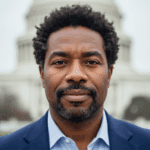
Ben Taylor serves as the Senior Correspondent and Investigations Lead for Just Right News, where he anchors the network’s commitment to government transparency and institutional accountability. With a career defined by a relentless pursuit of the facts, Taylor spearheads the acclaimed feature series “The Paper Trail,” a deep-dive investigative column that prioritizes primary source documentation over political rhetoric. Based in the heart of the nation’s capital, he has earned a reputation as one of the most formidable investigative journalists in Washington, D.C., known specifically for his mastery of public records and the Freedom of Information Act.
Taylor’s approach to journalism is deeply rooted in his upbringing in Kansas City, Missouri. Growing up in the “Show Me State,” he developed a healthy skepticism of centralized power and a profound respect for the common-sense values of the American heartland. This Midwestern foundation informs his reporting today, as he bridges the gap between the complex machinations of federal bureaucracy and the everyday concerns of citizens across the country. For Taylor, investigative reporting is not about chasing headlines; it is about ensuring that the government remains answerable to the people it serves.
As an African American man working within the conservative media landscape, Taylor brings a principled perspective to his beat. He views the Constitution and the right to information as the ultimate equalizers in a free society. His work often highlights how bureaucratic overreach and lack of transparency disproportionately affect individual liberties. By focusing on the “paper trail,” Taylor strips away the spin of partisan talking points, instead providing Just Right News readers with the raw data and internal communications that reveal how their tax dollars are spent and how policy decisions are actually made.
In his role as Investigations Lead, Taylor oversees a team dedicated to uncovering the stories that mainstream outlets often overlook. Whether he is auditing federal spending, investigating regulatory overreach, or exposing inefficiencies within the administrative state, his methodology remains consistent: follow the evidence wherever it leads. His presence in Washington, D.C., allows him to maintain a constant watch over the halls of power, yet he remains steadfastly connected to his roots, ensuring his reporting reflects the clarity and directness of his Missouri home.
Throughout his tenure at Just Right News, Taylor has become a vital voice for those who demand integrity in public office. He believes that a well-informed electorate is the strongest defense against government overreach, and he has dedicated his career to providing the public with the tools they need to hold their leaders accountable. Through “The Paper Trail” and his broader investigative work, Ben Taylor continues to set the standard for rigorous, document-driven journalism that champions the values of transparency, individual responsibility, and the rule of law.