

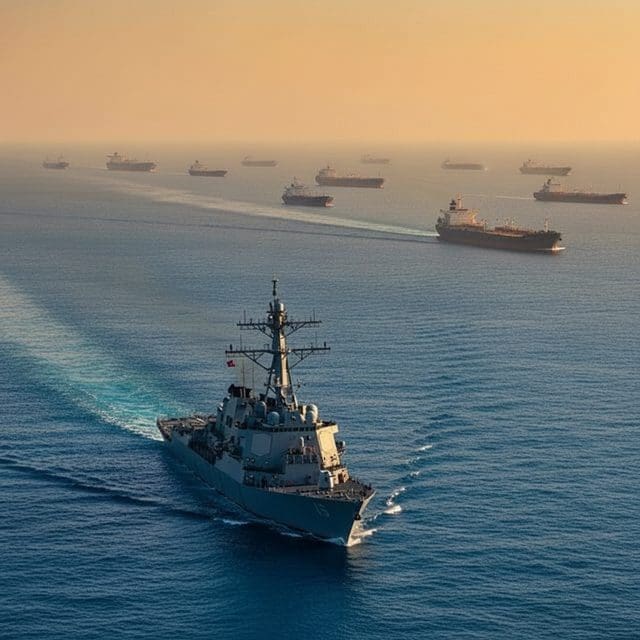
Escalating tensions in the Strait of Hormuz and fragility in the Israel-Lebanon ceasefire threaten to derail diplomatic efforts between Washington and Tehran as oil prices face renewed upward pressure.
The delicate architecture of Middle Eastern diplomacy is under severe strain as the United States and Iran clash over the terms of a potential nuclear framework. Despite President Donald Trump’s assertions that weekend negotiations are proceeding well, high-ranking Iranian officials have labeled American demands as “maximalist” barriers to progress. The friction comes at a precarious moment for global energy markets, with oil prices reacting to renewed volatility in the Strait of Hormuz and a shaky ceasefire in Lebanon.
Speaking from the Antalya Diplomacy Forum in Turkey, Iranian Deputy Foreign Minister Saeed Khatibzadeh flatly rejected the U.S. demand to transfer Iran’s stockpile of enriched uranium—estimated at 970 pounds of 60% purity material—to American custody. Khatibzadeh characterized the demand as a “non-starter,” insisting that Tehran will not move toward in-person talks until a rigid framework agreement is established. This diplomatic distance persists despite the U.S. military’s continued preparation for an expanded naval blockade, which includes the potential seizure of Iran-linked commercial vessels in international waters.
The security situation in the Strait of Hormuz remains a primary driver of economic anxiety. Following the collapse of previous talks in Pakistan, the IRGC reportedly fired upon several commercial tankers on April 18, forcing vessels to divert. While President Trump has maintained that a blockade is necessary to ensure Iranian compliance, Germany’s Chancellor Friedrich Merz has already requested U.S. participation in a broader mission to secure the vital waterway. The prospect of a prolonged maritime standoff has sent ripples through the heartland, where rising fuel costs directly impact the American logistics and agricultural sectors.
Adding to the complexity is the fragile 10-day ceasefire between Israel and Hezbollah. While the Trump administration has signaled that “enough is enough” regarding the conflict, the State Department clarified that Israel retains the right to self-defense. Reports of over 380 Israeli strikes on Hezbollah targets and retaliatory Lebanese shelling suggest the truce is failing to hold. Iran has conditioned further diplomatic progress on a total cessation of hostilities in Lebanon, yet Hezbollah remains poised for further engagement, complicating the path to a regional de-escalation.
Domestically, the administration’s “peace through strength” approach faces a dual challenge of international resistance and shifting public sentiment. A recent poll indicates that half of the American public perceives the administration’s broader enforcement strategies as overly aggressive. As the U.S. pushes for a 20-year moratorium on Iranian uranium enrichment against Tehran’s preference for a single-digit duration, the window for a negotiated settlement appears to be narrowing.
For the American citizen, these geopolitical maneuvers are more than abstract foreign policy; they represent the thin line between energy independence and a global supply shock. With the Strait of Hormuz serving as the world’s most critical oil chokepoint, the failure to secure a durable agreement could lead to a sustained period of economic volatility. The administration now faces the difficult task of maintaining a credible military deterrent while preventing a total collapse of the diplomatic channel that remains the only viable alternative to open conflict.

Olivia Kendall serves as the Senior Correspondent for Geopolitics, Defense, and Foreign Policy at Just Right News, where she provides a principled, conservative perspective on the complex forces shaping the global stage. With a career dedicated to deconstructing the intricacies of international relations, Kendall has become a trusted voice for readers who value national sovereignty, a robust military, and a foreign policy that prioritizes American interests above all else.
A native of Washington, D.C., Kendall’s professional journey is deeply rooted in her upbringing within the nation’s capital. Growing up in the epicenter of American political life, she developed an early and profound understanding of how policy is crafted and, more importantly, how it often fails to account for the values of the American heartland. This unique vantage point allowed her to witness firsthand the rise of globalist bureaucracies, fueling her commitment to reporting that champions the constitutional foundations of the United States. Her background as a British White American further informs her worldview, providing her with a keen appreciation for the Western tradition and the enduring importance of the “Special Relationship” in maintaining global stability.
Now based in Arlington, Virginia, Kendall operates from the doorstep of the Pentagon and the heart of the nation’s defense establishment. Her proximity to the decision-makers in the military and intelligence communities allows her to provide boots-on-the-ground reporting that is both timely and deeply informed. For Kendall, Arlington is more than just a base of operations; it is a daily reminder of the sacrifices made by the men and women in uniform. This connection to the defense community drives her rigorous coverage of military readiness and her advocacy for a “peace through strength” approach to diplomacy.
At Just Right News, Kendall is perhaps best known for her acclaimed feature series, “The World’s Shadow on America.” In this ongoing project, she explores the direct correlation between international developments and the daily lives of American citizens. Whether she is analyzing the encroachment of foreign adversaries in domestic supply chains or the impact of international treaties on local economies, Kendall’s work serves as a vital bridge between distant geopolitical shifts and their consequences at home. She rejects the notion that foreign policy is an abstract concern for elites, instead proving that what happens in the corridors of power in Brussels or Beijing has a tangible “shadow” that falls across every American doorstep.
Throughout her tenure, Kendall has remained a steadfast critic of international overreach and a vocal proponent of a clear-eyed, realistic foreign policy. She brings a sharp analytical mind to her beat, often challenging the prevailing narratives of the mainstream media to uncover the underlying truths that affect national security. Her reporting is characterized by a refusal to compromise on the truth and a dedication to the idea that a strong, secure America is the world’s best hope for liberty. As a Senior Correspondent, Olivia Kendall continues to lead the charge in providing the essential context and conservative insight necessary to navigate an increasingly volatile world.