

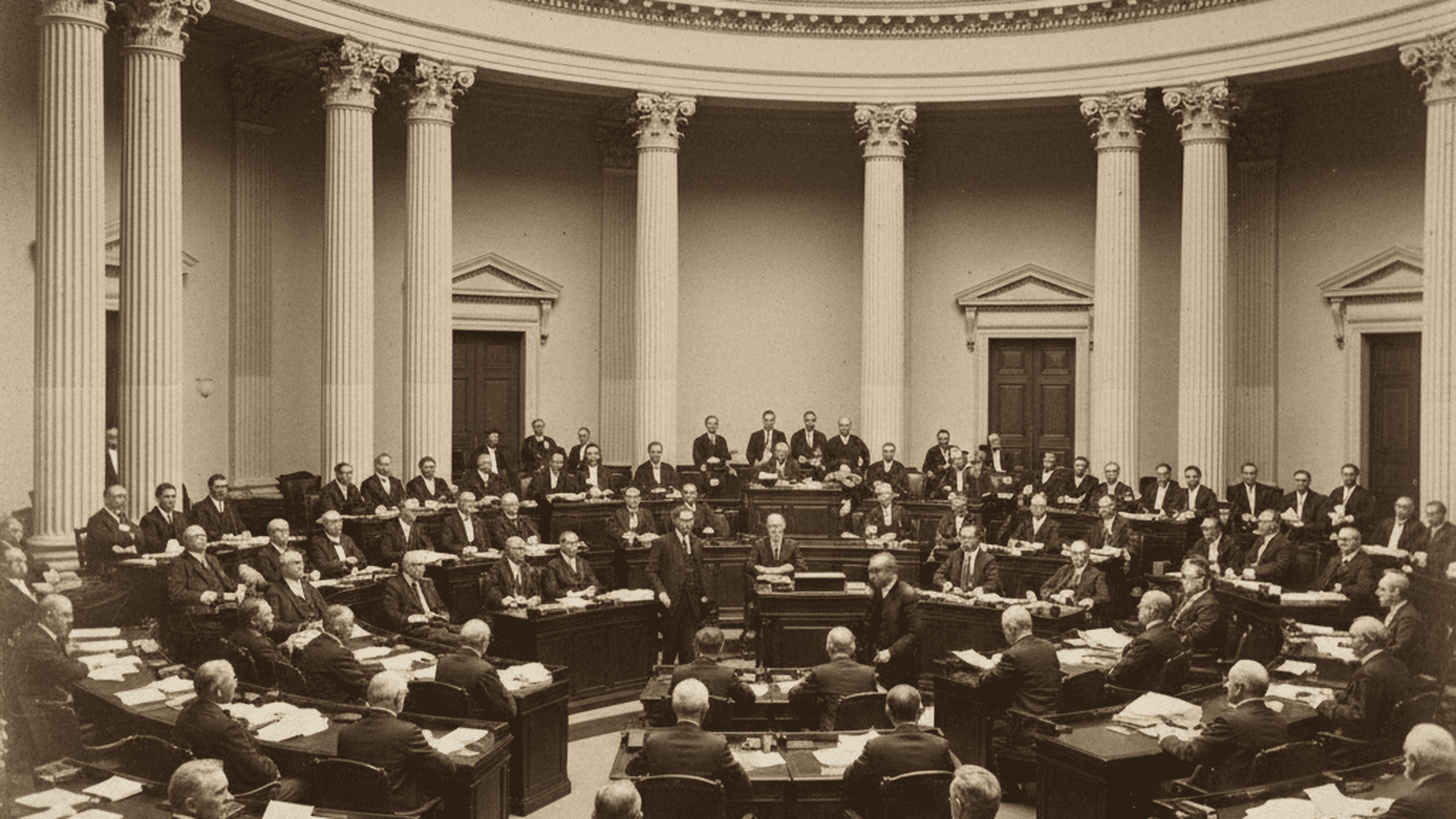
The 1912 Ohio Constitutional Convention was a landmark event in United States political history that introduced direct democracy and municipal home rule. These reforms shifted power from political machines to the voters, setting a precedent for Progressive Era governance across the Midwest.
TLDR: In 1912, Ohio reformers convened a constitutional convention that fundamentally reshaped the state’s political landscape. By introducing the initiative and referendum, the convention empowered citizens to bypass the legislature. This Progressive Era milestone established Ohio as a leader in democratic reform and influenced similar movements throughout the United States.
The dawn of the twentieth century brought a wave of political unrest to the American Midwest, as citizens grew increasingly weary of the influence wielded by industrial monopolies and urban political machines. In Ohio, this frustration culminated in the Fourth Constitutional Convention of 1912. This gathering was not merely a routine update of state law but a radical attempt to restructure the mechanics of democracy. Reformers sought to implement “direct legislation,” a concept that would allow the public to propose and approve laws independently of the state legislature.
The convention opened in January 1912 at the Ohio Statehouse in Columbus. Herbert S. Bigelow, a Congregationalist minister from Cincinnati known for his advocacy of the “single tax” and labor rights, was elected president of the convention. His leadership signaled a departure from the conservative, business-aligned interests that had long dominated Ohio politics. Under Bigelow’s guidance, the delegates drafted forty-two separate amendments rather than a single new constitution, allowing voters to decide on each reform individually. This strategy was designed to prevent a single controversial issue from sinking the entire reform package.
The most significant proposal was the introduction of the initiative and referendum. This mechanism granted Ohioans the power to place constitutional amendments and statutes on the ballot via petition. It also allowed them to challenge laws passed by the General Assembly before they took effect. Proponents argued that these tools were necessary “safety valves” for democracy, ensuring that the government remained responsive to the will of the people. Opponents, however, feared that direct democracy would lead to “mob rule” and undermine the stability of representative institutions.
Beyond election reform, the convention addressed the burgeoning needs of an industrial society. Delegates approved amendments establishing a mandatory workers’ compensation system, authorizing a state minimum wage, and limiting the working day to eight hours on public works projects. These measures reflected a growing consensus that the state had a role in protecting citizens from the excesses of the Gilded Age. The convention also sought to modernize the judiciary, creating a court of appeals and streamlining the legal process to reduce delays for litigants.
Another landmark change was the granting of “home rule” to municipalities. This allowed cities to draft their own charters and manage local affairs without constant interference from the state legislature. Before this reform, Ohio cities were often treated as mere administrative arms of the state government, subject to the whims of rural legislators. Home rule empowered growing urban centers like Cleveland, Cincinnati, and Toledo to innovate in areas of public utility management and local governance.
In September 1912, Ohio voters went to the polls to decide the fate of the proposed amendments. The campaign leading up to the vote was intense, with national progressive leaders like Theodore Roosevelt and William Jennings Bryan visiting the state to offer their support. Ultimately, thirty-four of the forty-two amendments were approved by the electorate. While a proposal for women’s suffrage was defeated during this specific cycle, the successful measures fundamentally altered the state’s legal framework.
The legacy of the 1912 convention continues to shape Ohio’s political identity and the broader landscape of the United States. The initiative process has been used frequently over the last century to address issues ranging from tax policy to environmental protection. While the ease of amending the constitution has occasionally sparked modern debates about the threshold for voter approval, the 1912 reforms remain a cornerstone of the state’s democratic infrastructure. These changes established a permanent mechanism for citizen oversight, ensuring that the legislative process remains subject to the ultimate authority of the electorate.

Sophie Carter serves as a Staff Writer for Just Right News, where she anchors the outlet’s critical coverage of Elections, Influence, and Democracy Infrastructure. In an era where the mechanics of voting and the flow of political capital are under constant scrutiny, Sophie provides a steady, principled voice dedicated to the preservation of American institutional integrity and the rule of law.
Raised in Charlotte, North Carolina, Sophie’s perspective was forged in a community that balances rapid modern growth with a deep respect for tradition and civic duty. Growing up in the Queen City, she witnessed firsthand how a robust local culture depends on the trust between the citizen and the state. This upbringing instilled in her a foundational belief that the right to vote is a sacred trust—one that must be protected from both administrative overreach and the encroaching influence of special interest groups. Her reporting reflects these North Carolina roots, emphasizing the importance of community-led governance and the preservation of the individual’s voice in the face of nationalized political movements.
Now based in Atlanta, Georgia, Sophie operates from the heart of one of the nation’s most pivotal and contested political landscapes. Her location allows her to report from the front lines of the debate over election security, legislative reform, and the modernization of voting systems. For Sophie, the “infrastructure” of democracy is not merely a matter of machines and ballots; it is the collection of laws, people, and transparent processes required to maintain public confidence. Her work often highlights the necessity of clear, enforceable standards that ensure every legal vote is counted fairly and that the machinery of our republic remains accountable to the taxpayers who fund it.
Central to her work at Just Right News is her acclaimed feature series, “The Price of a Vote.” Through this ongoing project, Sophie explores the complex web of influence that shapes modern campaigns and policy decisions. She delves into how high-level lobbying, non-governmental organizations, and shifting bureaucratic regulations impact the weight of an individual citizen’s ballot. By examining the financial and structural pressures placed on the electoral process, she provides readers with a comprehensive look at the forces vying for control over the American political system.
Sophie’s approach to journalism is rooted in a commitment to the constitutional framework. She views her role as a watchdog for the voter, ensuring that the systems meant to serve the public remain transparent and free from corruption. Whether she is analyzing the implementation of new voting technologies or investigating the influence of outside money on state-level policy, her work is characterized by a rigorous adherence to facts and a refusal to succumb to the sensationalism that often plagues modern political reporting.
At Just Right News, Sophie Carter continues to be a vital resource for readers who value clarity, conviction, and a defense of traditional American values. Her deep ties to the Southeast and her specialized focus on the mechanics of our republic make her an essential voice in the ongoing conversation about the future of American self-governance. Through her reporting, she remains dedicated to the idea that a secure and honest electoral system is the bedrock of a free and prosperous society.