

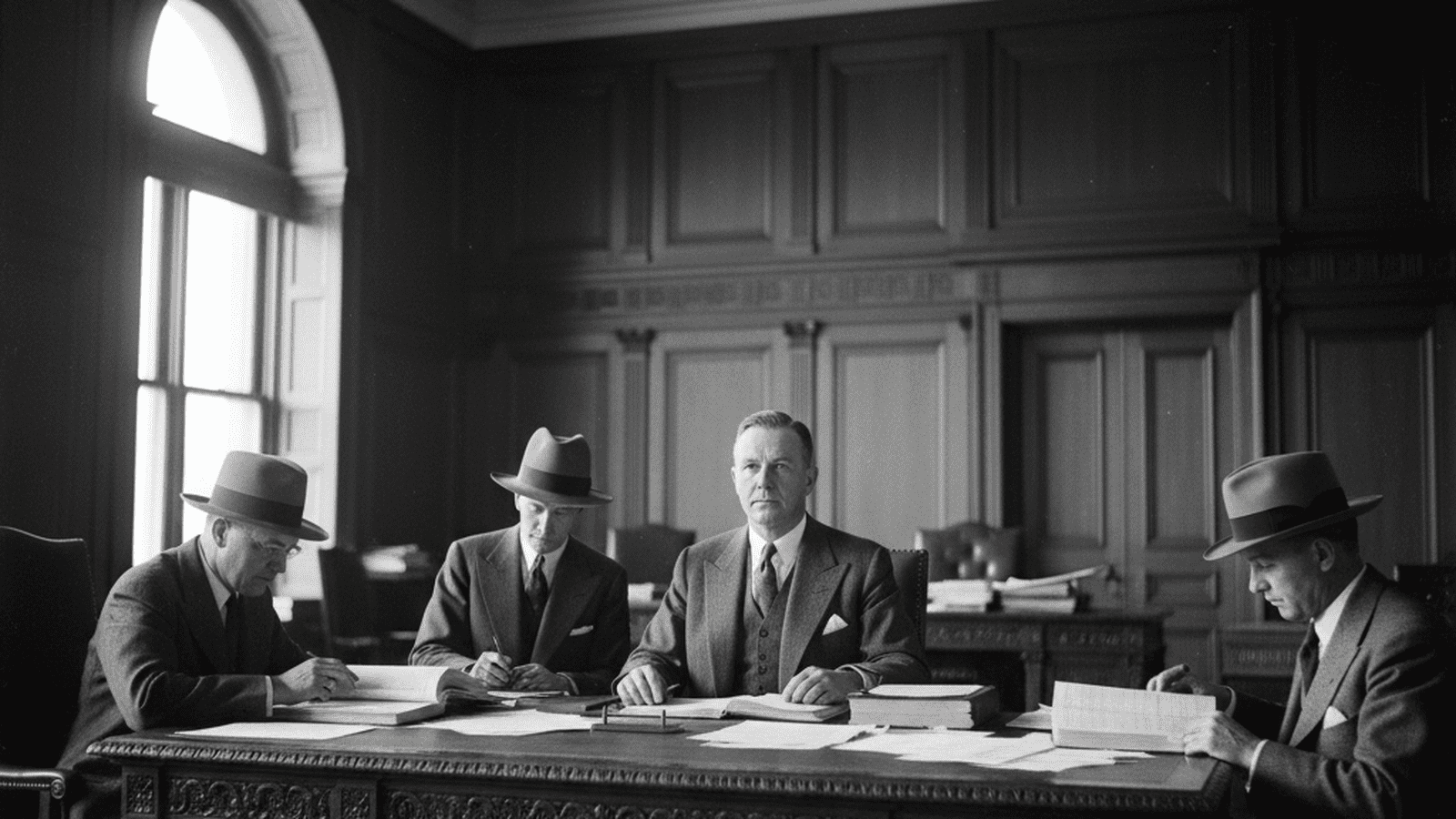
In 1939, Colorado Governor Ralph Carr initiated a sweeping investigation into the state’s Highway Department to root out systemic corruption and political patronage. This anti-corruption drive in the United States Mountain West led to significant administrative reforms and the professionalization of state agencies during the New Deal era.
TLDR: During the late 1930s, Colorado Governor Ralph Carr launched a major anti-corruption campaign targeting the state’s Highway Department. The investigation uncovered widespread payroll padding and kickbacks, eventually leading to the dismissal of entrenched officials and the establishment of merit-based civil service reforms in the United States.
In the late 1930s, as the United States navigated the complexities of the New Deal era, the state of Colorado faced a localized crisis of governance that threatened to undermine federal recovery efforts. The Colorado State Highway Department, bolstered by an unprecedented influx of federal and state infrastructure spending, had devolved into a sprawling network of political patronage. By 1939, the situation reached a breaking point, prompting a landmark anti-corruption drive that would redefine the state’s administrative landscape and set a precedent for the professionalization of state agencies across the Mountain West.
The catalyst for reform was the election of Ralph Carr as Governor in 1938. Carr, a former U.S. Attorney, campaigned on a platform of fiscal responsibility and the elimination of the “spoils system” that had long dominated Denver’s political circles. Upon taking office in January 1939, Carr immediately turned his attention to the Highway Department, which was then the largest and most influential agency in the state. Rumors of “deadwood” employees—individuals on the payroll who performed no actual work—and kickback schemes involving construction contracts had become impossible to ignore. The department had essentially become a private treasury for the political machine that preceded Carr’s administration.
Carr’s investigation was both methodical and aggressive. He appointed independent auditors to scrutinize the department’s books, uncovering a pattern of systemic financial abuse. The findings revealed that high-ranking officials had authorized payments for materials that were never delivered and maintained a “slush fund” used to influence local elections. The investigation specifically highlighted the “deadwood” problem, where nearly ten percent of the department’s workforce was found to be redundant or entirely absent from job sites. These positions were often filled by precinct captains and local party loyalists who viewed the highway fund as a source of political sustenance rather than public service.
The political stakes were high, as many of the officials under fire were well-connected members of the entrenched bureaucracy. Carr faced significant pushback from the state legislature and the Civil Service Commission, which initially resisted the governor’s attempts to bypass traditional protections for political appointees. However, the public outcry following the publication of the audit findings forced the hand of the commission. Carr utilized his executive authority to suspend several key administrators, including the long-serving Highway Engineer, Charles Vail. Although Vail fought the charges in a protracted legal battle, the momentum of the reform movement proved unstoppable.
Beyond the immediate dismissals, the 1939 purge led to a fundamental restructuring of how Colorado managed its public works. The state moved toward a more rigid merit-based system for hiring, reducing the ability of governors to use department jobs as rewards for political loyalty. This shift was part of a broader trend in the United States during the New Deal era, where states sought to professionalize their bureaucracies to better manage the massive federal grants flowing from Washington D.C. The professionalization of the department ensured that engineering expertise, rather than political affiliation, dictated the expansion of the state’s vital mountain road network.
The legacy of the 1939 Highway Department scandal remained a touchstone for Colorado politics for decades. It established Ralph Carr as a champion of administrative integrity, a reputation he would later solidify through his courageous opposition to the internment of Japanese Americans. The reforms initiated during this period created a culture of oversight that made it increasingly difficult for old-style political machines to operate within the state’s infrastructure agencies. Today, the professionalized nature of Colorado’s Department of Transportation is often traced back to the rigorous “clean up” of 1939, which served as a critical turning point in the transition from patronage to modern public administration.
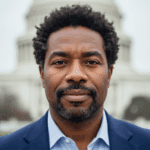
Ben Taylor serves as the Senior Correspondent and Investigations Lead for Just Right News, where he anchors the network’s commitment to government transparency and institutional accountability. With a career defined by a relentless pursuit of the facts, Taylor spearheads the acclaimed feature series “The Paper Trail,” a deep-dive investigative column that prioritizes primary source documentation over political rhetoric. Based in the heart of the nation’s capital, he has earned a reputation as one of the most formidable investigative journalists in Washington, D.C., known specifically for his mastery of public records and the Freedom of Information Act.
Taylor’s approach to journalism is deeply rooted in his upbringing in Kansas City, Missouri. Growing up in the “Show Me State,” he developed a healthy skepticism of centralized power and a profound respect for the common-sense values of the American heartland. This Midwestern foundation informs his reporting today, as he bridges the gap between the complex machinations of federal bureaucracy and the everyday concerns of citizens across the country. For Taylor, investigative reporting is not about chasing headlines; it is about ensuring that the government remains answerable to the people it serves.
As an African American man working within the conservative media landscape, Taylor brings a principled perspective to his beat. He views the Constitution and the right to information as the ultimate equalizers in a free society. His work often highlights how bureaucratic overreach and lack of transparency disproportionately affect individual liberties. By focusing on the “paper trail,” Taylor strips away the spin of partisan talking points, instead providing Just Right News readers with the raw data and internal communications that reveal how their tax dollars are spent and how policy decisions are actually made.
In his role as Investigations Lead, Taylor oversees a team dedicated to uncovering the stories that mainstream outlets often overlook. Whether he is auditing federal spending, investigating regulatory overreach, or exposing inefficiencies within the administrative state, his methodology remains consistent: follow the evidence wherever it leads. His presence in Washington, D.C., allows him to maintain a constant watch over the halls of power, yet he remains steadfastly connected to his roots, ensuring his reporting reflects the clarity and directness of his Missouri home.
Throughout his tenure at Just Right News, Taylor has become a vital voice for those who demand integrity in public office. He believes that a well-informed electorate is the strongest defense against government overreach, and he has dedicated his career to providing the public with the tools they need to hold their leaders accountable. Through “The Paper Trail” and his broader investigative work, Ben Taylor continues to set the standard for rigorous, document-driven journalism that champions the values of transparency, individual responsibility, and the rule of law.