

The White House notified Congress that hostilities with Iran have officially concluded, while Senate Republicans stalled a $70 billion budget package and questioned key executive appointments.
The White House has formally notified Congress via a War Powers letter that hostilities with Iran have ended. This administrative pivot asserts that statutory legal deadlines for military engagement no longer apply, even as U.S. forces remain deployed and a naval blockade continues around Iranian oil tankers. While the President maintains that negotiations are proceeding very well and a deal to solidify a ceasefire could arrive by the weekend, the legal declaration aims to reset the clock on executive war-making authorities. This move places the administration in a diplomatic holding pattern as the 60-day ceasefire extension and new nuclear talks move forward, though critics warn the President risks being boxed in by the continued military presence.
This shift in foreign policy posture coincides with a period of significant friction between the executive branch and the Senate GOP. In a rare display of defiance, Republican senators temporarily derailed a $70 billion budget package closely tied to the administration’s immigration agenda. The impasse reflects growing internal party concerns over the direction of federal spending and the specific mechanics of the proposed $1.776 billion anti-weaponization fund. This fund has become a primary symbol of administrative friction; while acting Attorney General Todd Blanche indicated there were no plans to proceed with the initiative, the President stated he would consult lawyers to determine if the program could be salvaged, effectively challenging his own appointee’s assessment.
Despite the disagreement over the fund, the President announced at a White House dinner his intention to formally nominate Blanche as the permanent Attorney General. This move seeks to lock in a close ally at the Department of Justice, though it sets the stage for a rigorous confirmation battle. Personnel choices are becoming a primary flashpoint for congressional oversight, as Republican senators have also voiced skepticism regarding Bill Pulte’s qualifications for the role of acting Director of National Intelligence. Senators expressed concerns on June 2 that Pulte lacks the traditional national security and intelligence credentials required for such a sensitive post, marking another point of contention between the President and his party in the Senate.
On the diplomatic front, the administration’s strategy has faced internal pressure and conflicting reports. While the President denied reports that U.S.-Iran negotiations had broken down, Democratic strategist David Axelrod reported that the President recently had a significant outburst at Israeli Prime Minister Netanyahu over plans to attack Hezbollah targets in southern Beirut. This escalation reportedly prompted Iran’s response and tested the limits of the current truce. The White House is currently relying on letters to Congress and direct statements rather than formal proclamations to manage these tensions, a move that avoids the permanence of executive orders but invites increased scrutiny from the Hill regarding the lack of a formal paper trail.
Beyond the beltway, the administration’s political influence faced a measurable setback in the Midwest. Representative Randy Feenstra lost the Iowa gubernatorial primary on June 3, despite receiving high-profile endorsements from both the President and retiring Senator Joni Ernst. The loss suggests a potential decoupling between national executive endorsements and local primary outcomes, signaling that the President’s influence over the party’s electoral base may be facing new limits. In other political developments, Maine Democratic Senate candidate Graham Platner is facing a sexting scandal involving sexually explicit messages sent after his marriage, a controversy that threatens his campaign against Senator Susan Collins.
As the White House navigates these foreign and domestic hurdles, it is also managing unusual projects on its own grounds. The President suggested that the UFC arena currently under construction on the White House South Lawn may become a permanent structure, a move that mirrors his broader approach to blending public policy with unconventional infrastructure. Meanwhile, the Senate is weighing additional war powers measures as it evaluates whether the administration’s claim that hostilities have ended matches the reality of the ongoing naval blockade. The coming weeks will determine if the President can bridge the gap with Senate leadership to pass his budget and secure his high-level appointments while maintaining the current fragile ceasefire.
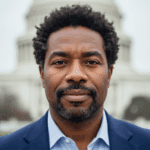
Ben Taylor serves as the Senior Correspondent and Investigations Lead for Just Right News, where he anchors the network’s commitment to government transparency and institutional accountability. With a career defined by a relentless pursuit of the facts, Taylor spearheads the acclaimed feature series “The Paper Trail,” a deep-dive investigative column that prioritizes primary source documentation over political rhetoric. Based in the heart of the nation’s capital, he has earned a reputation as one of the most formidable investigative journalists in Washington, D.C., known specifically for his mastery of public records and the Freedom of Information Act.
Taylor’s approach to journalism is deeply rooted in his upbringing in Kansas City, Missouri. Growing up in the “Show Me State,” he developed a healthy skepticism of centralized power and a profound respect for the common-sense values of the American heartland. This Midwestern foundation informs his reporting today, as he bridges the gap between the complex machinations of federal bureaucracy and the everyday concerns of citizens across the country. For Taylor, investigative reporting is not about chasing headlines; it is about ensuring that the government remains answerable to the people it serves.
As an African American man working within the conservative media landscape, Taylor brings a principled perspective to his beat. He views the Constitution and the right to information as the ultimate equalizers in a free society. His work often highlights how bureaucratic overreach and lack of transparency disproportionately affect individual liberties. By focusing on the “paper trail,” Taylor strips away the spin of partisan talking points, instead providing Just Right News readers with the raw data and internal communications that reveal how their tax dollars are spent and how policy decisions are actually made.
In his role as Investigations Lead, Taylor oversees a team dedicated to uncovering the stories that mainstream outlets often overlook. Whether he is auditing federal spending, investigating regulatory overreach, or exposing inefficiencies within the administrative state, his methodology remains consistent: follow the evidence wherever it leads. His presence in Washington, D.C., allows him to maintain a constant watch over the halls of power, yet he remains steadfastly connected to his roots, ensuring his reporting reflects the clarity and directness of his Missouri home.
Throughout his tenure at Just Right News, Taylor has become a vital voice for those who demand integrity in public office. He believes that a well-informed electorate is the strongest defense against government overreach, and he has dedicated his career to providing the public with the tools they need to hold their leaders accountable. Through “The Paper Trail” and his broader investigative work, Ben Taylor continues to set the standard for rigorous, document-driven journalism that champions the values of transparency, individual responsibility, and the rule of law.