

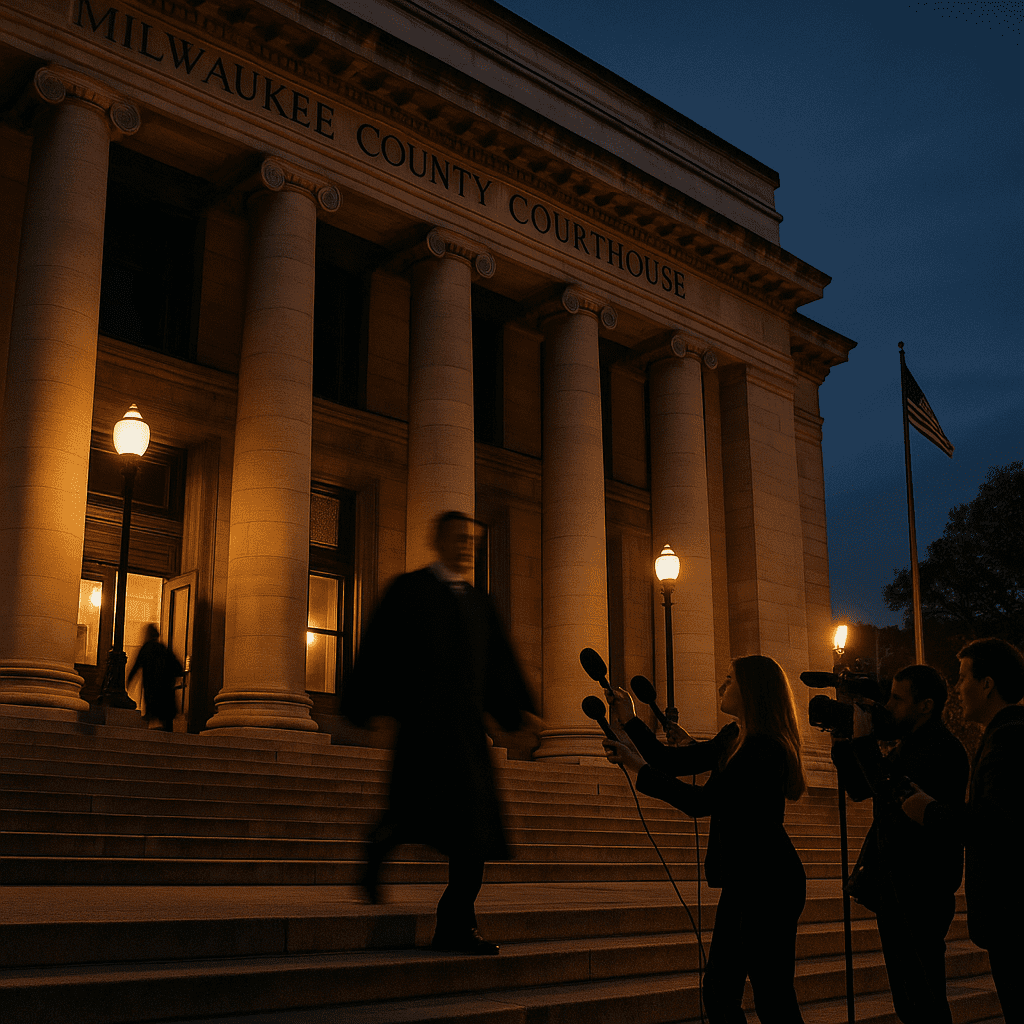
Interim U.S. Attorney Brad Schimel said lawyers are “discussing potential resolution” in the federal prosecution of Milwaukee County Judge Hannah Dugan, who is charged with obstruction and concealing an individual to prevent arrest after allegedly escorting an undocumented defendant out of her courtroom. Dugan’s defense insists she acted within her courtroom authority and is preparing for a trial scheduled to begin Dec. 15. The case has become a national flashpoint in clashes between the Trump administration’s immigration enforcement priorities and local judicial independence, with social media posts from federal officials intensifying partisan debate. Legal observers note that public comments by prosecutors and involvement from the Justice Department could constrain plea options as the December trial date nears.
Plea negotiations are underway in the federal case against Milwaukee County Judge Hannah Dugan, the interim U.S. attorney overseeing the matter said, even as her defense prepares for a December trial that has drawn national political attention. Interim U.S. Attorney Brad Schimel told The Associated Press that attorneys are “discussing potential resolution” of charges that Dugan obstructed federal agents and concealed an individual to prevent arrest, but he added that Dugan’s lawyers have not indicated a willingness to accept any offer.
Schimel framed the discussions as routine, saying plea negotiations are a “normal process to resolve a case and eliminate risk for both sides, to find a resolution that makes sense.” He spoke as the case, which began after an April courthouse encounter, has become a flashpoint in disputes between federal immigration authorities and local judicial officials.
Court documents show federal agents learned in April that an immigrant who was in the country illegally was scheduled to appear before Dugan on a state battery charge. The agents went to the Milwaukee County Courthouse to apprehend 31-year-old Eduardo Flores-Ruiz. According to charging papers, Dugan escorted Flores-Ruiz out of her courtroom through a private door. Flores-Ruiz briefly eluded agents but was captured after a foot chase; the Department of Homeland Security later announced he had been deported.
A week after the chase, authorities arrested Dugan at the courthouse and a federal grand jury returned an indictment in May. The indictment alleges obstruction and concealing an individual to prevent arrest. If convicted, Dugan faces up to six years in prison.
Dugan’s defense attorneys have maintained her innocence, arguing she acted within the scope of her courtroom authority and had control over movement in her courtroom. The defense has told the court it is preparing for trial next month, with the matter set to begin Dec. 15.
The prosecutor’s public acknowledgment that plea talks are ongoing added a new procedural layer to a case already weighted by politics and public commentary. John Vaudreuil, a former U.S. attorney in Wisconsin’s Western District, said he was surprised Schimel would comment publicly on plea negotiations because such discussions are generally private and public statements can be perceived as pressure on a defendant. Vaudreuil noted, however, that offers are routinely extended by prosecutors as a professional courtesy and that negotiations are not unusual.
Still, Vaudreuil warned that the political backdrop could limit the room for compromise. He suggested the upper echelons of the Justice Department may be involved and observed that direction from national officials could make a resolution short of trial less likely. He said, “If the attorney general of the United States says it has to be a felony and it has to be jail time, I don’t suspect that’s where the defense is starting from.”
Those partisan currents have been visible since the indictment. The case has intensified the broader clash between the Trump administration’s immigration enforcement priorities and local authorities. Democrats have accused the administration of trying to set an example to blunt judicial resistance to aggressive immigration policies. Federal agencies and officials have amplified that rhetoric on social media. FBI Director Kash Patel posted a photo on X showing Dugan being led from the courthouse in handcuffs, and the Department of Homeland Security posted on X that Dugan had taken the label “‘activist judge’ to a whole new meaning.”
The decision to make Schimel interim U.S. attorney also fed scrutiny. Attorney General Pamela Bondi appointed Schimel to the Eastern District of Wisconsin position on Monday. Schimel previously served as Wisconsin attorney general from 2015 to 2019 and has had an active career in state and federal arenas. He replaces acting U.S. Attorney Richard Frohling, who initiated the prosecution.
Courtroom authority and the boundary between state judicial functions and federal enforcement have become central legal questions in the case. Dugan has asserted she possesses the authority to control movement in her courtroom, a defense that raises issues about the interplay of state court procedures and federal immigration enforcement efforts.
Observers say the outcome carries implications beyond the individuals directly involved. The case is being watched for how it may affect judicial independence, local-federal cooperation in courthouse arrests, and the incentives prosecutors and defenders face under intense political scrutiny.
With trial set to begin Dec. 15, both sides are moving under tight timelines. Schimel has publicly acknowledged negotiation efforts, the defense says it remains ready to proceed, and the federal calendar will determine whether talks yield a resolution or the case proceeds to trial. Oversight from the Justice Department and political actors will likely continue to shape public statements and prosecutorial decisions as the December date approaches.
