


DHS plans to deploy roughly 250 Border Patrol agents to Louisiana for a two-month operation called “Swamp Sweep.” Federal planners have designated part of the FBI’s New Orleans field office as a command post and seek nearby naval sites for vehicles, equipment and “less lethal” munitions. Agents will stage before Thanksgiving, with a full sweep beginning in early December.
Federal planning documents and people familiar with the operation show the Department of Homeland Security is preparing to send about 250 Border Patrol agents to Louisiana for a two-month operation officials have labeled “Swamp Sweep.” The move is being framed inside federal ranks as a focused enforcement push that will use a network of staging sites, a centralized command post and prepositioned supplies — and it places Louisiana at the center of a broader state–federal test of mass deportation tactics.
Logistics for the deployment are already taking shape. Planning records reviewed by The Associated Press and people who spoke on the condition of anonymity show a portion of the FBI’s New Orleans field office has been designated as a command post. Vehicles and equipment are slated to be stored at a naval base five miles south of the city, where officials plan to hold thousands of pounds of so-called “less lethal” munitions, including tear gas and pepper balls. Homeland Security has also sought permission to use the Naval Air Station Joint Reserve Base New Orleans for up to 90 days beginning this weekend, according to documents obtained by the AP.
The timeline in the documents frames the operation as tightly scheduled. Agents are expected to arrive in New Orleans on Friday to stage equipment and vehicles just ahead of the Thanksgiving holiday, according to people familiar with the plans. The personnel are scheduled to return toward the end of the month after initial staging, with the full sweep slated to begin in early December — the deployment is expected to be under way in earnest on Dec. 1, planning materials indicate.
Operational tactics described in those planning documents mirror approaches used in other recent crackdowns. Border Patrol teams preparing to fan out across neighborhoods and commercial hubs throughout southeast Louisiana will cover New Orleans through Jefferson, St. Bernard and St. Tammany parishes and reach as far north as Baton Rouge, with additional activity planned in southeastern Mississippi. AP reporting on related operations in other cities notes agents have previously conducted aggressive arrest operations that included searches in churches, grocery stores and apartment complexes.
Command selection and past controversies add a legal and political overlay to the logistics. Gregory Bovino, the Border Patrol commander tapped to oversee the Louisiana sweep, has led similar large-scale operations elsewhere and has been criticized for tactics used in those campaigns. In Chicago, a federal judge publicly rebuked Bovino for misleading the court about threats posed by protesters and for deploying tear gas and pepper balls without justification during a downtown confrontation. Bovino’s role in Louisiana signals the administration’s intent to make the state a major enforcement priority.
The deployment also intersects with state politics. Louisiana’s Republican governor, Jeff Landry, has moved to align state policy with the White House enforcement agenda. That posture may smooth coordination at the state level, but it is likely to sharpen friction with liberal local officials in New Orleans who have long resisted federal sweeps. Observers and local leaders have described the arrangement as a potential collision point between federal enforcement priorities and city-level approaches to immigration enforcement.
The Department of Homeland Security declined to comment on the operation, and a DHS spokesperson, Tricia McLaughlin, said federal officials would not “telegraph potential operations” for safety and security reasons. People familiar with the operation said they could not publicly discuss details and spoke to the AP on condition of anonymity.
The scale and setup of the deployment make Louisiana a testing ground for how the administration intends to project federal enforcement into cities and parishes that may not welcome it. Staging at a federal command post, extended use of a reserve base and a large inventory of “less lethal” munitions suggest planners expect sustained operations and possible confrontations that could prompt legal challenges or independent oversight.
Local officials and civil rights advocates have in other jurisdictions pursued court remedies and public oversight after contentious operations. The Chicago rebuke of Bovino shows how judicial scrutiny can follow aggressive tactics. In Louisiana, similar scrutiny could arrive through federal or state courts, local oversight boards, or legislative inquiries once the sweep is underway.
As federal officials finalize staging and move personnel into place this week, the deployment’s immediate questions are practical as well as political: how command will be exercised from the FBI field office, how the naval storage site will be managed, and how coordination with state and local authorities will proceed. Agents are due in New Orleans on Friday to begin staging, DHS has requested base access for up to 90 days starting this weekend, and planners anticipate the full sweep beginning in early December. Those scheduled movements and the documented requests establish an initial calendar that will shape oversight, local responses and any legal challenges in the coming weeks.
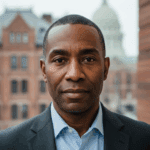
Dylan Brooks serves as the Senior Correspondent for Statehouses and Local Governance at Just Right News, where he brings a principled, constitutionalist lens to the often-overlooked machinery of state-level politics. As the lead voice behind the acclaimed feature series “Fifty Laboratories of Power,” Dylan has dedicated his career to the idea that the most impactful governance happens closest to home. His reporting consistently champions the Tenth Amendment, exploring how individual states can serve as testing grounds for innovative, conservative policy solutions that prioritize personal liberty and fiscal responsibility.
A native of Des Moines, Iowa, Dylan’s journalistic philosophy was forged in the heart of the American Midwest. Growing up in a community where local school board meetings and town halls were the bedrock of civic life, he developed a deep appreciation for the “retail politics” of the heartland. This upbringing instilled in him a fundamental belief that the American experiment is best preserved when power is decentralized. He carries the values of his Iowa roots into every assignment, maintaining a healthy skepticism of federal overreach and a steadfast commitment to the concerns of everyday citizens over the interests of the administrative state.
Now based in Madison, Wisconsin, Dylan operates from one of the nation’s most pivotal political battlegrounds. His location in a state capital known for its rigorous policy debates allows him to provide Just Right News readers with a front-row seat to the legislative process. From Madison, he tracks the ripple effects of statehouse decisions on local municipalities, ensuring that the connection between high-level policy and community impact is never lost. His work often highlights the success of conservative governors and legislatures in fostering economic growth, protecting parental rights, and securing the integrity of local institutions.
As an African American man in the conservative media landscape, Dylan offers a vital perspective on how limited government and free-market principles empower individuals and families. He frequently reports on how deregulation and school choice initiatives provide new avenues for success in underserved communities, challenging the monolithic narratives often presented by legacy media outlets. Dylan’s work is characterized by a commitment to the facts and a refusal to shy away from the complex realities of modern governance.
Throughout his tenure at Just Right News, Dylan has become a trusted authority for readers who value a rigorous, principled approach to the news. Whether he is dissecting a complex state budget or profiling a local grassroots movement, his goal remains the same: to provide the American public with the information they need to hold their local leaders accountable. By focusing on the “Fifty Laboratories of Power,” Dylan Brooks ensures that the vital work being done in statehouses across the country receives the national attention it deserves, always through a lens that respects the traditions and sovereignty of the American people.