

Rising energy costs and a cooling artificial intelligence sector are squeezing market indices as geopolitical tensions in the Strait of Hormuz persist.
The American taxpayer faces a dual-front economic challenge as the promise of the ‘AI revolution’ meets reality and energy markets brace for prolonged geopolitical friction. On Tuesday, the Nasdaq Composite retreated 0.9%, led by a significant sell-off in the technology sector. The downturn follows reports that OpenAI failed to meet its internal goal of one billion weekly active users and fell short of yearly revenue targets, casting a shadow over the massive capital expenditures currently fueling the sector.
The ripple effects of these missed targets were felt across the financial ecosystem. Nvidia shares dropped 1.6%, while Oracle and CoreWeave saw declines exceeding 4%. SoftBank Group, which recently completed a $40 billion commitment to OpenAI, saw its shares plummet 9.9% in Tokyo. These losses highlight the risks of centralized investment in speculative technology, particularly as OpenAI CFO Sarah Friar warns that revenue must scale rapidly to service approximately $600 billion in data center contracts.
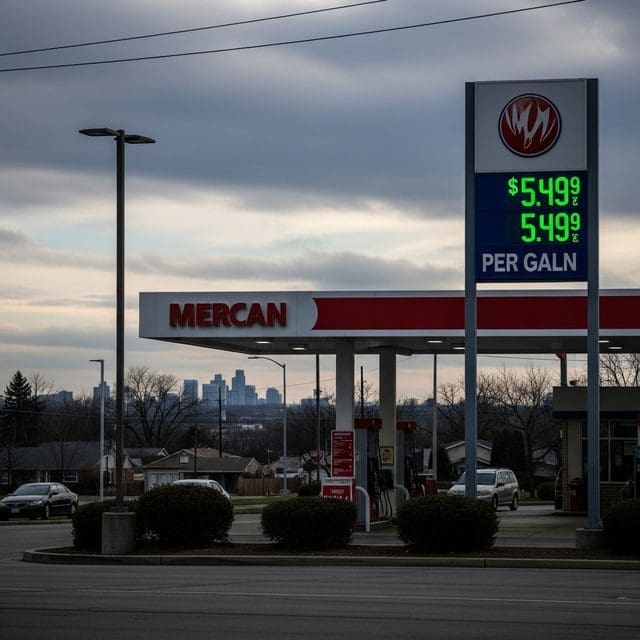
While technology stocks faltered, the cost of living for working households faced upward pressure from the energy sector. Brent crude futures for June delivery climbed to approximately $111 per barrel after President Trump rejected a proposal from Iran to reopen the Strait of Hormuz. The administration maintained that the blockade will remain until a comprehensive nuclear deal is reached, a stance reportedly supported by King Charles III. To mitigate the impact on domestic consumers, the President met with energy executives at the White House to discuss the ongoing maritime restrictions.
Adding to the complexity of the global energy market, the United Arab Emirates announced its intention to exit OPEC and OPEC+ effective May 1, 2026. This move, driven by strategic vision and frustrations over production quotas, introduces new uncertainty into global supply chains. U.S. crude prices responded by rising nearly 4%, settling near the $100 per barrel threshold. The OPEC Fund has launched a $1.5 billion initiative to help partner countries manage these rising economic pressures, yet the strain on the American consumer remains a primary concern.
Amidst these pressures, some sectors showed resilience. The semiconductor industry saw improved sentiment following strong earnings from Seagate and NXP, and Universal Music Group reported steady constant-currency growth. However, with BNP Paribas warning that $200-per-barrel oil could tip the global economy into recession, the focus remains on fiscal stability and the preservation of national sovereignty over volatile international markets. For the average worker, the combination of a cooling tech sector and rising fuel costs represents a significant headwind to the domestic economy.

Jordan Lee serves as the Senior Correspondent for Wall Street, Finance, and Monetary Systems at Just Right News. Based in the heart of the world’s financial capital, New York City, Lee brings a sharp, principled eye to the complex mechanisms that drive the global economy. His reporting is defined by a commitment to fiscal responsibility, the defense of the free market, and a deep-seated belief that a transparent monetary system is the bedrock of a free society.
Raised in Portland, Oregon, Lee’s perspective was forged in a city that has undergone significant cultural and economic shifts. His upbringing in the Pacific Northwest instilled in him a profound appreciation for the industriousness of small business owners and the importance of local economic stability. Watching the evolution of his hometown’s landscape sparked an early interest in how federal fiscal policy and large-scale financial trends eventually trickle down to the average citizen. This background provides him with a unique vantage point; he understands the growing disconnect between the policy-making elite and the reality of Main Street, a theme that frequently resonates throughout his work.
Now operating from his base in New York City, Lee bridges the gap between the high-stakes trading floors of Manhattan and the households of everyday Americans. He views the financial sector not merely as a collection of numbers and tickers, but as a vital engine of American prosperity that requires constant vigilance and accountability. His reporting often highlights the dangers of centralized financial control and the necessity of maintaining a system that rewards merit, risk-taking, and innovation.
As the creator and lead of the featured series, “The Invisible Economy,” Lee pulls back the curtain on the often-opaque world of monetary systems. He specializes in translating the dense jargon of central banking and international finance into actionable insights for the Just Right News audience. His work explores the “invisible” forces—such as inflationary pressures, regulatory creep, and the expansion of the administrative state—that erode the purchasing power of American families. By focusing on these systemic issues, Lee empowers readers to understand the hidden forces shaping their financial independence.
Lee’s journalistic philosophy is rooted in a steadfast commitment to traditional American values. As an Asian American professional who has navigated the competitive corridors of the financial world, he is a vocal advocate for meritocracy and the preservation of the American Dream. He believes that a stable currency and a predictable regulatory environment are essential for national sovereignty and individual liberty. His reporting frequently warns against the risks of government overreach in the private sector, arguing that the most effective solutions to economic challenges arise from competition and individual enterprise rather than bureaucratic mandates.
At Just Right News, Jordan Lee remains dedicated to providing a clear-eyed defense of the taxpayer. Whether he is analyzing market volatility or investigating the long-term implications of national debt, his mission is to provide the truth about where the money is going and what it means for the future of the country. Through his rigorous analysis and principled stance, Lee has become a trusted voice for those who value a strong, sovereign, and fiscally sound America.