


🎧 Listen to the summary:
Supporters of the Trump administration’s FEMA reforms argue the changes will return disaster response to state and local control, reduce federal bureaucracy, and cut wasteful spending while focusing aid on immediate survivor needs.
The administration has taken a series of administrative steps since early 2025 to implement that agenda.
Key actions documented in reporting include a directive to remove climate, diversity and immigration language from FEMA guidance; a pause or halt of the BRIC mitigation grant program; a stoppage of the Federal Flood Risk Management Standard; broad personnel cuts and a hiring freeze; and a reorganization that moves some responsibilities toward states.
Implementation has combined internal memos, executive orders, and personnel moves.
A FEMA memo directed staff to replace or remove terms such as social vulnerability, net zero, and noncitizen and recommended alternative phrasing for recovery doctrine. Agency leaders have paused new grant notices, reviewed existing awards, and ordered program evaluations intended to align grants with the administration’s priorities to shift more responsibility to state and local governments.
Personnel actions include the dismissal of hundreds of probationary employees, the replacement of FEMA’s acting administrator, and a directive that many field positions undergo review before renewal.
Officials and watchdogs report trade-offs and emerging inefficiencies: canceled or delayed mitigation projects, projects halted midconstruction, reduced incident management capacity before hurricane season, and new administrative reviews that add steps to grant processing. States and local recipients face uncertainty over award status and timing; some have begun litigation to restore funds that were paused or rescinded.
Reporting also documents claims that some funds were redirected toward immigration-related projects and that language changes could obscure measures used to identify communities at higher risk.
Critics note contradictions between simplifying aid and increasing oversight burdens, and warn that shifting duties may strain state capacity and delay response when disasters strike. Likely unintended consequences listed in coverage include weaker pre-disaster mitigation, legal challenges, slower grant delivery, deeper staffing shortages, and the erosion of data-driven targeting tools used for recovery.
Oversight includes congressional inquiries, watchdog audits and state lawsuits; cited guardrails include the Stafford Act plus GAO and OIG routine review.
—
Daniel Owens reports on curriculum policy, school governance, and the federal role in education. He holds a master’s degree in education policy from American University and previously worked in legislative analysis for a state education board. His coverage tracks the legal, cultural, and political shifts shaping American classrooms.
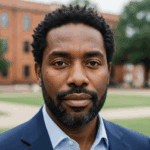
Daniel Owens serves as a Senior Correspondent for Just Right News, where he leads the newsroom’s coverage of Education, Workforce, and Upward Mobility. In an era where the national conversation often overlooks the practical foundations of success, Owens brings a principled perspective to the forefront of the media landscape. His work is defined by a commitment to the idea that a strong society is built on the pillars of quality education, a robust work ethic, and the removal of bureaucratic barriers to individual achievement.
Born and raised in Cleveland, Ohio, Owens’s worldview was shaped by the industrial landscape of the Midwest. Growing up in a city known for its grit and resilience, he witnessed firsthand the transformative power of steady employment and the devastating effects of economic stagnation. This background instilled in him a deep respect for the American worker and a healthy skepticism toward top-down government solutions that often fail to reach the communities they intend to help. As an African American man who has navigated the path to professional success, Owens approaches his beat with a nuanced understanding of how meritocracy and personal responsibility intersect with opportunity. He frequently draws on his roots to highlight the importance of family stability and community-led initiatives in fostering the next generation of leaders.
At Just Right News, Owens is the architect of the acclaimed feature series, “The Learning Curve.” Through this platform, he explores the evolving landscape of American schooling, from the rise of the school choice movement to the revitalization of trade schools and vocational training. He frequently challenges the status quo of higher education, advocating for a return to academic rigor and the practical alignment of degrees with market demands. For Owens, education is not merely about obtaining credentials; it is about equipping young people with the tools necessary to lead self-sufficient, meaningful lives. His reporting on “The Learning Curve” has become essential reading for parents and policymakers who believe that educational competition and parental rights are the keys to a brighter future.
Now based in Raleigh, North Carolina, Owens finds himself at the heart of one of the nation’s most dynamic regions for innovation and growth. Raleigh’s unique blend of traditional values and a fast-paced economy provides the perfect backdrop for his reporting on the modern workforce. From the tech hubs of the Research Triangle to the rural communities of the South, he tracks how shifts in the economy are impacting families and local industries. His reporting often highlights the success stories of entrepreneurs and workers who are thriving by embracing the values of hard work and innovation.
Throughout his career, Daniel Owens has remained a steadfast voice for the student seeking a better path and the worker striving for a better life. His reporting for Just Right News serves as a vital resource for readers who value common-sense solutions to the challenges of the 21st-century economy. By focusing on the intersection of policy and the human spirit, Owens continues to provide a roadmap for how individuals and communities can achieve lasting upward mobility.