

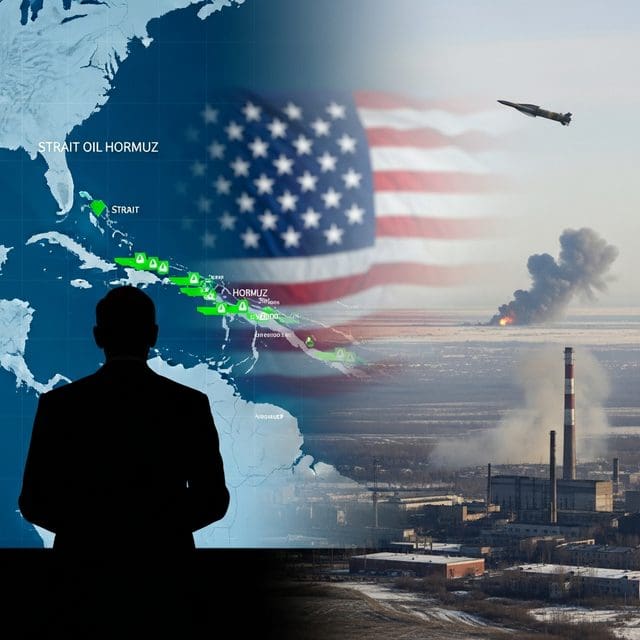
President Trump is conditioning a final Iran settlement on the mandatory expansion of the Abraham Accords, linking Middle Eastern stability to a broader regional recognition of Israel.
The Trump administration is attempting to leverage a fragile diplomatic opening with Tehran to fundamentally reorder the Middle East, demanding that regional powers formally recognize Israel as the price for a permanent end to hostilities. President Trump has issued what he termed a ‘mandatory request’ for a coalition of Muslim-majority nations—including Qatar, Pakistan, Egypt, Jordan, and Turkey—to join the Abraham Accords en masse. This maneuver seeks to transform a bilateral ceasefire into a permanent pro-Western security architecture, even as the Pentagon remains on high alert for a potential resumption of the conflict.
Secretary of State Marco Rubio reported on May 24 that while the administration prefers a diplomatic solution, the path forward remains fraught with uncertainty. The U.S. and Iran have reached basic terms to extend a ceasefire for 60 days and reopen the vital Strait of Hormuz, a move that has already sent global oil prices tumbling. The stakes for the American heartland are immediate; as of May 20, average gasoline prices had surpassed $4 per gallon in every U.S. state. To mitigate this pressure, the administration is exploring unconventional energy avenues, including a proposal from Louisiana Governor Jeff Landry, serving as a special envoy to Greenland, who suggested the territory could eventually help relieve global oil pressures and reduce domestic energy costs.
Despite the diplomatic activity, the administration faces significant domestic and international headwinds. Hard-line Republicans have criticized the emerging plan, arguing that any deal short of total Iranian capitulation is a strategic error. These critics favor a harder line against Tehran, mirroring concerns voiced by figures like General Michael Flynn, who warned that the Iranian regime cannot be trusted in negotiations. Meanwhile, the reality on the ground in the Middle East remains volatile. In Turkey, a key player in the proposed accord expansion, police recently stormed the offices of the opposition CHP party, using tear gas and rubber bullets over a three-day period. In Syria, the government has moved to consolidate power, holding legislative elections in the Hassakeh province and Kobani—areas only recently reintegrated after intense fighting in January.
The administration’s focus on the Middle East coincides with a brutal escalation in Eastern Europe. Russian forces have launched a ‘systematic’ air campaign against Ukraine’s defense-industrial facilities in and around Kyiv. Utilizing the Oreshnik hypersonic ballistic missile, Moscow has targeted the deeper-rear logistics and manufacturing hubs that Ukraine relies on to replenish its artillery and air defense stocks. This campaign, described as one of the heaviest in four years, involved nearly 90 missiles and 600 drones in a single barrage. The Kremlin has characterized these strikes as retaliation for a Ukrainian UAV attack on a college in Russian-occupied Starobilsk, but the strategic effect is the systematic degradation of Ukraine’s leverage in any future peace talks.
As the Trump administration navigates these dual crises, the ‘peace through strength’ doctrine is being tested by a realist calculation of power. The White House is effectively linking the restoration of global energy markets to a total reconfiguration of Arab-Israeli relations. While Kazakhstan has already signaled its intent to join the Abraham Accords, and nations like Saudi Arabia show ‘serious interest,’ the final outcome depends on whether the U.S. can provide the security guarantees and missile-shield assurances these nations demand in exchange for public recognition of Israel. For now, the administration remains in no hurry to finalize a deal, maintaining maximum pressure while keeping the door to diplomacy open.

Olivia Kendall serves as the Senior Correspondent for Geopolitics, Defense, and Foreign Policy at Just Right News, where she provides a principled, conservative perspective on the complex forces shaping the global stage. With a career dedicated to deconstructing the intricacies of international relations, Kendall has become a trusted voice for readers who value national sovereignty, a robust military, and a foreign policy that prioritizes American interests above all else.
A native of Washington, D.C., Kendall’s professional journey is deeply rooted in her upbringing within the nation’s capital. Growing up in the epicenter of American political life, she developed an early and profound understanding of how policy is crafted and, more importantly, how it often fails to account for the values of the American heartland. This unique vantage point allowed her to witness firsthand the rise of globalist bureaucracies, fueling her commitment to reporting that champions the constitutional foundations of the United States. Her background as a British White American further informs her worldview, providing her with a keen appreciation for the Western tradition and the enduring importance of the “Special Relationship” in maintaining global stability.
Now based in Arlington, Virginia, Kendall operates from the doorstep of the Pentagon and the heart of the nation’s defense establishment. Her proximity to the decision-makers in the military and intelligence communities allows her to provide boots-on-the-ground reporting that is both timely and deeply informed. For Kendall, Arlington is more than just a base of operations; it is a daily reminder of the sacrifices made by the men and women in uniform. This connection to the defense community drives her rigorous coverage of military readiness and her advocacy for a “peace through strength” approach to diplomacy.
At Just Right News, Kendall is perhaps best known for her acclaimed feature series, “The World’s Shadow on America.” In this ongoing project, she explores the direct correlation between international developments and the daily lives of American citizens. Whether she is analyzing the encroachment of foreign adversaries in domestic supply chains or the impact of international treaties on local economies, Kendall’s work serves as a vital bridge between distant geopolitical shifts and their consequences at home. She rejects the notion that foreign policy is an abstract concern for elites, instead proving that what happens in the corridors of power in Brussels or Beijing has a tangible “shadow” that falls across every American doorstep.
Throughout her tenure, Kendall has remained a steadfast critic of international overreach and a vocal proponent of a clear-eyed, realistic foreign policy. She brings a sharp analytical mind to her beat, often challenging the prevailing narratives of the mainstream media to uncover the underlying truths that affect national security. Her reporting is characterized by a refusal to compromise on the truth and a dedication to the idea that a strong, secure America is the world’s best hope for liberty. As a Senior Correspondent, Olivia Kendall continues to lead the charge in providing the essential context and conservative insight necessary to navigate an increasingly volatile world.