

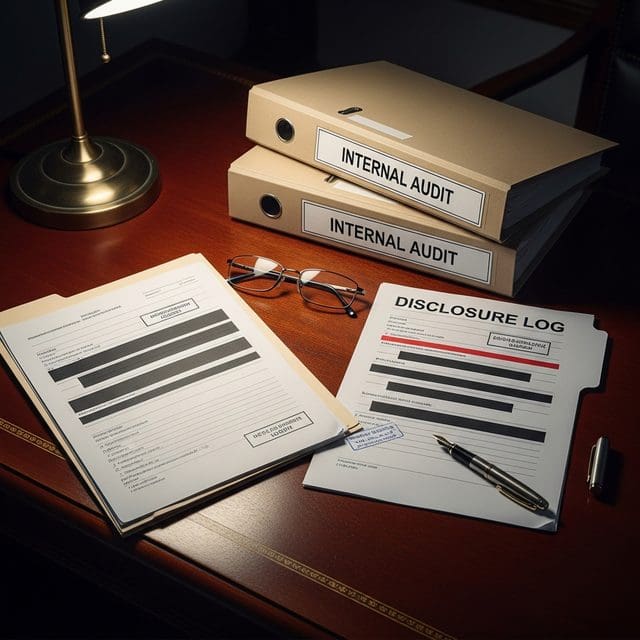
Newly released FOI documents and whistleblower disclosures reveal systemic transparency issues and data integrity concerns within major law enforcement and regulatory agencies.
A series of newly released public records and internal disclosures has cast a spotlight on the administrative state’s struggle with transparency, ranging from law enforcement data integrity in the United Kingdom to regulatory independence in Washington. These records, obtained through Freedom of Information (FOI) requests and whistleblower channels, suggest a pattern of bureaucratic shielding that prioritizes institutional reputation over public accountability.
In Scotland, a May 8, 2026, FOI release from the Scottish government provided a rare window into internal correspondence regarding Police Scotland’s crime-data recording systems. The documents detail how Safer Communities officials navigated concerns regarding data integrity and the recording of false allegations. This disclosure follows an inspectorate report raising alarms over the agency’s conduct, discipline, and whistleblowing systems. The audit noted that officers under investigation reported feeling suicidal, suggesting a breakdown in internal ethical mechanisms. Police Scotland’s own disclosure logs, which track roughly 3,000 requests annually, now include 2026 entries on disciplinary data that allow for a direct test of transparency claims against internal practices.
Across the Atlantic, the Commodity Futures Trading Commission (CFTC) faces renewed scrutiny as it prepares for expanded crypto oversight under the CLARITY Act. Investigative reports indicate that CFTC staff who previously questioned major firms were sidelined, raising questions about the agency’s internal culture. This follows a history of friction within the agency’s Office of the Inspector General, where a watchdog previously alleged that whistleblower identities were improperly disclosed and funds were misused. While the CFTC’s Division of Enforcement issued a February 2026 advisory regarding the misuse of nonpublic information, the paper trail suggests internal policing remains a point of contention for congressional overseers demanding a clear wall between regulatory action and political influence.
In the private sector, the European Union is moving toward a substantial financial penalty for Google. Based on a 2025 antitrust probe, regulators are preparing a fine in the high triple-digit millions of euros. The investigation centers on whether the tech giant favored its own services in search results. This enforcement action coincides with broader market shifts, such as oil prices dropping over 10% on April 17, 2026, following claims by the U.S. executive and Iran’s foreign minister that the Strait of Hormuz remained open for transit, highlighting how transparency in communication directly impacts global markets.
Transparency advocates are also monitoring the fallout of a March 2026 federal district court ruling in New York Times v. Department of Defense. The court struck down Pentagon press regulations as unconstitutional prior restraint and viewpoint discrimination. However, this gain is tempered by the continued classification of the “Department of Government Efficiency” as part of the presidential records system. This designation, established in early 2025, effectively shields the entity’s records from FOIA requests until at least 2034, creating a decade-long gap in public accountability for the influential advisory body.
Finally, localized investigations continue to rely on the slow process of forensic discovery. In Buckinghamshire, Thames Valley Police launched a murder probe after a woman was found dead on May 24, 2026. While a 58-year-old man has been arrested, the eventual disclosure of forensic reports and inquest files will be the only way for the public to verify the integrity of the investigation. Whether at the level of local law enforcement or international regulatory bodies, the paper trail remains the primary tool for ensuring that those granted the power of the state remain answerable to the people.

Ben Taylor serves as the Senior Correspondent and Investigations Lead for Just Right News, where he anchors the network’s commitment to government transparency and institutional accountability. With a career defined by a relentless pursuit of the facts, Taylor spearheads the acclaimed feature series “The Paper Trail,” a deep-dive investigative column that prioritizes primary source documentation over political rhetoric. Based in the heart of the nation’s capital, he has earned a reputation as one of the most formidable investigative journalists in Washington, D.C., known specifically for his mastery of public records and the Freedom of Information Act.
Taylor’s approach to journalism is deeply rooted in his upbringing in Kansas City, Missouri. Growing up in the “Show Me State,” he developed a healthy skepticism of centralized power and a profound respect for the common-sense values of the American heartland. This Midwestern foundation informs his reporting today, as he bridges the gap between the complex machinations of federal bureaucracy and the everyday concerns of citizens across the country. For Taylor, investigative reporting is not about chasing headlines; it is about ensuring that the government remains answerable to the people it serves.
As an African American man working within the conservative media landscape, Taylor brings a principled perspective to his beat. He views the Constitution and the right to information as the ultimate equalizers in a free society. His work often highlights how bureaucratic overreach and lack of transparency disproportionately affect individual liberties. By focusing on the “paper trail,” Taylor strips away the spin of partisan talking points, instead providing Just Right News readers with the raw data and internal communications that reveal how their tax dollars are spent and how policy decisions are actually made.
In his role as Investigations Lead, Taylor oversees a team dedicated to uncovering the stories that mainstream outlets often overlook. Whether he is auditing federal spending, investigating regulatory overreach, or exposing inefficiencies within the administrative state, his methodology remains consistent: follow the evidence wherever it leads. His presence in Washington, D.C., allows him to maintain a constant watch over the halls of power, yet he remains steadfastly connected to his roots, ensuring his reporting reflects the clarity and directness of his Missouri home.
Throughout his tenure at Just Right News, Taylor has become a vital voice for those who demand integrity in public office. He believes that a well-informed electorate is the strongest defense against government overreach, and he has dedicated his career to providing the public with the tools they need to hold their leaders accountable. Through “The Paper Trail” and his broader investigative work, Ben Taylor continues to set the standard for rigorous, document-driven journalism that champions the values of transparency, individual responsibility, and the rule of law.