

Oil prices dropped 5% following news of a potential U.S.-Iran ceasefire, offering a glimmer of relief for global markets strained by high energy costs and supply chain instability.
Global energy markets are showing signs of cautious optimism as the Trump administration nears a tentative resolution to the conflict with Iran. Following months of military tension that sent crude prices soaring, oil futures dropped approximately $5 per barrel on May 25. This shift comes as negotiators outline a 60-day ceasefire extension and the potential reopening of the Strait of Hormuz, a critical maritime artery. The emergence of these deal outlines has provided a cooling effect on a market that had surged more than 30% since the U.S. and Israel launched strikes against Iran in late February.
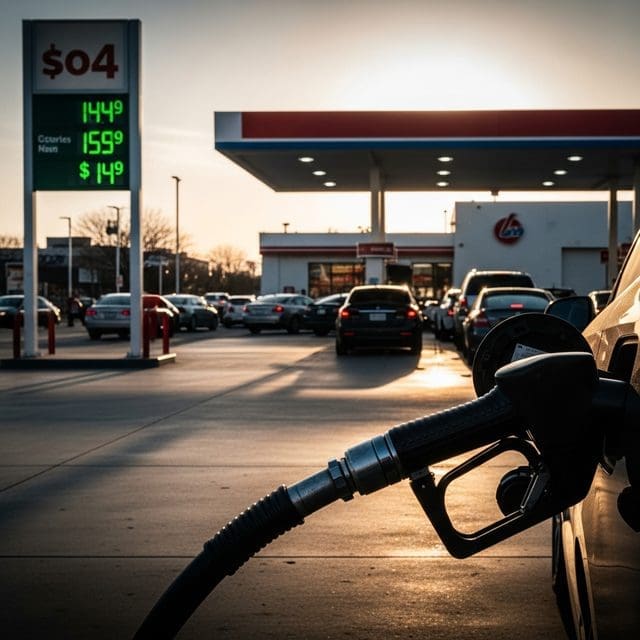
Despite the recent dip in crude prices, the economic reality for American households remains strained. The national average for a gallon of gasoline stood at $4.53 on May 23, the highest level since 2022. While industry analysts at GasBuddy warn that prices could climb to $4.80 over the summer, AAA reports that a record 39.1 million Americans still plan to travel by car this Memorial Day weekend. This resilience in demand, coupled with retail prices sitting 45% above pre-conflict levels, highlights the persistent inflationary pressure on the domestic economy. For many families, fuel costs are now a primary driver of shifting spending habits.
The geopolitical stakes remain high as the deal awaits finalization. White House officials indicate that the agreement is pending a review by Iranian Supreme Leader Mojtaba Khamenei, a process expected to take several days. President Trump has signaled a pragmatic approach, stating on May 20 that he is in no hurry to finalize a comprehensive treaty and may instead prioritize a smaller-scale agreement focused specifically on securing the Strait of Hormuz. This strategy has drawn criticism from hard-line Republicans who favor a more aggressive stance, arguing that concessions could be viewed as a sign of weakness.
The ripple effects of the energy crisis are being felt globally, forcing central banks to navigate a narrow path between growth and stability. In the Czech Republic, Prime Minister Petr Fiala has urged interest rate cuts to combat inflation risks driven by energy costs, even as the state-linked utility CEZ raised its 2026 profit outlook to 34 billion crowns due to high generation prices. Similarly, Nigeria’s central bank has maintained interest rates at 26.5%, characterizing the energy-driven inflation shock as transitory. In Nigeria, the crisis is compounded by energy theft and obsolete infrastructure, which have deepened the nation’s electricity instability.
Market analysts warn that the window for a resolution is narrow. If the Strait of Hormuz remains closed past August 2026, commodity markets could face a supply shock reminiscent of 2008. This concern persists despite U.S. stock market benchmarks reaching record highs on May 24, driven by earnings strength. The disconnect between equity performance and commodity volatility underscores the fragility of the current recovery. While long-term projections from BloombergNEF suggest solar could become the world’s primary electricity source by 2032, the immediate global economic health remains tethered to hydrocarbon logistics in the Middle East.
Secretary of State Marco Rubio noted on May 22 that while progress in talks is visible, the outcome remains uncertain. The administration continues to weigh the necessity of energy independence against the immediate need for market stabilization. Rubio also assessed the likelihood of a diplomatic solution with Cuba as low, keeping military options open. For the American taxpayer, the success of these diplomatic efforts will be measured not in headlines, but in the price displayed at the pump during the peak summer driving season. The trade-off between long-term strategic pressure and short-term economic relief remains the defining challenge of current U.S. energy policy.

Mark Davis serves as the Senior Correspondent for Energy, Climate, and Resource Economics at Just Right News. In an era where the conversation around the environment is often dominated by alarmism and top-down mandates, Mark provides a vital, market-oriented perspective on the complex forces shaping our world. As the lead voice behind the acclaimed feature series “Power and the Planet,” he explores the intersection of environmental policy, global energy markets, and the fundamental economic principles that sustain modern civilization.
Mark’s pragmatic approach to resource management was forged in the high desert of his hometown, Albuquerque, New Mexico. Growing up in a region defined by both its breathtaking natural beauty and its rugged, resource-dependent landscape, he developed an early appreciation for the delicate balance between conservation and utilization. New Mexico’s unique position as a hub for both traditional energy production and cutting-edge scientific research provided Mark with a front-row seat to the evolution of the American energy sector. This upbringing instilled in him a deep-seated belief that true environmental stewardship is inseparable from economic prosperity and technological innovation.
Now based in Boulder, Colorado, Mark operates from the heart of the nation’s climate research community. While Boulder is often seen as a bastion of environmental idealism, Mark utilizes his post to provide a necessary counterweight, grounded in the realities of resource economics. He understands that energy policy does not exist in a vacuum; it has tangible consequences for the American taxpayer, the stability of the national power grid, and the strength of the domestic manufacturing sector. By reporting from the front lines of the climate debate, he is able to challenge prevailing narratives with hard data and a commitment to the principles of the free market.
Throughout his tenure at Just Right News, Mark has distinguished himself by focusing on the “Resource Economics” aspect of his beat. He frequently highlights the hidden costs of rapid energy transitions and advocates for an “all-of-the-above” energy strategy that prioritizes American energy independence. His work often shines a light on the geopolitical implications of resource scarcity, arguing that a secure nation must first be an energy-secure nation. Whether he is analyzing the impact of federal land-use regulations or investigating the supply chains required for new technologies, Mark remains focused on how policy decisions affect the lives and livelihoods of everyday citizens.
In “Power and the Planet,” Mark continues to bridge the gap between complex scientific concepts and the economic realities facing the country. He rejects the false choice between a healthy environment and a thriving economy, instead seeking out solutions that leverage American ingenuity and private-sector competition. For Mark, reporting on the climate is not about following the latest trends, but about ensuring that the conversation remains tethered to the foundational values of liberty, property rights, and fiscal responsibility. His contributions ensure that Just Right News readers receive a comprehensive, clear-eyed view of the challenges and opportunities defining the future of our planet.