

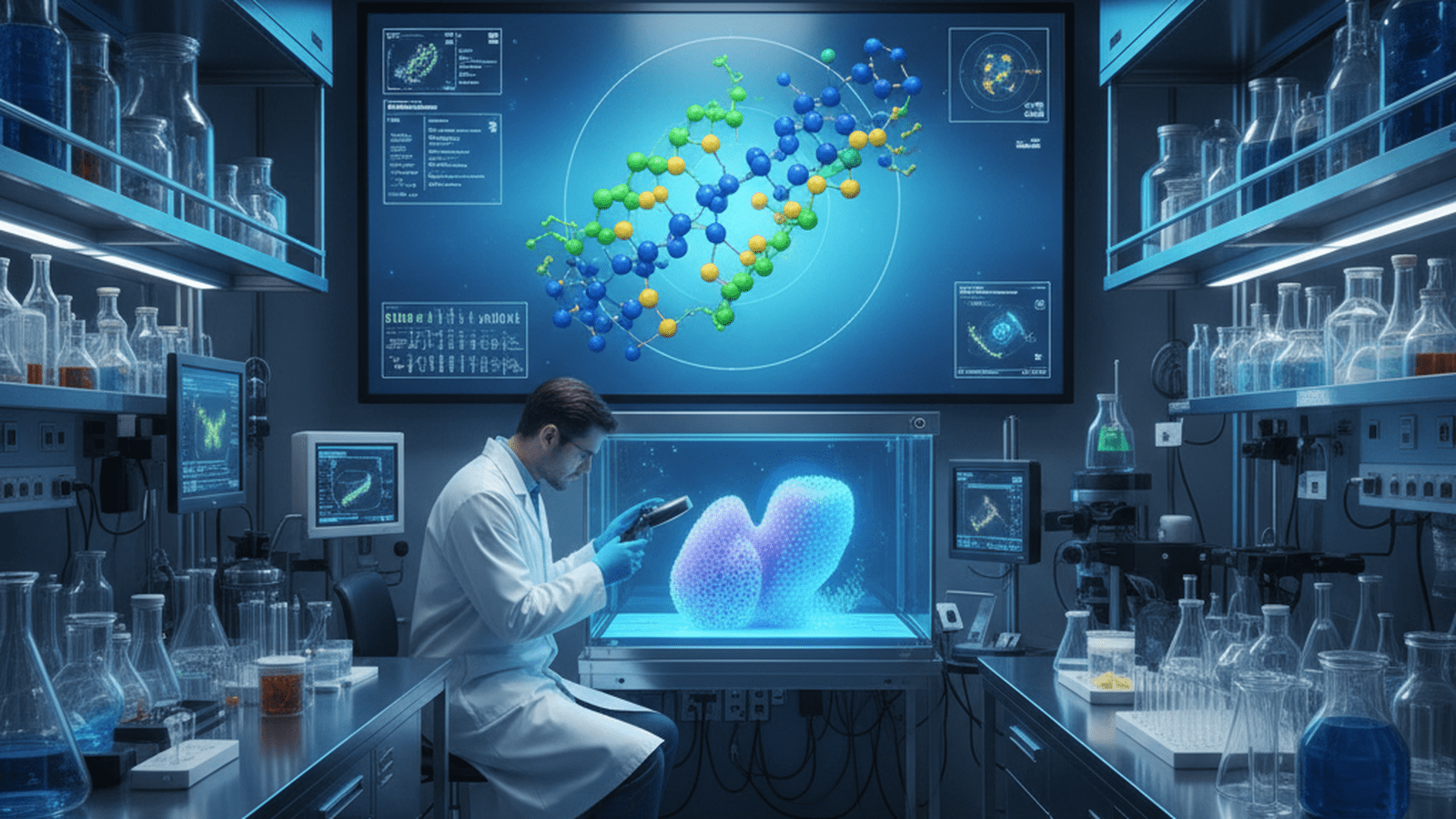
A research team based at a Norwegian university hospital has discovered a powerful anti-inflammatory molecule within the deep-sea sponge Geodia barretti. The compound effectively inhibits cytokine production in human cells, offering a new potential treatment for chronic inflammatory conditions.
TLDR: Scientists have isolated a unique anti-inflammatory peptide from the deep-sea sponge Geodia barretti. Collected from the North Atlantic, the molecule suppresses harmful immune responses in human cells. This discovery highlights the blue pharmacy potential of deep-sea ecosystems for developing new treatments for chronic inflammation and respiratory distress.
Researchers at the University Hospital of North Norway and the Arctic University of Norway have identified a potent anti-inflammatory compound derived from Geodia barretti, a large, structural sponge found in the cold depths of the North Atlantic. This discovery, bridging the fields of deep-sea oceanography and clinical immunology, offers a potential new pathway for treating chronic inflammatory diseases. The molecule, a specialized peptide, appears to suppress the overproduction of cytokines that lead to tissue damage in conditions like asthma, rheumatoid arthritis, and even severe viral infections.
The research team utilized advanced remotely operated vehicles (ROVs) equipped with high-definition cameras and precision robotic arms to harvest samples from depths exceeding 500 meters. Unlike shallow-water species, deep-sea sponges have evolved unique chemical defenses to survive in high-pressure, low-temperature environments where nutrients are scarce and competition for space is fierce. These secondary metabolites often possess bioactivity that is entirely absent in terrestrial plants or shallow-marine life. Once the samples were brought to the surface in pressurized containers, they were immediately transferred to a hospital-based laboratory for high-throughput screening against human cell lines.
Initial tests focused on the sponge’s ability to modulate the immune response, specifically looking for alternatives to traditional steroids which often carry heavy side effects. The researchers found that the extracted compounds significantly reduced the activity of the NF-kappaB pathway, a primary regulator of inflammation. In a hospital setting, this translates to a potential reduction in the cytokine storms often seen in patients with acute respiratory distress syndrome. The specificity of the sponge-derived molecule is particularly notable; it targets inflammatory markers without compromising the overall immune system’s ability to fight off bacterial pathogens, a common drawback of current immunosuppressants.
The transition from oceanographic collection to medical application required a multi-disciplinary approach. Oceanographers provided the ecological context, identifying the specific environmental stressors—such as extreme pressure and cold—that trigger the production of these protective molecules. Meanwhile, the hospital research team mapped the molecular interactions within human lung and skin cells using cryo-electron microscopy. This synergy allowed the team to isolate the most effective variants of the peptide and begin the process of structural optimization for human use.
One of the primary challenges in marine pharmacology is the sustainable sourcing of raw materials. Because Geodia barretti grows at a rate of only a few millimeters per year in the deep ocean, large-scale harvesting is ecologically unfeasible and would devastate the benthic ecosystems. To address this, the research team is working on biomimetic synthesis, a process that recreates the sponge’s complex molecules in a laboratory setting. By identifying the genetic sequences responsible for the peptide’s production, scientists hope to use microbial fermentation—essentially brewing the medicine—to produce the drug candidate at scale without ever touching the ocean floor again.
This breakthrough underscores the untapped medical potential of the world’s oceans, particularly the deep-sea blue pharmacy. As climate change alters ocean chemistry and temperature, the habitats of these unique organisms are increasingly at risk, potentially erasing medical cures before they are even discovered. The researchers emphasize that protecting deep-sea biodiversity is not only an environmental imperative but a necessity for future medical innovation. The next phase of the study will involve preclinical trials to assess the safety and efficacy of the synthetic version of the compound in animal models, with the hope of moving to human trials within the decade.

Rachel Vaughn serves as a Senior Correspondent for Just Right News, where she leads the network’s coverage of Global Health, Climate, and Development. With a career defined by intellectual rigor and a commitment to principled reporting, Rachel provides a vital conservative perspective on some of the most complex and high-stakes issues facing the world today. Her work is characterized by a refusal to accept bureaucratic narratives at face value, focusing instead on how international policies impact national sovereignty, individual liberty, and the American taxpayer.
Raised in New Haven, Connecticut, Rachel grew up in an environment dominated by elite academic discourse. This upbringing provided her with a front-row seat to the inner workings of the American establishment, but it also instilled in her a healthy skepticism of the “ivory tower” consensus. She learned early on that while academic theories may sound promising in a lecture hall, they often fail to account for the practical realities of the working class. This background drives her to bridge the gap between high-level policy discussions and the common-sense concerns of everyday citizens, ensuring that her reporting remains grounded and accessible.
Now based in Burlington, Vermont, Rachel operates from a unique vantage point within one of the nation’s most progressive political landscapes. Living and working in a region that often serves as a testing ground for radical social and environmental experiments allows her to witness the real-world consequences of these policies firsthand. From her base in the Green Mountain State, she provides Just Right News readers with essential “boots on the ground” reporting, documenting the friction between local mandates and the constitutional freedoms of the individual. Her presence in Burlington ensures that her critiques of globalist agendas are informed by a direct understanding of how those ideologies manifest at the local level.
In her acclaimed feature series, “Planetary Stakes,” Rachel explores the intersection of international development and environmental stewardship. She rejects the alarmism often found in mainstream media, opting instead for a sober analysis of the economic and geopolitical costs of global climate agreements. Her reporting frequently highlights the importance of market-driven innovation and the role of American leadership in fostering global health without ceding authority to unelected international bodies. Through “Planetary Stakes,” she has become a leading voice for those who believe that true conservation and public health are best achieved through transparency, accountability, and the protection of private property rights.
Throughout her tenure at Just Right News, Rachel has distinguished herself as a journalist who is unafraid to ask difficult questions of global institutions. Whether she is investigating the influence of non-governmental organizations on domestic policy or analyzing the fiscal transparency of international health initiatives, her goal remains the same: to provide her audience with the facts necessary to navigate an increasingly interconnected world. Her blend of East Coast intellectual heritage and her current immersion in the political heart of the Northeast makes her an indispensable asset to the newsroom and a trusted source for readers seeking a principled, conservative take on the issues that define our era.