

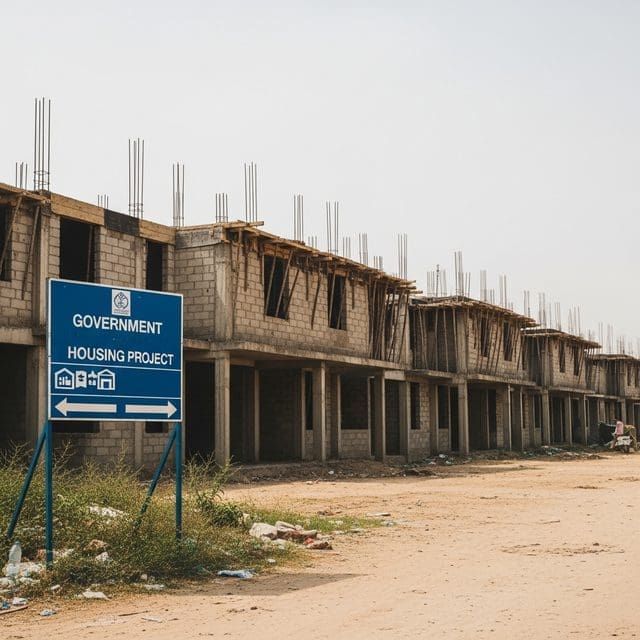
Investigators in Karnataka have uncovered a ₹23.3 crore misappropriation scheme where officials used falsified records to siphon funds meant for low-income housing.
The promise of secure, affordable housing for the most vulnerable members of society has been undermined by systemic corruption in Karnataka, where investigators have uncovered a massive fraud scheme involving the Pradhan Mantri Awas Yojana (Urban) works. The Belagavi Lokayukta has registered cases against several high-ranking officials and contractors following allegations that ₹23.3 crore was siphoned off from projects intended for slum redevelopment in Ramdurg. This case serves as a stark reminder of how bureaucratic overreach, when left unchecked by rigorous oversight, directly erodes the property rights and living standards of the poor.
According to investigative reports led by Inspector Venkatesh Yadahalli, the core of the deception relied on a sophisticated fabrication of inspection records. Officials allegedly utilized fake completion certificates and manipulated GPS-based photographic evidence to claim that hundreds of homes were finished and ready for occupancy. Between April 2019 and November 2024, 13 separate bills totaling approximately ₹29.4 crore were cleared by the state. However, the Lokayukta SP Prasanna Desai reported that only roughly ₹6.1 crore in actual materials reached the 600 intended beneficiaries. The remaining ₹23.3 crore vanished into the pockets of those tasked with managing the project.
The probe has identified several key figures in the scandal, including Shambulingappa B.S., a retired assistant executive engineer of the Karnataka Slum Development Board, and Prasad N.P., a contractor with National Projects Construction Corporation Ltd (NPCC). The investigation has rapidly expanded beyond the Belagavi district, with coordinated raids targeting at least eight locations. Search teams have descended upon offices and private residences in Hubballi, Vijayapura, Bagalkot, and the NPCC headquarters in Bengaluru. Investigators have reportedly seized a trove of “crucial documents” related to billing cycles and inspection logs that suggest the fraud was not an isolated error but a calculated effort to bypass consumer safeguards.
This Belagavi case is symptomatic of a broader pattern of housing-scheme abuse that has plagued the region. Previous investigations in Haveri under the same PMAY program found that contractors were billing the government for full project costs while providing only a fraction of the necessary building materials. In those instances, impoverished beneficiaries were often forced to attempt the construction of their own homes with inadequate supplies. Furthermore, a separate March 2026 Lokayukta probe confirmed similar corruption within the Rajiv Gandhi housing scheme, lending weight to long-standing allegations of graft championed by local leaders like MLA B.R. Patil.
Politically, the fallout from these revelations has triggered significant friction within the ruling government. Allegations regarding the corrupt allocation of roughly 950 houses, coupled with a leaked phone call involving the housing minister’s office, have forced Housing Minister B.Z. Zameer Ahmed Khan to issue public denials and call for a formal departmental inquiry. For the taxpayer, these developments are a cautionary tale regarding the inefficiency of state-managed housing. While the U.S. House of Representatives recently passed an amendment to the 21st Century ROAD to Housing Act on May 20 to address domestic supply and affordability, the international landscape demonstrates that without local sovereignty and strict fiscal accountability, such initiatives often fail to reach those in need.
As the Lokayukta continues its search for missing funds and falsified records, the focus remains on the hundreds of families in the Ramdurg slums who remain without the livable units or basic amenities they were promised. The systemic fabrication of GPS data to show incomplete houses as finished is a direct assault on the transparency required for healthy public policy. This investigation highlights the essential need for market-driven solutions and private property protections that prevent bureaucrats from gatekeeping the American—and global—dream of a stable home.

Deborah Cole serves as a Senior Correspondent for Just Right News, where she spearheads the network’s coverage of Housing, Infrastructure, and Mobility. With a career defined by a commitment to rigorous reporting and a focus on the fundamental pillars of American community life, Deborah brings a principled perspective to the complex issues that dictate how and where we live. Her work is grounded in the belief that sound policy, fiscal responsibility, and respect for private property are the essential foundations of a prosperous society.
Originally from Boston, Massachusetts, Deborah’s upbringing in one of the nation’s oldest and most historically significant cities deeply influenced her professional trajectory. Growing up amidst the architectural legacy and dense urban planning of New England, she developed an early appreciation for the importance of durable infrastructure and the role of local tradition in shaping neighborhoods. Her perspective is informed by the classic American values of her hometown—hard work, community cohesion, and a healthy skepticism of top-down bureaucratic mandates that often overlook the unique needs of individual citizens.
Today, Deborah operates from her base in Austin, Texas, a city that serves as a primary laboratory for her reporting. Austin’s rapid expansion and its status as a hub for innovation and migration provide her with a front-row seat to the most pressing challenges in modern infrastructure and housing. From the Lone Star State, she chronicles the tensions between rapid growth and the preservation of the American Dream, often highlighting how market-driven solutions and deregulation can address the housing shortages that plague many of the country’s metropolitan areas.
At Just Right News, Deborah is perhaps best known for her signature feature series, “Where We Live.” Through this platform, she explores the intersection of public policy and private life, moving beyond mere statistics to tell the stories of families, small business owners, and local developers. Her reporting frequently highlights the importance of mobility—not just in terms of transportation and transit, but as a vehicle for economic opportunity and social stability. She remains a staunch advocate for the taxpayer, consistently scrutinizing government spending on large-scale projects and advocating for transparency in how infrastructure dollars are allocated.
Deborah’s beat is more than just a collection of policy topics; it is an investigation into the physical and legal structures that allow families to flourish. Whether she is reporting on the impact of zoning laws on suburban development or the necessity of maintaining the nation’s highway systems, her work is characterized by a dedication to the facts and a respect for the constitutional principles that protect the rights of homeowners.
As a Senior Correspondent, Deborah Cole continues to be a vital voice for Just Right News, providing the audience with the clarity and context needed to navigate an ever-changing landscape. Her reporting ensures that the values of individual liberty and local sovereignty remain at the forefront of the national conversation regarding the future of our cities and towns. Through her tireless efforts, she remains committed to informing the public on the issues that hit closest to home.