

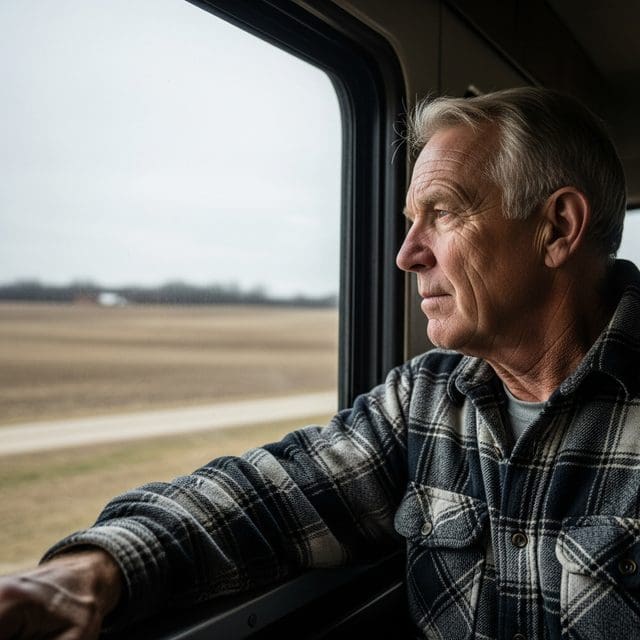
The One Big Beautiful Bill is reshaping the American safety net, extending work requirements to age 65 and forcing a national conversation on labor and fiscal discipline.
The American social safety net is undergoing its most significant structural realignment in a generation as the ‘One Big Beautiful Bill’ (OBBB) re-establishes work as the central pillar of federal assistance. By extending mandatory work requirements to individuals as old as 65, the legislation effectively ends the era of early-retirement reliance on certain public benefits, signaling a principled return to the idea that government aid should serve as a temporary springboard rather than a permanent destination.
Under the new OBBB guidelines, adults aged 55 to 64 who may have exited the workforce early now face a stark choice: document active employment or risk losing eligibility for SNAP and Medicaid. The law mandates 80 hours per month of work, education, or community service for most able-bodied adults. For SNAP specifically, the requirement is 20 hours per week, a move that eliminates previous blanket exemptions for older workers and many parents with children under 18. States must implement these Medicaid rules by January 1, 2027. State-level modeling suggests a complex transition; in Missouri alone, projections indicate 170,000 residents could lose Medicaid coverage and at least 58,000 could lose SNAP benefits.
This push for workforce participation arrives as the American heartland faces a mounting financial crisis. Midwest farmers are entering the 2026 planting season under the shadow of what some describe as the worst agricultural downturn since the 1980s. Driven by Iran conflict-driven diesel and fertilizer price increases, the cost of production is outstripping returns. Even industry stalwarts like Deere are feeling the pressure; despite beating earnings estimates, the company saw large ag equipment sales drop 14 percent as flat farm income and rising costs weigh on demand. For these rural communities, the dignity of work is often hampered by a lack of modern infrastructure. Rural businesses lose roughly $47 billion annually due to inadequate broadband, a gap that limits the very economic mobility the OBBB seeks to foster.
Compounding these challenges, the FCC is advancing rulemaking to further restrict the Lifeline program, which provides essential subsidies for phone and internet service. Advocates for reform argue for tighter expenditure caps and stricter eligibility checks to prevent fraud. However, a May 18 analysis warns that removing non-facilities-based providers could push millions of the poorest households off the grid. This digital divide remains a significant barrier to self-sufficiency, as job searches and education increasingly require reliable online access. Without these tools, the transition from welfare to work becomes a much steeper climb for those in isolated regions.
The fiscal reality of these changes is further complicated by existing gaps in benefit utilization. The National Council on Aging reports that over 9 million eligible older adults are already missing out on $58 billion in available benefits like SSI and Medicare Savings Programs due to bureaucratic hurdles. As the Federal Reserve faces pressure to raise interest rates following an April inflation spike, the cost of living continues to squeeze those on the margins.
Ultimately, the success of this new era of welfare policy will depend on the resilience of local civic institutions and the ability of the private sector to absorb an influx of older workers. While the OBBB aims to reduce federal dependency and promote the restorative power of hard work, the simultaneous tightening of broadband access and the strain on the agricultural sector create a narrow path for success. The goal remains a safety net that protects the vulnerable while demanding the best of the American workforce.

James Foster serves as the Senior Correspondent for Inequality and the Social Safety Net at Just Right News, where he brings a principled and nuanced perspective to the most pressing economic challenges facing the nation. With a career dedicated to exploring the intersection of policy and personal responsibility, Foster has become a leading voice in documenting how government programs and economic shifts impact the American family. His reporting is characterized by a commitment to the “human element,” moving beyond cold statistics to highlight the stories of resilience, work, and community that define the modern American experience.
Foster’s perspective is deeply rooted in his upbringing in Birmingham, Alabama. Growing up in a city with a rich industrial heritage and a history of economic transformation, he witnessed firsthand the importance of the dignity of work and the strength of local institutions. In Birmingham, he saw how the most effective safety nets were often those woven by neighbors, faith-based organizations, and local civic groups. This background instilled in him a lifelong skepticism of “one-size-fits-all” solutions from distant bureaucracies, favoring instead the localized, community-driven support systems that he frequently champions in his writing.
Now based in Atlanta, Georgia, Foster operates from one of the most dynamic and rapidly evolving metropolitan hubs in the South. His location provides a front-row seat to the stark contrasts of the modern economy. From the gleaming towers of Atlanta’s financial districts to the struggling neighborhoods on the city’s periphery, Foster finds the stories that illustrate the complexities of upward mobility. His reporting from the Sun Belt serves as a microcosm for the national debate on poverty, highlighting how inflation, housing costs, and labor market shifts affect the working class in real-time.
As the lead for the acclaimed feature series “America’s Balancing Act,” Foster explores the delicate tension between providing a necessary hand up and fostering long-term independence. The series has become a cornerstone of Just Right News, offering a deep dive into the unintended consequences of social welfare policies. Foster’s work often focuses on the “cliff effect” and other systemic hurdles that can inadvertently discourage employment, arguing that true compassion is measured by how many people are empowered to leave the safety net, rather than how many are added to it.
Throughout his tenure, Foster has remained dedicated to the mission of Just Right News, providing a clear-eyed, conservative analysis of social issues. He believes that a free society thrives when individuals are empowered and the private sector is allowed to innovate. Whether he is interviewing small business owners about the challenges of a changing workforce or documenting the success of private charitable initiatives, Foster’s goal is to provide readers with the truth about the state of the American Dream. His work serves as a vital reminder that while the challenges of inequality are great, the solutions are often found in the strength of the American spirit and the preservation of traditional values.