

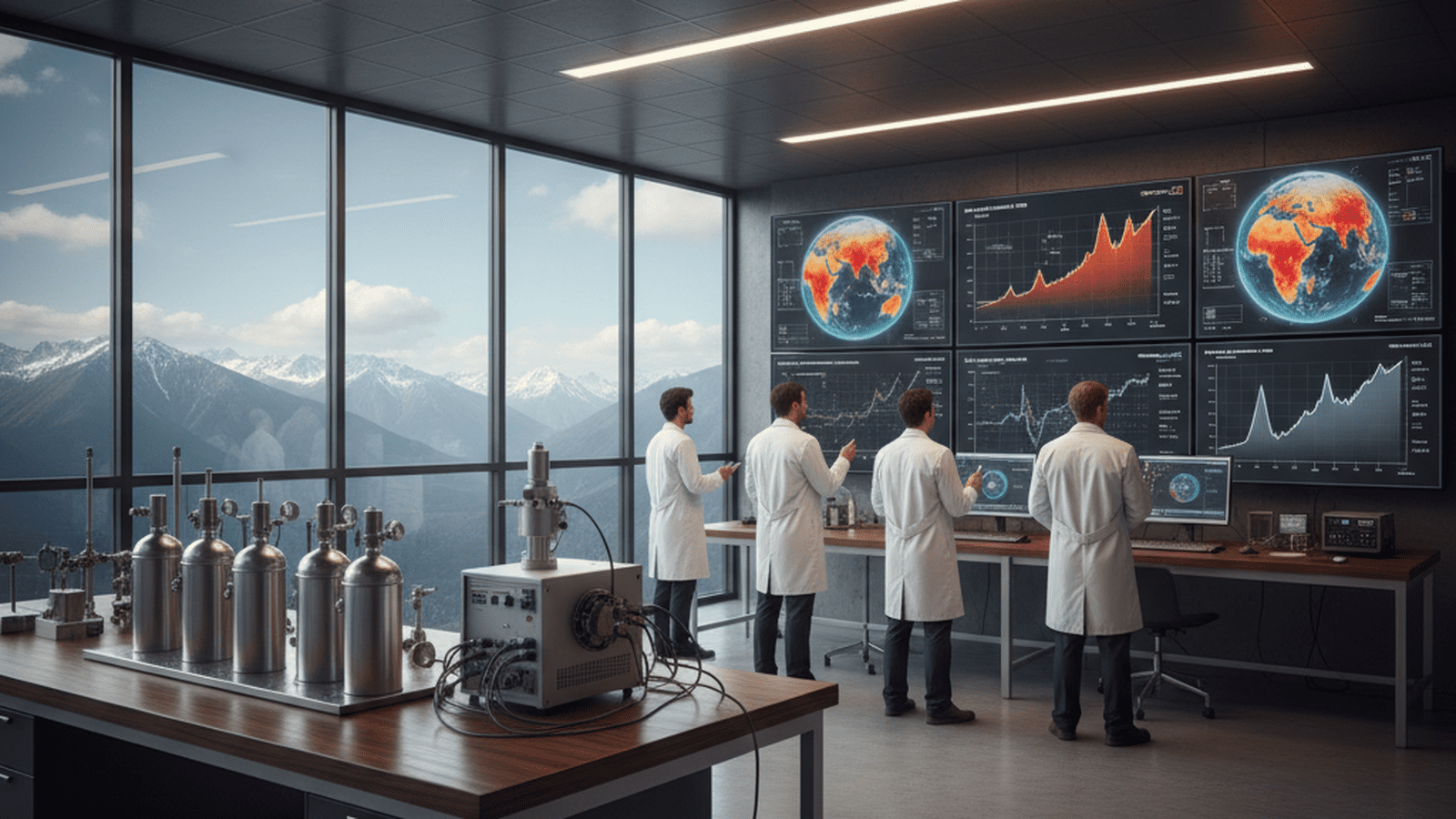
NOAA researchers have determined that the recent record-breaking rise in atmospheric methane is primarily driven by biological sources rather than fossil fuel leaks. Isotopic analysis reveals that warming-induced feedback loops in wetlands and agriculture are accelerating the release of this potent greenhouse gas.
TLDR: NOAA scientists have identified a shift in atmospheric methane sources, with biological emissions from wetlands and agriculture now outpacing fossil fuel leaks. This discovery suggests that climate-driven feedback loops are accelerating, complicating global efforts to limit warming as natural systems respond to rising temperatures.
Scientists at the National Oceanic and Atmospheric Administration (NOAA) have identified a significant and unexpected shift in the composition of atmospheric methane. While methane is a potent greenhouse gas with a warming potential many times higher than carbon dioxide, the recent record-breaking increases are not primarily originating from the fossil fuel industry. Instead, sophisticated isotopic analysis suggests that biological sources, such as tropical wetlands and agricultural activities, are driving the current surge. This finding indicates that the Earth’s natural systems may be entering a self-reinforcing feedback loop that accelerates global warming.
The research was conducted primarily at the Global Monitoring Laboratory in Boulder, Colorado. This facility tracks atmospheric gases using a vast network of air sampling sites located in remote areas, from the Mauna Loa Observatory in Hawaii to the South Pole. In 2023, the laboratory reported that atmospheric methane reached an average of 1,922.6 parts per billion. This represents a nearly threefold increase from pre-industrial levels. The speed of this rise has alarmed the scientific community, as methane is responsible for approximately 30 percent of the total warming experienced since the Industrial Revolution.
To determine the origin of the new methane, researchers examine the ratio of carbon isotopes within the molecules. Methane produced by the heat and pressure of the Earth’s crust—the kind found in natural gas and coal deposits—contains a higher proportion of the heavier carbon-13 isotope. In contrast, methane produced by microbes in wetlands, rice paddies, or the digestive systems of livestock contains more of the lighter carbon-12 isotope. The NOAA data shows a distinct and persistent “lightening” of the atmospheric methane pool over the last decade. This isotopic signature points directly to microbial activity as the dominant force behind the acceleration.
This shift suggests a dangerous climate feedback loop is already in motion. As global temperatures rise and precipitation patterns shift, tropical wetlands are expanding and becoming more biologically active. These saturated soils provide the ideal anaerobic environment for methanogens—microorganisms that produce methane as a metabolic byproduct. Furthermore, the warming of the Arctic is beginning to thaw permafrost, potentially unlocking vast stores of organic matter that microbes can then convert into methane. The fact that natural systems are responding so vigorously to initial warming complicates the path toward climate stabilization.
The implications for international climate policy and resource economics are profound. For years, policy efforts have focused heavily on plugging leaks in natural gas pipelines and reducing flaring at oil wells. While these actions remain critical because they are technically feasible and provide immediate benefits, the rise of biological emissions is far more difficult to mitigate. It suggests that even if human industrial emissions were zeroed out tomorrow, the planet’s own ecosystems might continue to drive warming through these newly energized biological pathways. This feedback makes the task of meeting the temperature targets set by the Paris Agreement significantly more complex.
Future research at the government level will focus on deploying high-resolution satellite monitoring to pinpoint the specific wetland regions contributing most to the surge. Scientists are also investigating the role of the hydroxyl radical, a chemical in the atmosphere that acts as a detergent by breaking down methane. There is growing concern that the atmosphere’s ability to clean itself may be slowing down, further contributing to the methane buildup. Understanding these complex chemical and biological dynamics is essential for refining the next generation of climate models and developing mitigation strategies that account for the interplay between human activity and natural responses.

Mark Davis serves as the Senior Correspondent for Energy, Climate, and Resource Economics at Just Right News. In an era where the conversation around the environment is often dominated by alarmism and top-down mandates, Mark provides a vital, market-oriented perspective on the complex forces shaping our world. As the lead voice behind the acclaimed feature series “Power and the Planet,” he explores the intersection of environmental policy, global energy markets, and the fundamental economic principles that sustain modern civilization.
Mark’s pragmatic approach to resource management was forged in the high desert of his hometown, Albuquerque, New Mexico. Growing up in a region defined by both its breathtaking natural beauty and its rugged, resource-dependent landscape, he developed an early appreciation for the delicate balance between conservation and utilization. New Mexico’s unique position as a hub for both traditional energy production and cutting-edge scientific research provided Mark with a front-row seat to the evolution of the American energy sector. This upbringing instilled in him a deep-seated belief that true environmental stewardship is inseparable from economic prosperity and technological innovation.
Now based in Boulder, Colorado, Mark operates from the heart of the nation’s climate research community. While Boulder is often seen as a bastion of environmental idealism, Mark utilizes his post to provide a necessary counterweight, grounded in the realities of resource economics. He understands that energy policy does not exist in a vacuum; it has tangible consequences for the American taxpayer, the stability of the national power grid, and the strength of the domestic manufacturing sector. By reporting from the front lines of the climate debate, he is able to challenge prevailing narratives with hard data and a commitment to the principles of the free market.
Throughout his tenure at Just Right News, Mark has distinguished himself by focusing on the “Resource Economics” aspect of his beat. He frequently highlights the hidden costs of rapid energy transitions and advocates for an “all-of-the-above” energy strategy that prioritizes American energy independence. His work often shines a light on the geopolitical implications of resource scarcity, arguing that a secure nation must first be an energy-secure nation. Whether he is analyzing the impact of federal land-use regulations or investigating the supply chains required for new technologies, Mark remains focused on how policy decisions affect the lives and livelihoods of everyday citizens.
In “Power and the Planet,” Mark continues to bridge the gap between complex scientific concepts and the economic realities facing the country. He rejects the false choice between a healthy environment and a thriving economy, instead seeking out solutions that leverage American ingenuity and private-sector competition. For Mark, reporting on the climate is not about following the latest trends, but about ensuring that the conversation remains tethered to the foundational values of liberty, property rights, and fiscal responsibility. His contributions ensure that Just Right News readers receive a comprehensive, clear-eyed view of the challenges and opportunities defining the future of our planet.