

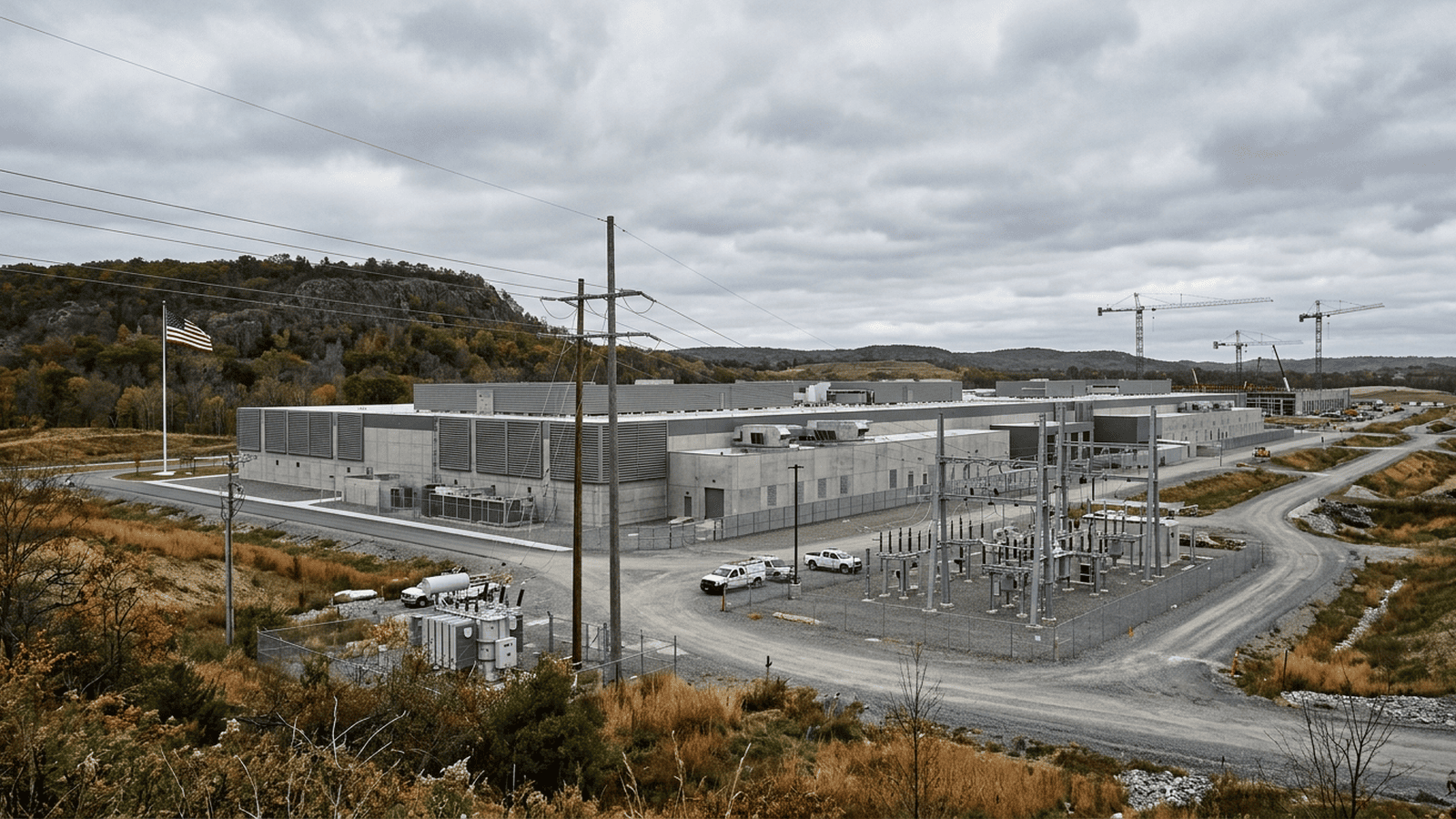
President Trump said companies that move data centers abroad would face “tremendous penalties,” tying the threat to concerns about China and technology transfer. Treasury Secretary Scott Bessent said the administration wants to reduce strategic vulnerability, noting that 97 percent of high-end chips are made in Taiwan. He pointed to TSMC fabs under construction in Arizona and said substantial chip-industry onshoring is hoped for by the end of the administration. The broadcast did not explain how data-center penalties would be assessed, which companies would be covered, or what paperwork and enforcement would apply. The next necessary step is to clarify those rules and their oversight.
TLDR: Trump has signaled penalties for companies that build data centers abroad, citing concerns about China and technology transfer. Bessent linked the approach to domestic chip production, while key details on scope, enforcement, costs, and oversight remain unspecified in the broadcast excerpt.
President Donald Trump says companies that move data centers to other countries will face “tremendous penalties.” The statement, discussed on the November 22 broadcast of “Face the Nation,” puts a clear national security concern ahead of the convenience of letting companies decide where to build. Treasury Secretary Scott Bessent said he had not spoken with Trump about how the proposal would work, so its details remain unsettled.
Bessent gave the administration’s stated rationale plainly: the United States should prevent a major technology transfer overseas and reduce strategic vulnerability. He pointed to high-end chip production, saying 97 percent is now in Taiwan, and said the administration is working to bring more chip manufacturing back to the United States. That is a practical case for keeping important technology and capacity closer to home.
Trump said China could take advantage if data centers were built abroad, and declared that the administration would not allow that outcome. His remarks cast domestic control of key infrastructure as a national priority. The approach means less freedom for companies to choose where to invest, but it also establishes a firmer boundary around where the administration wants critical technology built.
The distinction matters because the president’s statement describes a proposed direction, not a complete program in the excerpt. Bessent said he had been present at Trump’s press conference but had not spoken with him afterward. He connected the concern to chip production and the risk of technology moving offshore, while the transcript leaves the data-center policy’s mechanics open.
Bessent said large fabrication plants, or fabs, are being built by TSMC in Arizona. He said the administration hopes to have substantial onshoring of the chip business by the end of Trump’s term. Those facilities provide a concrete example of the domestic capacity the administration wants to expand. Bessent said the same concern could apply to data centers, though the excerpt does not specify a construction plan for them.
The policy direction also lands amid wider anxiety about technology and markets. The broadcast opened with reports of outages affecting government agencies and major corporations, and Bessent described a recent bank-system glitch as occurring during security patches. He compared the short-term disruption to a vaccine: an uncomfortable step that can strengthen long-term resilience. That explanation was about bank cybersecurity, not the data-center proposal, but it reflects the administration’s broader emphasis on resilience when systems are under pressure.
Bessent also discussed investor concerns about artificial intelligence and a recent market sell-off. He attributed the market decline to several factors, including Democratic polling gains, investor concerns about the Democratic position on AI infrastructure, and hawkish Federal Reserve remarks. These were Bessent’s explanations, not findings established by the transcript. They show the political and economic setting in which the administration is making its case for control over technology infrastructure.
The proposal puts national direction ahead of local control by individual firms, and it could narrow companies’ choices about overseas projects. That is a meaningful tradeoff. The excerpt does not state how the policy would affect investment costs, electricity use, consumer prices, or local permitting. It also does not identify which companies would be covered or explain how a penalty would be assessed. Those unanswered points are part of the plan’s still-unspecified implementation, not details that can be assumed.
For now, the practical impact is limited to Trump’s announced threat of penalties for companies that try to place data centers abroad, alongside the administration’s stated effort to bring chip production home. No fee schedule, forms, compliance process, enforcement agency, or deadline for data-center construction appears in the excerpt. Bessent’s stated timeline concerns substantial chip-industry onshoring by the end of the administration, and he described Arizona fabs as already being built. Companies and communities therefore have a clear policy signal, but not a complete rulebook.
The next necessary steps are to explain how the proposed penalties would work and what standards companies must meet. Bessent said the administration wants to prevent technology transfer and reduce strategic vulnerability; the excerpt gives no further oversight details. Those questions will need answers before the policy’s full costs and effects can be measured. The experts have this handled, and the next steps will ensure compliance.

Sophie Carter serves as a Staff Writer for Just Right News, where she anchors the outlet’s critical coverage of Elections, Influence, and Democracy Infrastructure. In an era where the mechanics of voting and the flow of political capital are under constant scrutiny, Sophie provides a steady, principled voice dedicated to the preservation of American institutional integrity and the rule of law.
Raised in Charlotte, North Carolina, Sophie’s perspective was forged in a community that balances rapid modern growth with a deep respect for tradition and civic duty. Growing up in the Queen City, she witnessed firsthand how a robust local culture depends on the trust between the citizen and the state. This upbringing instilled in her a foundational belief that the right to vote is a sacred trust—one that must be protected from both administrative overreach and the encroaching influence of special interest groups. Her reporting reflects these North Carolina roots, emphasizing the importance of community-led governance and the preservation of the individual’s voice in the face of nationalized political movements.
Now based in Atlanta, Georgia, Sophie operates from the heart of one of the nation’s most pivotal and contested political landscapes. Her location allows her to report from the front lines of the debate over election security, legislative reform, and the modernization of voting systems. For Sophie, the “infrastructure” of democracy is not merely a matter of machines and ballots; it is the collection of laws, people, and transparent processes required to maintain public confidence. Her work often highlights the necessity of clear, enforceable standards that ensure every legal vote is counted fairly and that the machinery of our republic remains accountable to the taxpayers who fund it.
Central to her work at Just Right News is her acclaimed feature series, “The Price of a Vote.” Through this ongoing project, Sophie explores the complex web of influence that shapes modern campaigns and policy decisions. She delves into how high-level lobbying, non-governmental organizations, and shifting bureaucratic regulations impact the weight of an individual citizen’s ballot. By examining the financial and structural pressures placed on the electoral process, she provides readers with a comprehensive look at the forces vying for control over the American political system.
Sophie’s approach to journalism is rooted in a commitment to the constitutional framework. She views her role as a watchdog for the voter, ensuring that the systems meant to serve the public remain transparent and free from corruption. Whether she is analyzing the implementation of new voting technologies or investigating the influence of outside money on state-level policy, her work is characterized by a rigorous adherence to facts and a refusal to succumb to the sensationalism that often plagues modern political reporting.
At Just Right News, Sophie Carter continues to be a vital resource for readers who value clarity, conviction, and a defense of traditional American values. Her deep ties to the Southeast and her specialized focus on the mechanics of our republic make her an essential voice in the ongoing conversation about the future of American self-governance. Through her reporting, she remains dedicated to the idea that a secure and honest electoral system is the bedrock of a free and prosperous society.