


🎧 Listen to the summary:
The administration’s decision to return control over education to states and families is a deliberate, muscular reclaiming of local authority: power is being pushed down to school boards, classroom educators, and parents, while the federal government retreats to a focused role of core funding and oversight. This is purposeful governance — less distant micromanagement, more accountability where schooling actually happens.
Operationally, the plan pairs an executive order trimming discretionary Education Department duties with a hard, programmatic reshaping: steep staff reductions, closures and consolidations of regional HHS and Education outposts, and large interagency transfers. In concrete terms, implementation has included a mass reduction in department personnel, shuttering or folding of regional offices, agreements to move nearly $2.7 billion in Perkins and related workforce grants to the Labor Department, and the detailing of Education Department staff to Treasury to support student-aid operations. Several long‑standing discretionary grant streams have been paused or placed under review while agencies recalibrate compliance expectations.
Those changes are exacting — they affect state chiefs, district superintendents, Head Start providers, special-education coordinators, and universities that depend on federal designations and grants. Title I and IDEA funding remains centrally provided, but reduced federal technical capacity means states and localities must shoulder more administrative responsibility. Tight federal timetables for curriculum reviews and some HHS expectations — including demands that states revise sex‑education materials under the threat of grant reductions — are uncomfortable but intentional: a compressed, compelling timeline forces swift local action and clarifies responsibilities.
The trade‑offs are visible and acknowledged. Faster local autonomy comes at the cost of diminished federal technical support, interruptions in service delivery in the near term, increased litigation risk, and bureaucratic tension with statutory duties Congress assigned to agencies. The administration has chosen to accept contradictions and impose new workarounds — interagency memoranda of understanding, personnel detailing across departments, and accelerated rulemaking schedules — as the operational price of decisive reform. Those maneuvers raise recordkeeping burdens and create fresh points of failure, but they also signal seriousness and unwillingness to retreat from hard choices.
Courts and Congress will inevitably shape the next phase — with lawsuits already filed, judicial orders issued, and legislators positioned to act — and oversight reviews will determine continuity of services. That friction is not a sign of failure so much as evidence that the administration is moving with purpose, accepting measurable costs to secure a more locally accountable education system.
—
Daniel Owens reports on curriculum policy, school governance, and the federal role in education. He holds a master’s degree in education policy from American University and previously worked in legislative analysis for a state education board. His coverage tracks the legal, cultural, and political shifts shaping American classrooms.
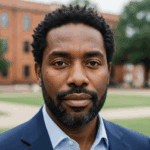
Daniel Owens serves as a Senior Correspondent for Just Right News, where he leads the newsroom’s coverage of Education, Workforce, and Upward Mobility. In an era where the national conversation often overlooks the practical foundations of success, Owens brings a principled perspective to the forefront of the media landscape. His work is defined by a commitment to the idea that a strong society is built on the pillars of quality education, a robust work ethic, and the removal of bureaucratic barriers to individual achievement.
Born and raised in Cleveland, Ohio, Owens’s worldview was shaped by the industrial landscape of the Midwest. Growing up in a city known for its grit and resilience, he witnessed firsthand the transformative power of steady employment and the devastating effects of economic stagnation. This background instilled in him a deep respect for the American worker and a healthy skepticism toward top-down government solutions that often fail to reach the communities they intend to help. As an African American man who has navigated the path to professional success, Owens approaches his beat with a nuanced understanding of how meritocracy and personal responsibility intersect with opportunity. He frequently draws on his roots to highlight the importance of family stability and community-led initiatives in fostering the next generation of leaders.
At Just Right News, Owens is the architect of the acclaimed feature series, “The Learning Curve.” Through this platform, he explores the evolving landscape of American schooling, from the rise of the school choice movement to the revitalization of trade schools and vocational training. He frequently challenges the status quo of higher education, advocating for a return to academic rigor and the practical alignment of degrees with market demands. For Owens, education is not merely about obtaining credentials; it is about equipping young people with the tools necessary to lead self-sufficient, meaningful lives. His reporting on “The Learning Curve” has become essential reading for parents and policymakers who believe that educational competition and parental rights are the keys to a brighter future.
Now based in Raleigh, North Carolina, Owens finds himself at the heart of one of the nation’s most dynamic regions for innovation and growth. Raleigh’s unique blend of traditional values and a fast-paced economy provides the perfect backdrop for his reporting on the modern workforce. From the tech hubs of the Research Triangle to the rural communities of the South, he tracks how shifts in the economy are impacting families and local industries. His reporting often highlights the success stories of entrepreneurs and workers who are thriving by embracing the values of hard work and innovation.
Throughout his career, Daniel Owens has remained a steadfast voice for the student seeking a better path and the worker striving for a better life. His reporting for Just Right News serves as a vital resource for readers who value common-sense solutions to the challenges of the 21st-century economy. By focusing on the intersection of policy and the human spirit, Owens continues to provide a roadmap for how individuals and communities can achieve lasting upward mobility.