

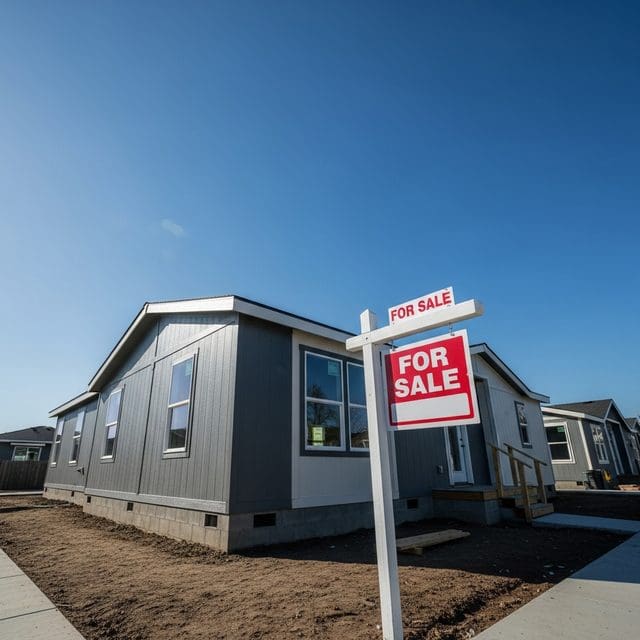
Elevated borrowing costs continue to strain American households despite the enactment of the 21st Century ROAD to Housing Act and shifting global energy markets.
The American housing market remains in a state of high-tension equilibrium as the mid-summer season fails to deliver the interest rate relief many prospective buyers had anticipated. As of mid-July 2026, average 30-year fixed mortgage rates are holding firm in the 6.49% to 6.69% range. This persistent elevation, which effectively doubles the historic lows seen in 2021, continues to squeeze the budgets of middle-class families and first-time buyers who find themselves priced out of the traditional American dream of property ownership. Real-time trackers confirm this trend, with 15-year fixed offers clustered near 5.9% to 6.0%, offering little respite for those seeking shorter-term debt.
This stagnation is largely a reflection of the Federal Reserve’s current posture. By maintaining the federal funds rate at 3.50–3.75%, the central bank has signaled a “higher for longer” approach to monetary policy. For the housing sector, this translates to a lack of downward pressure on yields. Industry forecasters from Fannie Mae and the Mortgage Bankers Association now suggest that meaningful rate relief is unlikely to materialize before the final months of 2026, with base-case projections keeping rates anchored near 6.4% for the foreseeable future. The refinancing window also remains firmly shut for the vast majority of existing homeowners, as 30-year refi rates have climbed above the 7% threshold, reinforcing a lock-in effect that prevents mobility.
Against this backdrop of financial constraint, the legislative branch has attempted to pull different levers to address the supply-side crisis. The 21st Century ROAD to Housing Act, which became law on June 10, 2026, represents a significant bipartisan effort to modernize the nation’s housing stock. The Act focuses on expanding financing options for Accessory Dwelling Units (ADUs) and modernizing the regulatory framework for manufactured housing. By treating these alternative housing types as legitimate components of the national infrastructure, the law seeks to bypass traditional zoning bottlenecks and encourage private-sector density. The American Planning Association recently applauded the measure on July 11, noting its potential to diversify the housing market through market-driven solutions rather than top-down bureaucratic mandates.
However, the domestic housing landscape does not exist in a vacuum. Global geopolitical instability continues to introduce volatility into the macro-economic indicators that influence mortgage yields. While a brief period of optimism followed the U.S.-Iran memorandum of understanding in June—which included a 60-day ceasefire and the reopening of the Strait of Hormuz without tolls—that stability has proven fragile. Recent reports of drone and missile strikes in the Middle East have sent oil prices to four-week highs, ratcheting up government borrowing costs across the West. When energy and shipping costs rise due to conflict, the resulting inflationary pressure often forces the Federal Reserve to maintain its restrictive stance, further delaying any reprieve for the American homebuyer.
For the taxpayer, the intersection of these forces creates a complex cost-of-living challenge. While the ROAD to Housing Act provides the tools for long-term supply growth, the immediate reality is dictated by the high cost of capital and the uncertainty of international trade routes. The market is also watching private sector developments, such as SpaceX’s massive $75 billion IPO and Meta’s infrastructure-driven stock surge, which signal a shift in where capital is flowing. As the nation moves into the second half of the year, the success of these housing reforms will depend heavily on whether the broader economy can achieve the stability necessary to bring mortgage rates back toward a level that respects the financial liberty of the individual citizen. Until then, the housing market remains a primary theater in the ongoing struggle for affordability, local sovereignty, and fiscal responsibility.

Deborah Cole serves as a Senior Correspondent for Just Right News, where she spearheads the network’s coverage of Housing, Infrastructure, and Mobility. With a career defined by a commitment to rigorous reporting and a focus on the fundamental pillars of American community life, Deborah brings a principled perspective to the complex issues that dictate how and where we live. Her work is grounded in the belief that sound policy, fiscal responsibility, and respect for private property are the essential foundations of a prosperous society.
Originally from Boston, Massachusetts, Deborah’s upbringing in one of the nation’s oldest and most historically significant cities deeply influenced her professional trajectory. Growing up amidst the architectural legacy and dense urban planning of New England, she developed an early appreciation for the importance of durable infrastructure and the role of local tradition in shaping neighborhoods. Her perspective is informed by the classic American values of her hometown—hard work, community cohesion, and a healthy skepticism of top-down bureaucratic mandates that often overlook the unique needs of individual citizens.
Today, Deborah operates from her base in Austin, Texas, a city that serves as a primary laboratory for her reporting. Austin’s rapid expansion and its status as a hub for innovation and migration provide her with a front-row seat to the most pressing challenges in modern infrastructure and housing. From the Lone Star State, she chronicles the tensions between rapid growth and the preservation of the American Dream, often highlighting how market-driven solutions and deregulation can address the housing shortages that plague many of the country’s metropolitan areas.
At Just Right News, Deborah is perhaps best known for her signature feature series, “Where We Live.” Through this platform, she explores the intersection of public policy and private life, moving beyond mere statistics to tell the stories of families, small business owners, and local developers. Her reporting frequently highlights the importance of mobility—not just in terms of transportation and transit, but as a vehicle for economic opportunity and social stability. She remains a staunch advocate for the taxpayer, consistently scrutinizing government spending on large-scale projects and advocating for transparency in how infrastructure dollars are allocated.
Deborah’s beat is more than just a collection of policy topics; it is an investigation into the physical and legal structures that allow families to flourish. Whether she is reporting on the impact of zoning laws on suburban development or the necessity of maintaining the nation’s highway systems, her work is characterized by a dedication to the facts and a respect for the constitutional principles that protect the rights of homeowners.
As a Senior Correspondent, Deborah Cole continues to be a vital voice for Just Right News, providing the audience with the clarity and context needed to navigate an ever-changing landscape. Her reporting ensures that the values of individual liberty and local sovereignty remain at the forefront of the national conversation regarding the future of our cities and towns. Through her tireless efforts, she remains committed to informing the public on the issues that hit closest to home.