

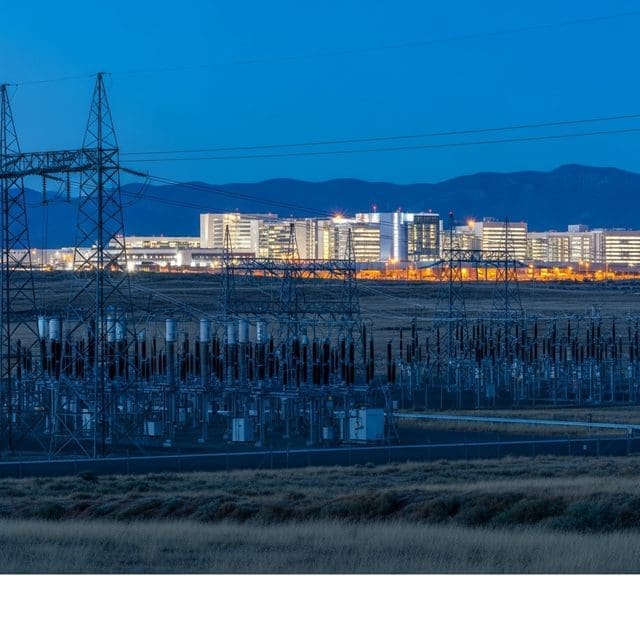
Federal regulators and the Trump administration are overhauling grid access rules to force AI developers to fund their own infrastructure and prevent speculative demand from inflating ratepayer costs.
The Federal Energy Regulatory Commission (FERC) has moved to stabilize the national power grid by imposing strict new requirements on large-scale energy consumers. In a series of orders issued this month, FERC placed six regional grid operators—including PJM, MISO, SPP, CAISO, ISO-NE, and NYISO—on 30- and 60-day deadlines to quantify spare capacity and overhaul tariffs for massive loads. The move is a direct response to an artificial intelligence boom that has transformed electricity into a scarce commodity, driving tech companies across the economy into the energy business to secure their futures. This surge in demand comes at a time when tech stocks have seen sharp declines, with investors increasingly questioning the immediate return on massive AI infrastructure spending and rotating capital into healthcare and software.
Central to the new regulatory landscape is the elimination of the “duplicate demand” problem. Data from recent FERC filings indicate that AI developers have frequently reserved megawatts with multiple utilities for the same project, creating a phantom backlog that prevents other industries from accessing the grid. To combat this, regulators are shifting toward “commitment-first” planning under docket RM26-4-000. This framework forces developers to provide binding contracts or significant financial security before grid operators recognize their requests as legitimate load. This ensures that the de facto fast lane granted to AI data centers is reserved for projects with real economic backing, rather than speculative placeholders that clog the interconnection queue and delay vital infrastructure for other sectors.
Market-oriented policy shifts are also emerging from the executive branch to address the intersection of national security and economic stability. The Trump administration has secured a “Ratepayer Protection Pledge” signed on March 4, 2026, by seven leading AI firms. Under this agreement, signatories must build or purchase their own generation and cover the full cost of grid upgrades. This policy aims to ensure that the massive capital requirements for AI infrastructure are borne by the tech sector rather than being subsidized by American households through higher monthly utility bills. The administration is also pressuring PJM to run 15-year power auctions specifically for tech firms, ensuring that new power plants are financed by the companies using them rather than the general public. These measures are coupled with an extended cap on wholesale payment increases through mid-2028 to contain consumer costs.
Natural gas continues to serve as the critical swing fuel for this expanding load, even as global innovation calls, such as the Team for the Planet initiative, seek industrial-scale decarbonization solutions. Federal market data shows U.S. gas demand rose approximately 4.6% over the last year, a trend expected to accelerate as data centers are projected to account for 25% of new electricity demand by 2030. FERC’s summer 2026 assessment expects higher gas production to meet this elevated electricity consumption. While the administration encourages this growth, officials like Doug Burgum have highlighted the resulting price disparities, noting that energy-rich red states currently offer significantly lower costs for consumers compared to those with more restrictive regulatory environments, with some states seeing prices over 50 cents cheaper per gallon at the pump and lower per-kilowatt rates.
Geopolitical tensions in the Persian Gulf have provided a brief window of relief for energy markets following a June 28 agreement between the U.S. and Iran to halt attacks. While the upcoming talks in Qatar on June 30 aim to resolve disputes over the Strait of Hormuz and shipping risks, the domestic focus remains on grid resilience and the splintering of AI policy over national security concerns. By forcing tech giants to accept bespoke rates and provide backup generation during emergencies, regulators hope to balance the race for AI supremacy with the fundamental need for a reliable and affordable power supply. This pragmatic approach recognizes that while AI is a national security priority, it cannot be allowed to destabilize the economic foundation of the American ratepayer during a period of tightening credit and reduced student loan repayment options.

Mark Davis serves as the Senior Correspondent for Energy, Climate, and Resource Economics at Just Right News. In an era where the conversation around the environment is often dominated by alarmism and top-down mandates, Mark provides a vital, market-oriented perspective on the complex forces shaping our world. As the lead voice behind the acclaimed feature series “Power and the Planet,” he explores the intersection of environmental policy, global energy markets, and the fundamental economic principles that sustain modern civilization.
Mark’s pragmatic approach to resource management was forged in the high desert of his hometown, Albuquerque, New Mexico. Growing up in a region defined by both its breathtaking natural beauty and its rugged, resource-dependent landscape, he developed an early appreciation for the delicate balance between conservation and utilization. New Mexico’s unique position as a hub for both traditional energy production and cutting-edge scientific research provided Mark with a front-row seat to the evolution of the American energy sector. This upbringing instilled in him a deep-seated belief that true environmental stewardship is inseparable from economic prosperity and technological innovation.
Now based in Boulder, Colorado, Mark operates from the heart of the nation’s climate research community. While Boulder is often seen as a bastion of environmental idealism, Mark utilizes his post to provide a necessary counterweight, grounded in the realities of resource economics. He understands that energy policy does not exist in a vacuum; it has tangible consequences for the American taxpayer, the stability of the national power grid, and the strength of the domestic manufacturing sector. By reporting from the front lines of the climate debate, he is able to challenge prevailing narratives with hard data and a commitment to the principles of the free market.
Throughout his tenure at Just Right News, Mark has distinguished himself by focusing on the “Resource Economics” aspect of his beat. He frequently highlights the hidden costs of rapid energy transitions and advocates for an “all-of-the-above” energy strategy that prioritizes American energy independence. His work often shines a light on the geopolitical implications of resource scarcity, arguing that a secure nation must first be an energy-secure nation. Whether he is analyzing the impact of federal land-use regulations or investigating the supply chains required for new technologies, Mark remains focused on how policy decisions affect the lives and livelihoods of everyday citizens.
In “Power and the Planet,” Mark continues to bridge the gap between complex scientific concepts and the economic realities facing the country. He rejects the false choice between a healthy environment and a thriving economy, instead seeking out solutions that leverage American ingenuity and private-sector competition. For Mark, reporting on the climate is not about following the latest trends, but about ensuring that the conversation remains tethered to the foundational values of liberty, property rights, and fiscal responsibility. His contributions ensure that Just Right News readers receive a comprehensive, clear-eyed view of the challenges and opportunities defining the future of our planet.