

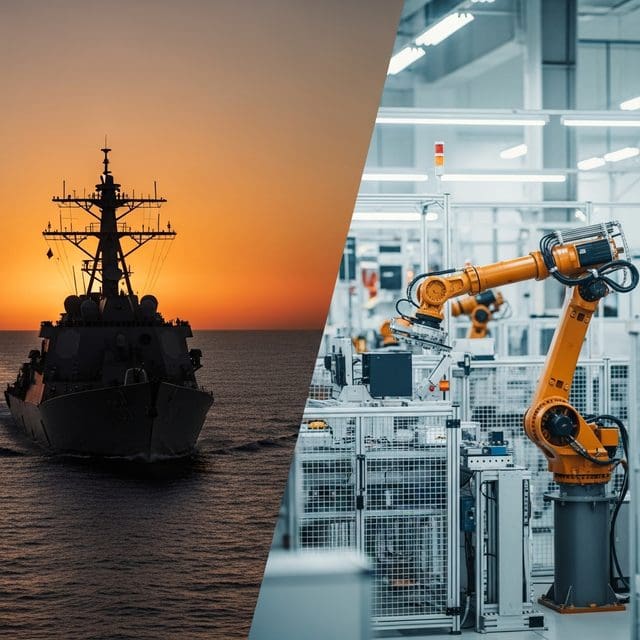
Washington and Tehran move toward technical talks to reopen the Strait of Hormuz, while China leverages energy stability and Ukraine cripples Russian refinery capacity.
The geopolitical landscape entered a phase of recalibration on Monday as the United States and Iran agreed to a formal stand-down, moving their confrontation from the Persian Gulf to the negotiating tables of Doha. This diplomatic pivot follows a volatile sequence of military exchanges. Early on June 27, Iran launched drone attacks against Bahrain, shortly after U.S. strikes on Iranian military sites. The cycle continued on June 28 with retaliatory Iranian strikes on Kuwait and Bahrain, prompting Tehran to threaten a total cessation of diplomacy before the current de-escalation was reached.
The upcoming technical talks in Qatar aim to implement the June 17 memorandum of understanding to reopen the Strait of Hormuz. However, stability remains obstructed by fundamental disagreements. Iranian officials continue to insist on absolute control through the chokepoint, warning Gulf states that siding with Washington carries severe consequences. This tension has kept global energy markets anxious, with Brent futures settling near $73 per barrel as traders remain skeptical of a long-term resolution.
While the U.S. remains entangled in Middle Eastern security, China is emerging as a primary strategic beneficiary. Beijing’s massive reserves and clean-energy infrastructure have cushioned its economy from price shocks affecting Western manufacturing. Recent data shows China’s trade surplus widening to $105 billion in May 2026. As global energy costs rise, Beijing is positioning itself as the world’s most resilient manufacturing hub, further complicating the U.S. economic position, which saw a $202 billion goods trade deficit with China in 2025.
In Eastern Europe, the conflict between Russia and Ukraine has entered a phase of industrial attrition. Kyiv has intensified long-range drone strikes against Russian energy infrastructure, hitting the Slavyansk oil refinery and targets in Volgograd. These strikes, targeting facilities with capacities of 100,000 barrels per day, have forced the Kremlin to admit to fuel shortages and rationing. Although Moscow claims its air defenses destroyed over 4,500 Ukrainian drones, the disruption of the Russian energy network suggests a significant breach in their defensive perimeter.
The Trump administration’s foreign policy is also being shaped by domestic institutional shifts. Following a 6-3 Supreme Court ruling allowing the administration to end legal protections for 1.3 million migrants from Syria and Haiti, the White House moved to tighten enforcement by nominating Lance Schroyer as ICE director. This restrictive posture aligns with a focus on national sovereignty, despite warnings from state leaders like Ohio Governor Mike DeWine regarding labor shortages.
Furthermore, the administration secured a legal victory with the guilty plea of former National Security Advisor John Bolton for the illegal retention of classified information. This development, alongside tightened sanctions on Iran-linked cryptocurrency flows, signals a rigorous approach to internal security. As Washington and Jerusalem coordinate strikes that damaged Iranian sites, the administration is signaling that its ‘peace through strength’ doctrine remains the guiding principle, even as Doha talks attempt to find a pragmatic exit from the maritime blockade.

Olivia Kendall serves as the Senior Correspondent for Geopolitics, Defense, and Foreign Policy at Just Right News, where she provides a principled, conservative perspective on the complex forces shaping the global stage. With a career dedicated to deconstructing the intricacies of international relations, Kendall has become a trusted voice for readers who value national sovereignty, a robust military, and a foreign policy that prioritizes American interests above all else.
A native of Washington, D.C., Kendall’s professional journey is deeply rooted in her upbringing within the nation’s capital. Growing up in the epicenter of American political life, she developed an early and profound understanding of how policy is crafted and, more importantly, how it often fails to account for the values of the American heartland. This unique vantage point allowed her to witness firsthand the rise of globalist bureaucracies, fueling her commitment to reporting that champions the constitutional foundations of the United States. Her background as a British White American further informs her worldview, providing her with a keen appreciation for the Western tradition and the enduring importance of the “Special Relationship” in maintaining global stability.
Now based in Arlington, Virginia, Kendall operates from the doorstep of the Pentagon and the heart of the nation’s defense establishment. Her proximity to the decision-makers in the military and intelligence communities allows her to provide boots-on-the-ground reporting that is both timely and deeply informed. For Kendall, Arlington is more than just a base of operations; it is a daily reminder of the sacrifices made by the men and women in uniform. This connection to the defense community drives her rigorous coverage of military readiness and her advocacy for a “peace through strength” approach to diplomacy.
At Just Right News, Kendall is perhaps best known for her acclaimed feature series, “The World’s Shadow on America.” In this ongoing project, she explores the direct correlation between international developments and the daily lives of American citizens. Whether she is analyzing the encroachment of foreign adversaries in domestic supply chains or the impact of international treaties on local economies, Kendall’s work serves as a vital bridge between distant geopolitical shifts and their consequences at home. She rejects the notion that foreign policy is an abstract concern for elites, instead proving that what happens in the corridors of power in Brussels or Beijing has a tangible “shadow” that falls across every American doorstep.
Throughout her tenure, Kendall has remained a steadfast critic of international overreach and a vocal proponent of a clear-eyed, realistic foreign policy. She brings a sharp analytical mind to her beat, often challenging the prevailing narratives of the mainstream media to uncover the underlying truths that affect national security. Her reporting is characterized by a refusal to compromise on the truth and a dedication to the idea that a strong, secure America is the world’s best hope for liberty. As a Senior Correspondent, Olivia Kendall continues to lead the charge in providing the essential context and conservative insight necessary to navigate an increasingly volatile world.