

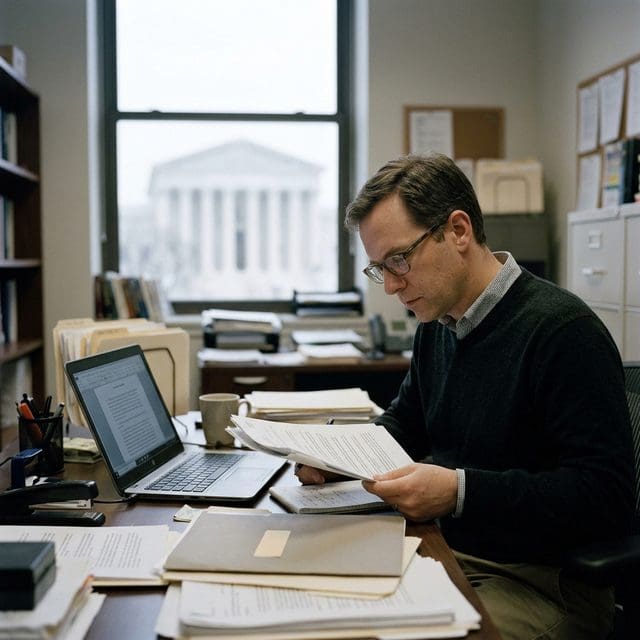
Recent reporting on USAID files, an AI fund’s losses and a leaked NHS report shows why document-based accountability depends on separating records from claims about them.
A new batch of federal records and several high-profile reports are drawing attention to government and institutional accountability. But the material available so far does not support every conclusion being attached to it. In each case, the distinction between a document, a report about a document and an interpretation of its meaning matters.
The Trump administration published 248 internal USAID files on Nov. 24, according to the supplied reporting. The files reportedly include emails, memoranda, chat logs, videos and meeting materials concerning disinformation programs and contacts with technology companies.
A Nov. 28 opinion column in The Hill said the newly disclosed material included USAID training involving the Global Disinformation Index, as well as webinars, staff chats and meetings with technology companies. That account is an opinion piece, not an independent audit of the records. Its claims should be weighed as the author’s characterization of the disclosure, rather than treated as findings by an inspector general, court or other reviewing authority.
The available material does not establish that a new criminal, regulatory, inspector-general or congressional investigation has formally opened in response to the files. Nor does the summary provide the contents of particular emails or memoranda. Without the documents themselves, or a detailed review identifying what they show, broader conclusions about the programs remain claims to be tested against the underlying record.
A separate financial story illustrates another records problem: figures can appear to conflict when the reporting does not explain the period or calculation. Seeking Alpha reported Nov. 28 that Situational Awareness, the fund associated with Leopold Aschenbrenner, lost 65% after fees in the third quarter of 2026 as AI-linked trades unraveled.
A separate account of an investor letter, dated Nov. 24, said the fund was up 88.5% through September. Secondary reports also attributed to the letter a 67% net loss in July and said the fund was hiring a chief risk officer. Those figures are reported secondhand, and the available summaries do not provide the letter or explain the calculation behind each return. The third-quarter loss and the reported gain through September cannot be reconciled confidently from the material provided. A full accounting would require the letter and a clear explanation of the fund’s reporting periods and methodology.
In Scotland, BBC reporting said First Minister John Swinney urged people to attend medical appointments and insisted the national health service was safe after a leaked report highlighted avoidable deaths at NHS Grampian. The supplied account does not specify how many deaths the report identified, the period it covered or whether officials opened a formal inquiry. Those omissions limit what can responsibly be said about the scale of the problem or the government’s follow-up.
The leak is a starting point for questions, not a substitute for the report. Establishing what happened would require the document’s scope, methods and findings, along with any response from the health authority or government. The available information does not establish that such a formal investigation has begun.
The common thread is not that these disclosures prove misconduct. It is that public claims should remain tethered to what the records actually show. The USAID files are described, but not reproduced here; the fund’s returns are reported through accounts that do not fully explain their figures; and the NHS report’s central details remain unspecified. Until the underlying documents and official follow-up are available, the strongest account is also the narrowest one.
Ben Taylor serves as the Senior Correspondent and Investigations Lead for Just Right News, where he anchors the network’s commitment to government transparency and institutional accountability. With a career defined by a relentless pursuit of the facts, Taylor spearheads the acclaimed feature series “The Paper Trail,” a deep-dive investigative column that prioritizes primary source documentation over political rhetoric. Based in the heart of the nation’s capital, he has earned a reputation as one of the most formidable investigative journalists in Washington, D.C., known specifically for his mastery of public records and the Freedom of Information Act.
Taylor’s approach to journalism is deeply rooted in his upbringing in Kansas City, Missouri. Growing up in the “Show Me State,” he developed a healthy skepticism of centralized power and a profound respect for the common-sense values of the American heartland. This Midwestern foundation informs his reporting today, as he bridges the gap between the complex machinations of federal bureaucracy and the everyday concerns of citizens across the country. For Taylor, investigative reporting is not about chasing headlines; it is about ensuring that the government remains answerable to the people it serves.
As an African American man working within the conservative media landscape, Taylor brings a principled perspective to his beat. He views the Constitution and the right to information as the ultimate equalizers in a free society. His work often highlights how bureaucratic overreach and lack of transparency disproportionately affect individual liberties. By focusing on the “paper trail,” Taylor strips away the spin of partisan talking points, instead providing Just Right News readers with the raw data and internal communications that reveal how their tax dollars are spent and how policy decisions are actually made.
In his role as Investigations Lead, Taylor oversees a team dedicated to uncovering the stories that mainstream outlets often overlook. Whether he is auditing federal spending, investigating regulatory overreach, or exposing inefficiencies within the administrative state, his methodology remains consistent: follow the evidence wherever it leads. His presence in Washington, D.C., allows him to maintain a constant watch over the halls of power, yet he remains steadfastly connected to his roots, ensuring his reporting reflects the clarity and directness of his Missouri home.
Throughout his tenure at Just Right News, Taylor has become a vital voice for those who demand integrity in public office. He believes that a well-informed electorate is the strongest defense against government overreach, and he has dedicated his career to providing the public with the tools they need to hold their leaders accountable. Through “The Paper Trail” and his broader investigative work, Ben Taylor continues to set the standard for rigorous, document-driven journalism that champions the values of transparency, individual responsibility, and the rule of law.