

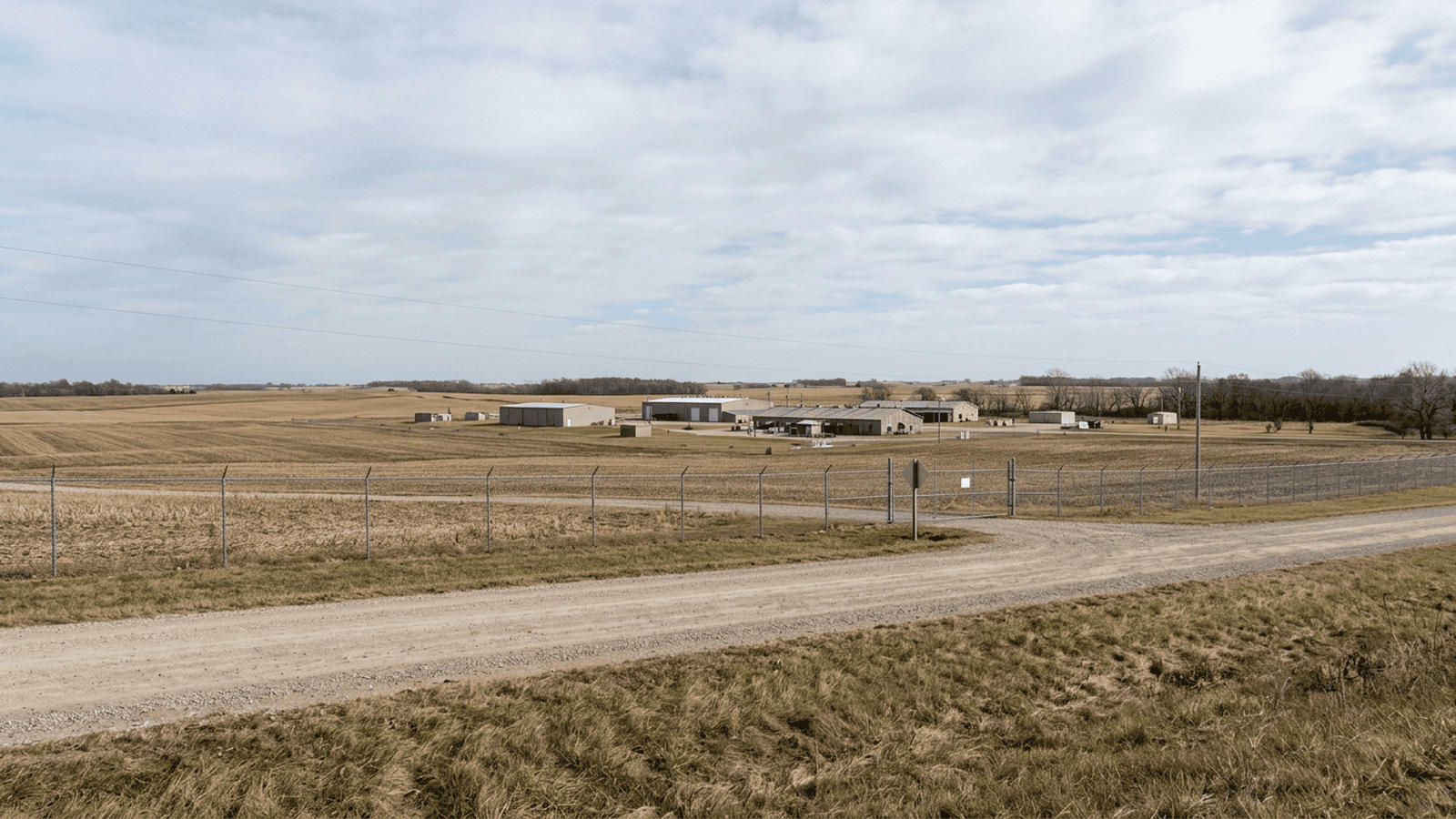
The Army destroyed five tons of deteriorating explosives at its Middletown, Iowa, ammunition plant, citing the risk of an unplanned explosion. The EPA expects to begin receiving test results as early as Friday and reported that no airborne lead had been detected in the region as of Thursday. It collected more than 1,500 samples before the detonation and more than 1,000 afterward, including samples from homes, schools, farms, water sources and other sites. Testing covers lead and other compounds that could have been released. The 8th Circuit declined to block the plan after a temporary pause, while questions about the decision’s handling reached the White House. Final results and any follow-up steps have not yet been reported.
TLDR: The Army destroyed a deteriorating explosives stockpile in Iowa after citing the danger of an accidental blast. EPA testing is underway, with early results expected as soon as Friday and no airborne lead detected through Thursday.
The U.S. Army has destroyed five tons of deteriorating explosives at an ammunition plant in Middletown, Iowa, and the Environmental Protection Agency expects to begin receiving test results as early as Friday. The EPA said Thursday that no airborne lead had been detected across the region as of that day. Testing for lead and other possible compounds is continuing. The agency has not yet released final results from the samples collected before and after the detonation.
The Army said it detonated the stockpile because the explosives posed a risk of an unplanned explosion. The EPA said the lead azide had degraded during about 20 years in storage, undergoing changes that increased its sensitivity to friction and shock. That risk of accidental detonation was the stated reason for destroying the material. The Army’s action was intended to address the hazard posed by the aging stockpile, while environmental testing is now focused on whether the detonation released substances into nearby areas.
The stockpile contained about 10,000 pounds of lead azide, a substance used in ammunition since World War I. The Army carried out the detonation Wednesday at its ammunition plant in the small Iowa community. The EPA described the detonation as controlled and said its testing covers substances that could potentially have been released. The agency has not said that its testing has established whether any other compounds were released.
The agency collected more than 1,500 air, water, soil and dust samples before the destruction and more than 1,000 afterward. Samples went to multiple EPA and private laboratories. The agency said it collected samples at more than 130 structures, including homes, schools, daycare centers and churches, and at parks, nearby farms, drinking water sources and the Mississippi River watershed. The sampling therefore covers both buildings where people live or gather and outdoor locations, including agricultural land and water sources.
That broad sampling effort is intended to establish what, if anything, was released in the area. The EPA said it is testing for other compounds in addition to lead. Its Thursday update said no airborne lead had been detected, but the results from the collected samples were still pending. The agency said results could begin arriving Friday, not that all testing would be complete by then. Results from the different laboratories will be part of the wider picture, but the update did not set out when that picture would be complete.
The decision proceeded after a legal challenge and a temporary pause. The 8th Circuit Court of Appeals halted the detonation last week while it considered whether to issue a longer-lasting order. On Monday, the court said environmental groups challenging the plan had not shown they were likely to succeed. Local residents and environmental groups had sought to block the action over concerns that toxic lead dust could threaten public health and agriculture. The court’s decision allowed the Army to proceed, while the sampling and testing continued as a separate effort to assess possible releases.
The sequence has also raised questions inside the Trump administration about how the matter was handled. Sources familiar with the situation told CBS News that the chaotic lead-up reached the White House and prompted questions about what went wrong and why the issue was not elevated to senior officials sooner. President Trump praised the detonation as having “exceeded expectations.” The available account does not say that the administration has completed a review or assigned responsibility.
For people and institutions near the plant, the practical impact described so far is environmental sampling rather than a new fee, form, or compliance deadline. The EPA’s work covers air, water, soil and dust at residential, public, agricultural and water locations. More than 130 structures and nearby sites were included, with samples divided among agency and private labs. The account does not specify testing costs, any paperwork required from residents, enforcement measures, or a deadline for final results. It also does not describe any new requirement for residents, schools, farms or other sampled locations.
The findings will matter to residents, schools, daycare centers, churches, farms and others in the sampled area, as well as to agencies assessing possible effects on water sources and the Mississippi River watershed. The EPA’s statement that no airborne lead had been detected by Thursday is a preliminary status report; testing for other compounds and analysis of the samples remain part of the process. The data may help clarify the concerns that residents and environmental groups raised about health and agriculture, but the excerpt provides no final findings on those issues. For now, the available information describes the scope of testing and the early lead update, not a final assessment of risk.
The next step is for the EPA and the private laboratories to return results, which the agency expected to begin receiving as early as Friday. No later publication date or specific follow-up review is stated. Those results and any further agency updates are the necessary steps for documenting what the sampling found and determining what comes next.

Jordan Lee serves as the Senior Correspondent for Wall Street, Finance, and Monetary Systems at Just Right News. Based in the heart of the world’s financial capital, New York City, Lee brings a sharp, principled eye to the complex mechanisms that drive the global economy. His reporting is defined by a commitment to fiscal responsibility, the defense of the free market, and a deep-seated belief that a transparent monetary system is the bedrock of a free society.
Raised in Portland, Oregon, Lee’s perspective was forged in a city that has undergone significant cultural and economic shifts. His upbringing in the Pacific Northwest instilled in him a profound appreciation for the industriousness of small business owners and the importance of local economic stability. Watching the evolution of his hometown’s landscape sparked an early interest in how federal fiscal policy and large-scale financial trends eventually trickle down to the average citizen. This background provides him with a unique vantage point; he understands the growing disconnect between the policy-making elite and the reality of Main Street, a theme that frequently resonates throughout his work.
Now operating from his base in New York City, Lee bridges the gap between the high-stakes trading floors of Manhattan and the households of everyday Americans. He views the financial sector not merely as a collection of numbers and tickers, but as a vital engine of American prosperity that requires constant vigilance and accountability. His reporting often highlights the dangers of centralized financial control and the necessity of maintaining a system that rewards merit, risk-taking, and innovation.
As the creator and lead of the featured series, “The Invisible Economy,” Lee pulls back the curtain on the often-opaque world of monetary systems. He specializes in translating the dense jargon of central banking and international finance into actionable insights for the Just Right News audience. His work explores the “invisible” forces—such as inflationary pressures, regulatory creep, and the expansion of the administrative state—that erode the purchasing power of American families. By focusing on these systemic issues, Lee empowers readers to understand the hidden forces shaping their financial independence.
Lee’s journalistic philosophy is rooted in a steadfast commitment to traditional American values. As an Asian American professional who has navigated the competitive corridors of the financial world, he is a vocal advocate for meritocracy and the preservation of the American Dream. He believes that a stable currency and a predictable regulatory environment are essential for national sovereignty and individual liberty. His reporting frequently warns against the risks of government overreach in the private sector, arguing that the most effective solutions to economic challenges arise from competition and individual enterprise rather than bureaucratic mandates.
At Just Right News, Jordan Lee remains dedicated to providing a clear-eyed defense of the taxpayer. Whether he is analyzing market volatility or investigating the long-term implications of national debt, his mission is to provide the truth about where the money is going and what it means for the future of the country. Through his rigorous analysis and principled stance, Lee has become a trusted voice for those who value a strong, sovereign, and fiscally sound America.