

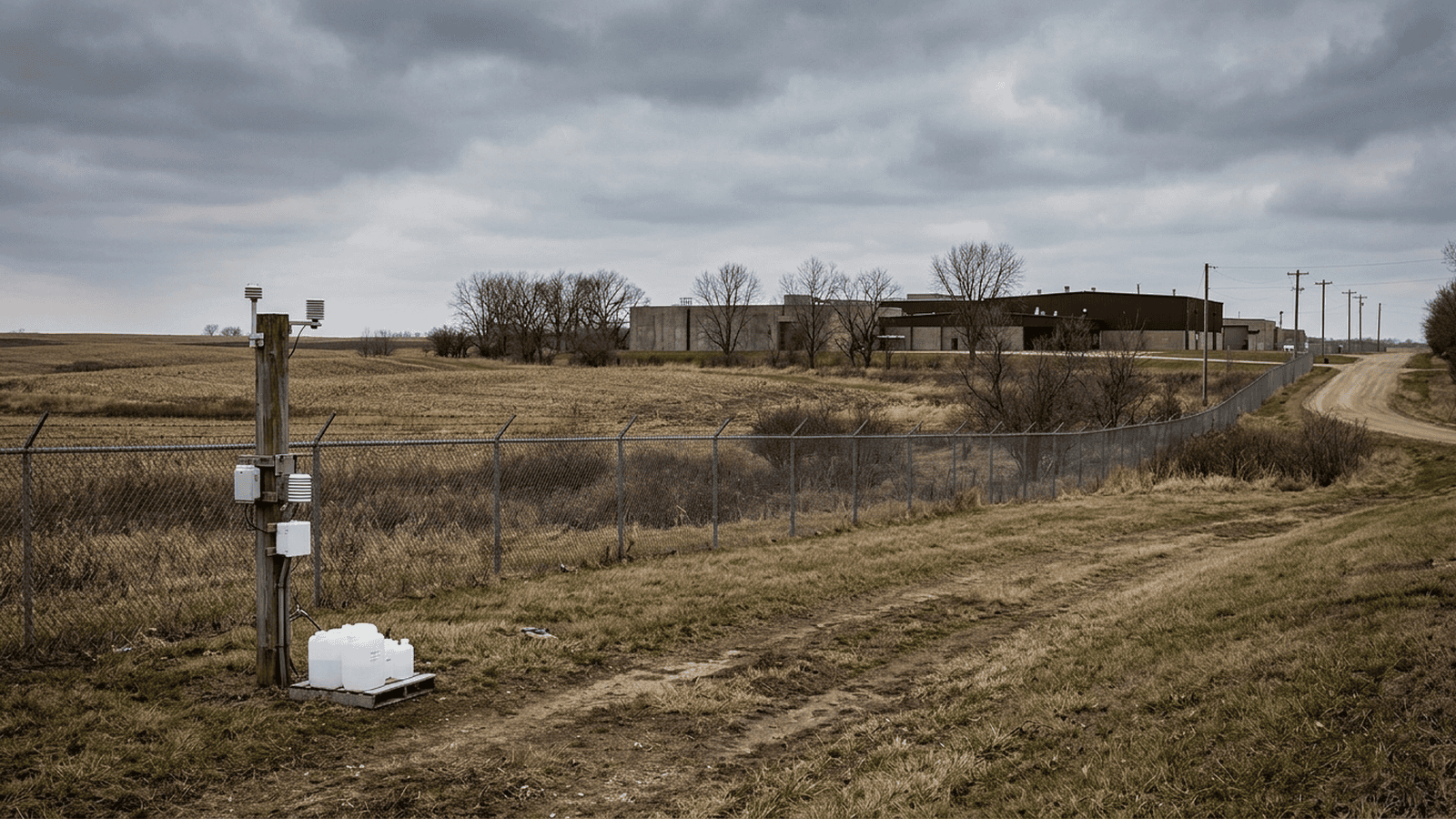
The EPA expects to begin receiving results as early as Friday after the Army detonated five tons of deteriorating explosives at its Middletown, Iowa, ammunition plant. The agency collected more than 1,500 samples before the blast and more than 1,000 afterward, covering homes, schools, farms, water sources and other locations. As of Thursday, no airborne lead had been detected, while testing for other possible compounds continues. The Army cited the risk of an unplanned explosion because lead azide had degraded during storage and become more sensitive to friction and shock. The EPA has not provided a deadline for all results, announced fees or forms, or described enforcement steps; results and public communication remain the next steps.
TLDR: Initial EPA results from the Middletown detonation may arrive as early as Friday, following more than 2,500 samples collected before and after the Army destroyed the aging explosives. No airborne lead had been detected as of Thursday, and tests for other possible compounds are still underway.
The Environmental Protection Agency expects to begin receiving test results as early as Friday after the U.S. Army detonated a stockpile of degrading explosives at an ammunition plant in Middletown, Iowa. The results will help show what was present in air, water, soil and dust around the site. The EPA said it collected samples both before and after Wednesday’s detonation and sent them to EPA and private laboratories. The agency has not yet reported the full findings.
The Army said the detonation was needed because the deteriorating explosives posed a risk of an unplanned explosion. The EPA said the lead azide had degraded during about 20 years in storage, and a recrystallization process had increased its sensitivity to friction and shock. That change made the material more susceptible to an unintended detonation, according to the agency. The Army destroyed five tons of explosives at the plant.
The sampling effort covers a broad area and a range of locations. Before the detonation, the EPA collected more than 1,500 samples of air, water, soil and dust. It collected more than 1,000 additional samples afterward. Sampling took place at more than 130 structures, including homes, schools, daycare centers and churches, as well as parks, nearby farms, drinking water sources and the Mississippi River watershed.
The number of samples and locations shows the scope of the EPA’s testing, but it does not yet provide a complete picture of what the blast released. The agency has said that results are still being processed. The samples are meant to check several kinds of material in different places, so the early findings will be only part of the overall account. The EPA has not yet described which individual locations will have results first.
As of Thursday, the EPA said it had detected no airborne lead throughout the region. That finding is an initial update, not a complete account of the testing. It does not answer what the remaining samples may show about lead in other materials or locations. The agency is also checking for other compounds that may have been released during the detonation. It said it is testing for everything it anticipated could potentially be released by the controlled blast.
The first results are expected to arrive soon, but the EPA has not said in the provided update when all results will be available or when a final assessment will be issued. Samples are being tested by multiple EPA and private laboratories. The agency’s statement describes the substances under examination, but does not provide a public schedule for each lab’s work. Those timing details remain part of the plan rather than confirmed deadlines. Receiving some results is also not the same as completing the full analysis or issuing a final account.
Residents and environmental groups had sought to block the detonation because they were concerned that toxic lead dust could threaten public health and agriculture. The 8th Circuit Court of Appeals temporarily halted the action last week while considering whether to issue a longer-lasting ruling. On Monday, the court said the groups had not shown they were likely to succeed. The detonation then proceeded on Wednesday.
The episode also drew attention to how the decision was communicated within the federal government. CBS News reported that the lead-up reached the White House and prompted questions within the Trump administration about what went wrong and why the matter had not been raised with senior officials sooner. President Trump praised the detonation as having “exceeded expectations.” The EPA’s pending test results will address environmental measurements; the information provided does not describe a separate inquiry’s findings or timetable.
For people and places directly covered by the sampling, the immediate practical impact is continued testing rather than a stated fee, form, or compliance requirement. The EPA has disclosed no costs to residents, paperwork requirements, enforcement actions, or public deadline for completing the analysis. The available update includes more than 2,500 samples taken before and after the detonation, but does not say when every result will be released. It also does not set out a deadline for residents to take action or describe any new rules tied to the sampling. The next necessary steps are for the laboratories to return results and for the EPA to communicate what those findings show, including results for lead and other compounds.

Sophie Carter serves as a Staff Writer for Just Right News, where she anchors the outlet’s critical coverage of Elections, Influence, and Democracy Infrastructure. In an era where the mechanics of voting and the flow of political capital are under constant scrutiny, Sophie provides a steady, principled voice dedicated to the preservation of American institutional integrity and the rule of law.
Raised in Charlotte, North Carolina, Sophie’s perspective was forged in a community that balances rapid modern growth with a deep respect for tradition and civic duty. Growing up in the Queen City, she witnessed firsthand how a robust local culture depends on the trust between the citizen and the state. This upbringing instilled in her a foundational belief that the right to vote is a sacred trust—one that must be protected from both administrative overreach and the encroaching influence of special interest groups. Her reporting reflects these North Carolina roots, emphasizing the importance of community-led governance and the preservation of the individual’s voice in the face of nationalized political movements.
Now based in Atlanta, Georgia, Sophie operates from the heart of one of the nation’s most pivotal and contested political landscapes. Her location allows her to report from the front lines of the debate over election security, legislative reform, and the modernization of voting systems. For Sophie, the “infrastructure” of democracy is not merely a matter of machines and ballots; it is the collection of laws, people, and transparent processes required to maintain public confidence. Her work often highlights the necessity of clear, enforceable standards that ensure every legal vote is counted fairly and that the machinery of our republic remains accountable to the taxpayers who fund it.
Central to her work at Just Right News is her acclaimed feature series, “The Price of a Vote.” Through this ongoing project, Sophie explores the complex web of influence that shapes modern campaigns and policy decisions. She delves into how high-level lobbying, non-governmental organizations, and shifting bureaucratic regulations impact the weight of an individual citizen’s ballot. By examining the financial and structural pressures placed on the electoral process, she provides readers with a comprehensive look at the forces vying for control over the American political system.
Sophie’s approach to journalism is rooted in a commitment to the constitutional framework. She views her role as a watchdog for the voter, ensuring that the systems meant to serve the public remain transparent and free from corruption. Whether she is analyzing the implementation of new voting technologies or investigating the influence of outside money on state-level policy, her work is characterized by a rigorous adherence to facts and a refusal to succumb to the sensationalism that often plagues modern political reporting.
At Just Right News, Sophie Carter continues to be a vital resource for readers who value clarity, conviction, and a defense of traditional American values. Her deep ties to the Southeast and her specialized focus on the mechanics of our republic make her an essential voice in the ongoing conversation about the future of American self-governance. Through her reporting, she remains dedicated to the idea that a secure and honest electoral system is the bedrock of a free and prosperous society.