

Justice Department Inspector General Don Berthiaume declined to investigate allegations concerning the prosecution of Olympian David Hearn, finding they fell outside his office’s authority and referring them to the Office of Professional Responsibility. Hearn’s felony case was dismissed after the U.S. attorney said new information indicated a contractor’s installation caused the Reflecting Pool damage. His lawyers allege misconduct, including a change in a key witness’s testimony, but those claims have not been established as findings. OPR has exclusive jurisdiction over department lawyers’ conduct in litigation and related legal work. The available account does not state whether OPR has opened a review or set a deadline.
TLDR: The Justice Department inspector general referred allegations tied to David Hearn’s dismissed Reflecting Pool case to the department office responsible for attorney conduct. Hearn’s lawyers say the referral leaves their requested investigation without an investigator; no OPR review timetable or finding is reported.
The Justice Department’s inspector general has declined to investigate allegations of misconduct by prosecutors in the David Hearn case, referring the matter to the department’s Office of Professional Responsibility. The allegations concern the prosecution of Hearn, an Olympian who was indicted over damage to the Reflecting Pool and whose felony case was later dismissed.
In an Oct. 21 letter, Inspector General Don Berthiaume said the allegations fell outside his office’s authority. The Office of Professional Responsibility, or OPR, has exclusive jurisdiction over department lawyers’ conduct when they are litigating, investigating or providing legal advice. The inspector general’s office investigates alleged misconduct by federal agents in connection with investigations.
The referral establishes which Justice Department office is assigned to consider the allegations. The available account does not give a detailed explanation from the inspector general beyond the limits of his office’s authority. Hearn’s attorneys say the referral means no investigation will take place, while the referral itself sends the matter to the office responsible for attorney conduct.
Hearn’s lawyers asked the Justice Department inspector general and the Interior Department inspector general on Oct. 6 to examine the circumstances of Hearn’s arrest, indictment and the dismissal of the felony charge. Their follow-up letter to OPR alleged potential crimes, including witness tampering, perjury-related conduct, obstruction of justice and civil rights violations. Those are allegations made by the lawyers, not findings by an investigator or court.
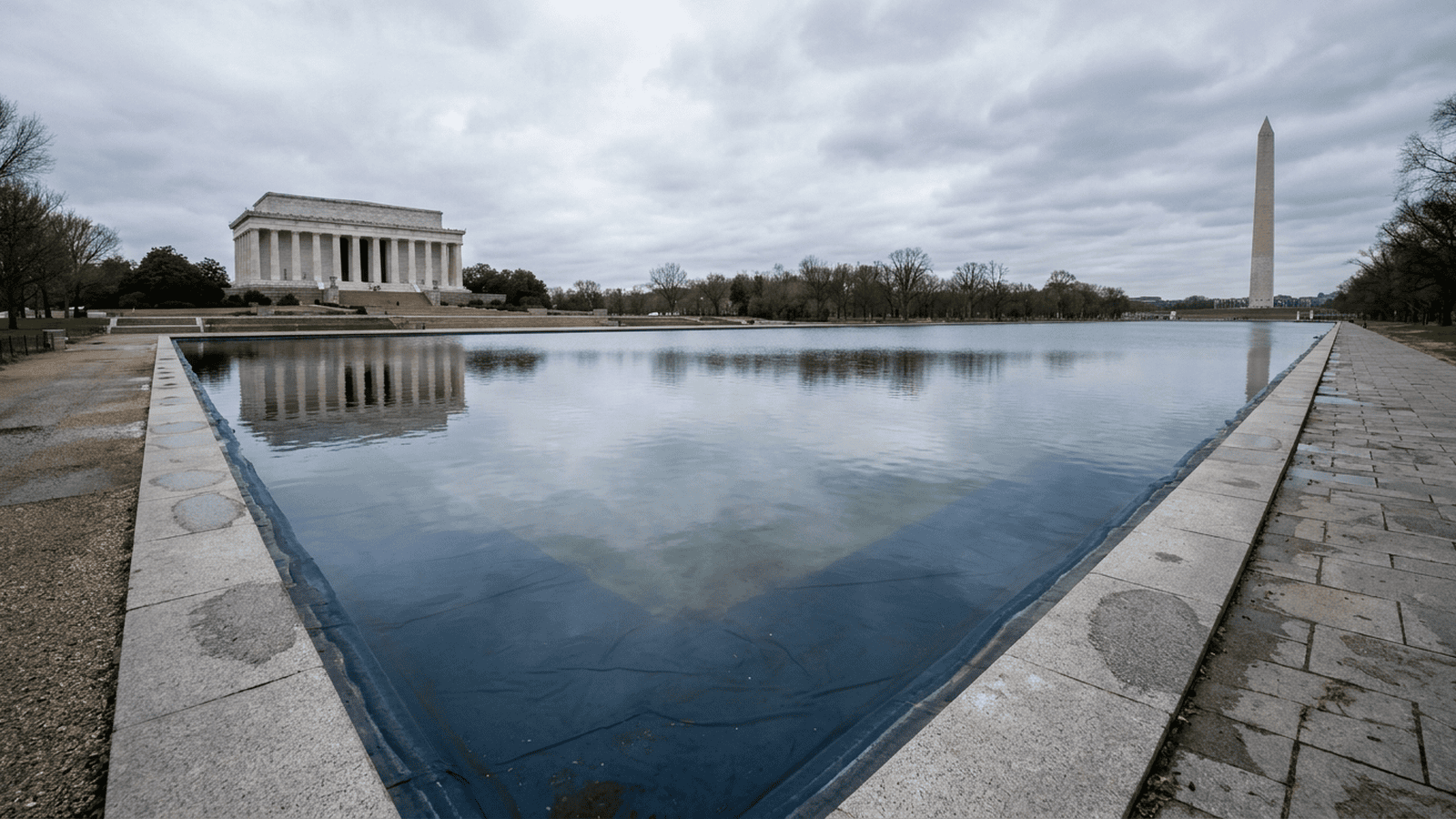
The case began with an indictment announced at a July 2 press conference by Jeanine Pirro, the U.S. attorney for the District of Columbia. Pirro accused Hearn of ripping up part of the Reflecting Pool liner by hand. She later dismissed the case, saying new information showed that the damage resulted from a contractor’s botched installation rather than vandalism.
Hearn’s attorneys have focused on a key witness’s grand jury testimony. They said the witness initially testified that the pool already needed repairs, could not estimate the cost of the damage and did not know whether Hearn had caused it. After a 21-minute break, the witness returned and said the damage was definitely at least $1,000, according to the lawyers. That amount was necessary for a felony destruction-of-property charge, their letter said.
The attorneys, including former Justice Department Inspector General Michael Bromwich, argued that the circumstances warranted an investigation by the inspector general. They said the allegations involved possible criminal conduct, rather than only poor judgment in litigation, and described the matter as within the inspector general’s traditional investigative function. Berthiaume’s decision, as reported in the Oct. 21 letter, was that the allegations fell outside his office’s purview.
The division of authority has been a longstanding issue. Previous Justice Department inspectors general have complained about limits on their ability to investigate certain kinds of attorney misconduct. OPR was established after the Watergate scandal and is charged with investigating specified categories of misconduct by department lawyers. The inspector general is appointed by the president and confirmed by the Senate; OPR’s head is appointed by the attorney general and is generally viewed as less independent.
That difference has drawn attention in this case. The account says Justice Department leadership removed the career official in charge of OPR last year, prompting concern among longtime department veterans about the office’s willingness to hold Trump-appointed officials accountable. Hearn’s attorneys also said OPR had been depleted by roughly 50% since the start of the Trump administration. Those concerns are their stated views; the available account does not report an OPR finding on Hearn’s allegations.
The case also sits within a record of earlier inspector general inquiries into department lawyers, despite the formal division of responsibilities. In 2023, the inspector general investigated former Massachusetts U.S. Attorney Rachael Rollins, concluding that she had improperly used her position to interfere in a local district attorney election by leaking information about a political rival. The office referred her for possible prosecution, but the Justice Department declined to bring criminal charges.
For Hearn, the immediate practical impact is that the inspector general will not conduct the requested investigation. The matter has been referred to OPR, but the account does not say whether OPR has opened a review, set a deadline or requested forms or other paperwork. It identifies no fees or new compliance requirements. The direct subjects of the allegations are department prosecutors and officials involved in the case; the lawyers’ request also named the Interior Department’s inspector general, but the reported referral is to Justice’s OPR.
The next step described in the record is OPR’s handling of the referral. No timetable or further oversight action is specified, and the attorneys say the inspector general’s decision means an investigation will not take place. Any additional review, findings or enforcement action remain unreported. The referral and any subsequent OPR action are the necessary steps now on the record, while the allegations remain unadjudicated.

Ryan Mitchell serves as a Staff Writer for Just Right News, where he anchors the desk for Cyber, Technology Policy, and Digital Sovereignty. In an era where the digital landscape has become as much a battlefield as any physical territory, Ryan provides a critical conservative lens on the forces shaping the future of American innovation and national security. His work is defined by a commitment to the idea that American leadership in the digital age is not just a matter of economic success, but a necessity for the preservation of global liberty.
Born and raised in Austin, Texas, Ryan’s perspective is deeply rooted in the Lone Star State’s tradition of independence and skepticism of centralized authority. Growing up in a city that transformed from a quiet state capital into a global technology hub, he witnessed firsthand the disruptive power of the tech industry. This upbringing instilled in him a firm belief in free-market principles and the necessity of protecting individual liberties from both government overreach and corporate overstep. His Texan background serves as a foundational compass, guiding his reporting toward stories that emphasize national resilience and the preservation of constitutional values in an increasingly virtual world.
Now based in San Francisco, California, Ryan operates from the epicenter of the very industry he scrutinizes. Living and working in the heart of Silicon Valley allows him to provide “boots on the ground” reporting that few conservative journalists can match. He navigates the cultural and political complexities of the Bay Area to bring Just Right News readers an inside look at the boardrooms and coding labs where the next generation of digital policy is forged. For Ryan, being stationed in San Francisco is a strategic choice; it allows him to challenge the prevailing ideological monoculture of the tech elite from within their own backyard, ensuring that the concerns of middle America are represented in the conversation about our digital future.
His beat—Cyber, Technology Policy, and Digital Sovereignty—covers the high-stakes world of data privacy, artificial intelligence, and the infrastructure of the modern web. Ryan is particularly focused on the concept of digital sovereignty, arguing that for a nation to remain truly free, it must maintain control over its own technological destiny and critical infrastructure. He frequently explores how international regulations and domestic policies impact the ability of American firms to compete without sacrificing the privacy or security of their citizens.
Central to his current body of work is his featured series, “The New Cold War.” Through this project, Ryan examines the escalating technological rivalry between the United States and its global adversaries. He delves into the complexities of state-sponsored hacking, the global race for semiconductor dominance, and the ideological struggle to define the rules of the internet. Ryan views this competition not merely as a commercial race, but as a fundamental defense of Western values against authoritarian digital models. Through his rigorous reporting and principled analysis, Ryan Mitchell ensures that the readers of Just Right News stay informed about the invisible forces defining the 21st century, always advocating for a future where technology serves the cause of freedom.