

Pregnancy Justice reports at least 902 prosecutions related to pregnancy, pregnancy loss, or birth in the first three years after the Supreme Court overturned Roe v. Wade. The cases include 70 involving pregnancy loss, 871 allegations of substance use during pregnancy, 77 allegations of inadequate prenatal care, and 13 connected to seeking or researching abortion. South Carolina, Oklahoma, and Alabama account for the largest reported totals, and each has a state supreme court decision treating fetuses as children under child-abuse laws. The excerpt links many cases to substance-use allegations and says health care providers often report people to law enforcement or child welfare; it identifies no deadlines, fees, or formal oversight plan.
TLDR: A Pregnancy Justice report counts at least 902 pregnancy-related prosecutions in the first three years after Dobbs, including 70 cases involving pregnancy loss. The largest totals were reported in South Carolina, Oklahoma, and Alabama, where court decisions have treated fetuses as children under child-abuse laws.
A report from Pregnancy Justice documents at least 902 cases across the United States in which prosecutors initiated charges related to pregnancy, pregnancy loss, or birth during the first three years after the Supreme Court overturned Roe v. Wade. The cases show that criminal prosecution related to pregnancy is not limited to abortion charges. Most involved a live birth and allegations that a pregnant person used drugs, while a growing share involved pregnancy loss, according to the report’s findings described by senior vice president Dana Sussman.
The excerpt does not provide an official government rationale for these prosecutions. Sussman describes the pattern as a continuation of decades of pregnancy policing, much of it connected to allegations of substance use and state laws that treat fetuses as children under child-abuse provisions.
The report counts 70 documented prosecutions involving pregnancy loss during the three years after Dobbs. It also records 871 allegations of substance use during pregnancy, 77 allegations of a lack of prenatal care, and 13 allegations related to obtaining, attempting, or researching an abortion. These figures describe allegations in the cases, not findings of guilt. The breakdown indicates that pregnancy-related prosecutions in the report extend well beyond cases involving abortion.
Fourteen state bills seeking to charge people who have abortions with homicide were introduced during the year covered by the excerpt, but none passed. The debate over those proposals has drawn attention, yet the report points to a larger existing set of cases involving pregnancy outcomes. It does not establish that Dobbs alone caused the prosecutions. Sussman said the underlying legal and enforcement patterns predate the 2022 ruling, while the report documents an acceleration in pregnancy-loss prosecutions after it.
The cases are concentrated in a small number of states. South Carolina accounted for 381, Oklahoma for 222, and Alabama for 204, while Massachusetts had none in the reported data. Sussman said each of the three states with the largest totals has a state supreme court decision treating fetuses as children under child-abuse laws. The decisions came in South Carolina in the late 1990s, Alabama in 2013, and Oklahoma in 2020.
The excerpt also describes prosecutions in states without such a supreme court ruling. Mississippi, which the interview says has no fetal-personhood law or court decision, had 27 cases in which prosecutors were described as interpreting existing laws in this way. The report’s figures therefore reflect both state court decisions and prosecutorial choices, according to the interview. In some states, cases have not yet reached a state supreme court.
Sussman said the racial profile of people prosecuted has changed over time. Black women were disproportionately charged in the 1980s, 1990s, and early 2000s, she said. In the current data described in the interview, the majority are white women, and poverty is a strong indicator. The excerpt presents these as findings and observations from the report and interview, rather than a complete account of every case or every state’s practices.
The interview links the history of these cases to the war on drugs in the 1980s and to the targeting of Black women on allegations of substance use, including crack cocaine. It also notes that the so-called “crack baby epidemic” was thoroughly debunked. Sussman said three state supreme court decisions—Alabama, South Carolina, and Oklahoma—used pregnancy and substance use to extend child-abuse protections to fetuses under state law. The excerpt does not provide the full text of those decisions or detail how each case was prosecuted.
The practical impacts described are criminal charges and the involvement of law enforcement or child-welfare agencies. The excerpt says health care providers often report people to law enforcement or child welfare, but it gives no information on prosecution costs, fines, required forms, compliance deadlines, or a uniform enforcement process. People most directly affected in the reported cases are those accused in connection with substance use, lack of prenatal care, pregnancy loss, or birth; the excerpt identifies low-income women as a majority demographic in the data described. It does not specify a new policy or set out upcoming deadlines.
The report’s next steps and any official oversight process are not provided in the excerpt. State court decisions and prosecutor actions remain central features of the account, while the documented cases offer a measure of how current laws have been applied. No deadline, review schedule, or formal compliance plan is identified in the available material.
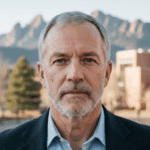
Mark Davis serves as the Senior Correspondent for Energy, Climate, and Resource Economics at Just Right News. In an era where the conversation around the environment is often dominated by alarmism and top-down mandates, Mark provides a vital, market-oriented perspective on the complex forces shaping our world. As the lead voice behind the acclaimed feature series “Power and the Planet,” he explores the intersection of environmental policy, global energy markets, and the fundamental economic principles that sustain modern civilization.
Mark’s pragmatic approach to resource management was forged in the high desert of his hometown, Albuquerque, New Mexico. Growing up in a region defined by both its breathtaking natural beauty and its rugged, resource-dependent landscape, he developed an early appreciation for the delicate balance between conservation and utilization. New Mexico’s unique position as a hub for both traditional energy production and cutting-edge scientific research provided Mark with a front-row seat to the evolution of the American energy sector. This upbringing instilled in him a deep-seated belief that true environmental stewardship is inseparable from economic prosperity and technological innovation.
Now based in Boulder, Colorado, Mark operates from the heart of the nation’s climate research community. While Boulder is often seen as a bastion of environmental idealism, Mark utilizes his post to provide a necessary counterweight, grounded in the realities of resource economics. He understands that energy policy does not exist in a vacuum; it has tangible consequences for the American taxpayer, the stability of the national power grid, and the strength of the domestic manufacturing sector. By reporting from the front lines of the climate debate, he is able to challenge prevailing narratives with hard data and a commitment to the principles of the free market.
Throughout his tenure at Just Right News, Mark has distinguished himself by focusing on the “Resource Economics” aspect of his beat. He frequently highlights the hidden costs of rapid energy transitions and advocates for an “all-of-the-above” energy strategy that prioritizes American energy independence. His work often shines a light on the geopolitical implications of resource scarcity, arguing that a secure nation must first be an energy-secure nation. Whether he is analyzing the impact of federal land-use regulations or investigating the supply chains required for new technologies, Mark remains focused on how policy decisions affect the lives and livelihoods of everyday citizens.
In “Power and the Planet,” Mark continues to bridge the gap between complex scientific concepts and the economic realities facing the country. He rejects the false choice between a healthy environment and a thriving economy, instead seeking out solutions that leverage American ingenuity and private-sector competition. For Mark, reporting on the climate is not about following the latest trends, but about ensuring that the conversation remains tethered to the foundational values of liberty, property rights, and fiscal responsibility. His contributions ensure that Just Right News readers receive a comprehensive, clear-eyed view of the challenges and opportunities defining the future of our planet.