

Volodymyr Zelenskyy criticized a pause in Russia sanctions, while Iran’s Revolutionary Guard made an unverified claim of a mine strike on a supertanker in the Strait of Hormuz.
Two tests of American influence emerged Saturday in separate theaters: Ukraine’s president pressed Washington to maintain economic pressure on Russia, while Iran’s Revolutionary Guard made an unverified claim of a mine strike in the Strait of Hormuz. The developments involve different adversaries and instruments of power, but both put the credibility and consequences of U.S. policy in view.
Volodymyr Zelenskyy called the U.S. pause in sanctions on Russia “unfortunate” and urged supporters to defend the law behind the measures, the Associated Press reported. He said the decision “completely disregards” the Graham Act and argued that sanctions could still help pressure Moscow to end its war against Ukraine.
The dispute raises a central question for Washington: how much economic leverage should it apply, and when should it hold back? Sanctions can raise costs for an adversary, but their effectiveness depends on enforcement, allied participation and a willingness to sustain them. A pause may preserve room for diplomacy or other priorities; it may also signal that pressure is negotiable. The available reporting does not establish the administration’s full rationale or the expected effect of the pause.
For Kyiv, the issue is not only the impact of a particular measure, but whether the Western coalition can maintain a consistent policy over time. Ukraine has relied on Western backing in its war with Russia, and decisions in Washington can shape both Kyiv’s resources and Moscow’s assessment of U.S. resolve.
The dispute follows President Donald Trump’s October 9 announcement of a deal with Russia for millions of tons of diesel, which he said would help lower U.S. energy prices. Four Republican and two Democratic senators urged Trump to reverse the plan, saying the administration had not consulted Congress or provided the legal justification they said was required. Their concerns highlight domestic energy costs and congressional oversight; Zelenskyy’s appeal reflects the stakes for Ukraine’s wartime leverage.
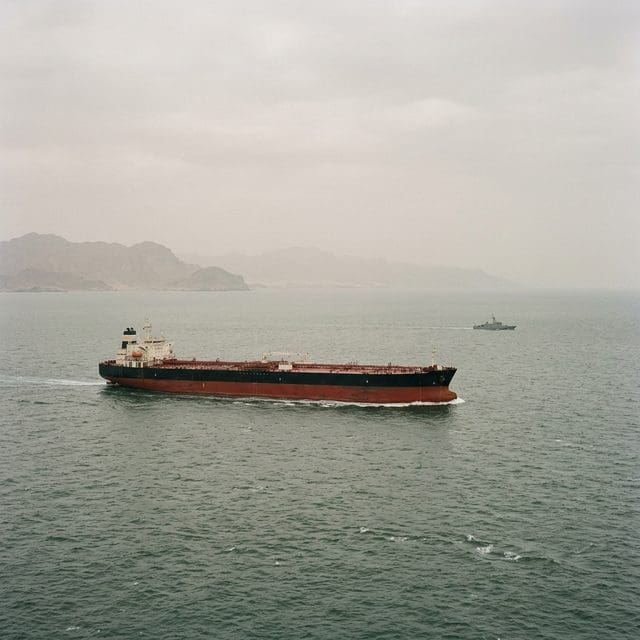
In the Gulf, Iran’s Islamic Revolutionary Guard Corps Navy said Saturday that a supertanker carrying more than two million barrels of crude struck a naval mine and caught fire while using what Iran called an unauthorized route through the Strait of Hormuz. Iran did not identify the vessel, its owner or its flag. The claim—including the extent of damage and whether there were casualties—had not been independently verified.
A confirmed strike on a large crude carrier could increase risks for commercial shipping and energy markets in a waterway central to global oil traffic. But the Iranian statement alone does not establish what happened to a vessel, who planted a mine or whether the incident was deliberate. The vessel’s route and the meaning of Iran’s description, “unauthorized,” also remain unclear.
That distinction matters for governments and shipping firms weighing operational risks or possible responses. Tehran’s account can shape perceptions of danger before outside investigators verify the facts. Yet acting on an unconfirmed claim risks escalation or a misreading of events; dismissing a genuine threat could leave commercial traffic exposed.
The two developments are not evidence of a coordinated strategy between Moscow and Tehran. They do underscore the demands on American power across distant theaters: sustaining pressure where it serves U.S. interests, keeping policy within legal and political bounds, and judging reported threats against verified facts. Allies and adversaries will assess not only what Washington announces, but whether its commitments endure and its response is grounded in evidence.

Olivia Kendall serves as the Senior Correspondent for Geopolitics, Defense, and Foreign Policy at Just Right News, where she provides a principled, conservative perspective on the complex forces shaping the global stage. With a career dedicated to deconstructing the intricacies of international relations, Kendall has become a trusted voice for readers who value national sovereignty, a robust military, and a foreign policy that prioritizes American interests above all else.
A native of Washington, D.C., Kendall’s professional journey is deeply rooted in her upbringing within the nation’s capital. Growing up in the epicenter of American political life, she developed an early and profound understanding of how policy is crafted and, more importantly, how it often fails to account for the values of the American heartland. This unique vantage point allowed her to witness firsthand the rise of globalist bureaucracies, fueling her commitment to reporting that champions the constitutional foundations of the United States. Her background as a British White American further informs her worldview, providing her with a keen appreciation for the Western tradition and the enduring importance of the “Special Relationship” in maintaining global stability.
Now based in Arlington, Virginia, Kendall operates from the doorstep of the Pentagon and the heart of the nation’s defense establishment. Her proximity to the decision-makers in the military and intelligence communities allows her to provide boots-on-the-ground reporting that is both timely and deeply informed. For Kendall, Arlington is more than just a base of operations; it is a daily reminder of the sacrifices made by the men and women in uniform. This connection to the defense community drives her rigorous coverage of military readiness and her advocacy for a “peace through strength” approach to diplomacy.
At Just Right News, Kendall is perhaps best known for her acclaimed feature series, “The World’s Shadow on America.” In this ongoing project, she explores the direct correlation between international developments and the daily lives of American citizens. Whether she is analyzing the encroachment of foreign adversaries in domestic supply chains or the impact of international treaties on local economies, Kendall’s work serves as a vital bridge between distant geopolitical shifts and their consequences at home. She rejects the notion that foreign policy is an abstract concern for elites, instead proving that what happens in the corridors of power in Brussels or Beijing has a tangible “shadow” that falls across every American doorstep.
Throughout her tenure, Kendall has remained a steadfast critic of international overreach and a vocal proponent of a clear-eyed, realistic foreign policy. She brings a sharp analytical mind to her beat, often challenging the prevailing narratives of the mainstream media to uncover the underlying truths that affect national security. Her reporting is characterized by a refusal to compromise on the truth and a dedication to the idea that a strong, secure America is the world’s best hope for liberty. As a Senior Correspondent, Olivia Kendall continues to lead the charge in providing the essential context and conservative insight necessary to navigate an increasingly volatile world.