

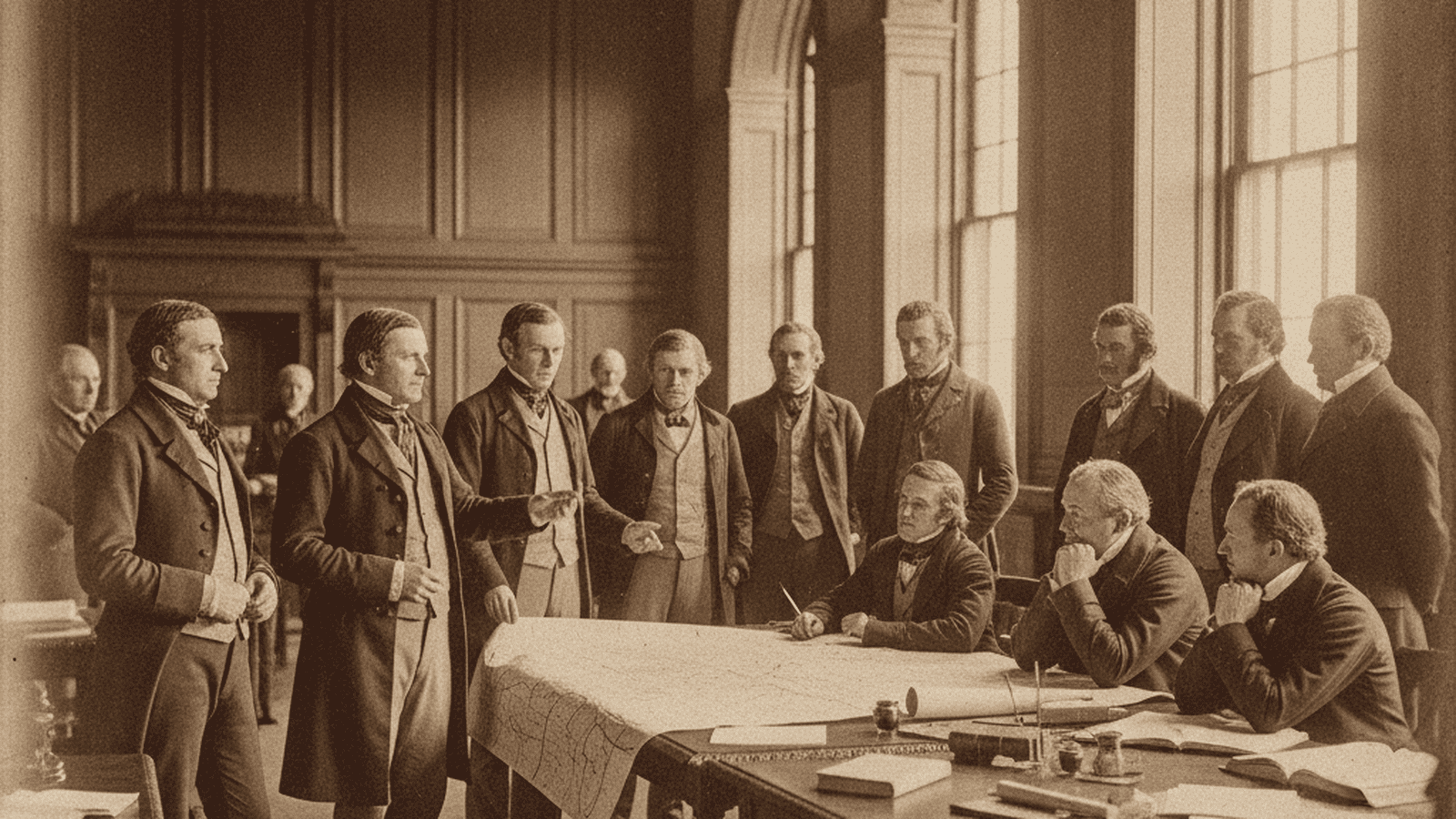
The North Carolina Constitutional Convention of 1835 fundamentally restructured the state’s government by shifting power from the eastern planter elite to the growing western counties. This United States political event introduced the direct election of the governor and realigned the legislature based on population and taxation.
TLDR: In 1835, North Carolina overhauled its colonial-era constitution to address deep regional inequities. By moving to a direct gubernatorial election and reallocating legislative seats, the state ended decades of political stagnation. This realignment empowered the Whig Party to launch a transformative era of internal improvements and public education.
In the early 19th century, North Carolina was often derided as the “Rip Van Winkle State” due to its perceived economic and social lethargy. This stagnation was largely rooted in a political structure that favored the eastern planter aristocracy at the expense of the rapidly developing western counties. Under the original 1776 constitution, each county received equal representation in the legislature regardless of size or population. By the 1830s, this arrangement allowed a minority of the population in the East to maintain a stranglehold on state policy, blocking internal improvements like railroads and canals that the West desperately needed.
The pressure for reform reached a breaking point in 1834, leading to the call for a constitutional convention. When the delegates assembled in Raleigh in June 1835, the primary objective was a total parliamentary realignment. The debates were fierce, pitting the traditionalist “Old Republicans” of the East against the “Westerners” and emerging Whigs who sought a more equitable distribution of power. Nathaniel Macon, a venerable figure of the old guard, presided over the convention, but the momentum belonged to reformers like David L. Swain, who argued that the state could not prosper while governed by a geographic minority.
The resulting amendments fundamentally altered the mechanics of North Carolina’s democracy. The convention abolished the “borough towns” system, which had granted specific towns their own legislative representatives regardless of the surrounding county’s needs. More importantly, it restructured the General Assembly into a more balanced body. Representation in the House of Commons was now based on the federal census, which accounted for the West’s growing population, while the Senate was organized based on the amount of taxes paid to the state. This compromise balanced the West’s superior numbers against the East’s greater concentrated wealth, yet it significantly weakened the East’s absolute veto over state progress and infrastructure spending.
Perhaps the most visible change was the shift in executive power. Previously, the governor was elected annually by the legislature, making the office a mere tool of the dominant faction. The 1835 reforms established a two-year term and moved the election to a direct popular vote. This change forced candidates to campaign across the entire state, fostering the development of organized political parties and a more engaged electorate. For the first time, the governor possessed a mandate independent of the legislative branch, allowing for more assertive executive leadership.
However, the realignment also included restrictive measures that reflected the era’s hardening racial attitudes. The convention voted to disenfranchise free people of color, who had previously been allowed to vote if they met property requirements. This move was part of a broader effort to consolidate white political identity as the state moved toward a more competitive two-party system. The disenfranchisement remained a stain on the state’s democratic expansion for decades, illustrating the complex and often contradictory nature of antebellum reform.
The immediate aftermath of the 1835 convention saw the rapid rise of the Whig Party in North Carolina. With the structural barriers to progress removed, the state embarked on an ambitious program of “internal improvements” that had been stalled for a generation. Under Whig leadership, North Carolina built its first major railroads, chartered new banks, and established a comprehensive system of public schools. This era of reform transformed the state from a backwater into a leader of the New South, demonstrating how parliamentary realignment could unlock suppressed economic potential. The 1835 constitution remained the fundamental law of the state until the post-Civil War era, serving as the blueprint for North Carolina’s transition into a modern, competitive political entity.

Dylan Brooks serves as the Senior Correspondent for Statehouses and Local Governance at Just Right News, where he brings a principled, constitutionalist lens to the often-overlooked machinery of state-level politics. As the lead voice behind the acclaimed feature series “Fifty Laboratories of Power,” Dylan has dedicated his career to the idea that the most impactful governance happens closest to home. His reporting consistently champions the Tenth Amendment, exploring how individual states can serve as testing grounds for innovative, conservative policy solutions that prioritize personal liberty and fiscal responsibility.
A native of Des Moines, Iowa, Dylan’s journalistic philosophy was forged in the heart of the American Midwest. Growing up in a community where local school board meetings and town halls were the bedrock of civic life, he developed a deep appreciation for the “retail politics” of the heartland. This upbringing instilled in him a fundamental belief that the American experiment is best preserved when power is decentralized. He carries the values of his Iowa roots into every assignment, maintaining a healthy skepticism of federal overreach and a steadfast commitment to the concerns of everyday citizens over the interests of the administrative state.
Now based in Madison, Wisconsin, Dylan operates from one of the nation’s most pivotal political battlegrounds. His location in a state capital known for its rigorous policy debates allows him to provide Just Right News readers with a front-row seat to the legislative process. From Madison, he tracks the ripple effects of statehouse decisions on local municipalities, ensuring that the connection between high-level policy and community impact is never lost. His work often highlights the success of conservative governors and legislatures in fostering economic growth, protecting parental rights, and securing the integrity of local institutions.
As an African American man in the conservative media landscape, Dylan offers a vital perspective on how limited government and free-market principles empower individuals and families. He frequently reports on how deregulation and school choice initiatives provide new avenues for success in underserved communities, challenging the monolithic narratives often presented by legacy media outlets. Dylan’s work is characterized by a commitment to the facts and a refusal to shy away from the complex realities of modern governance.
Throughout his tenure at Just Right News, Dylan has become a trusted authority for readers who value a rigorous, principled approach to the news. Whether he is dissecting a complex state budget or profiling a local grassroots movement, his goal remains the same: to provide the American public with the information they need to hold their local leaders accountable. By focusing on the “Fifty Laboratories of Power,” Dylan Brooks ensures that the vital work being done in statehouses across the country receives the national attention it deserves, always through a lens that respects the traditions and sovereignty of the American people.