

Former CIA Director John Brennan has been ordered to testify before a Florida grand jury as federal prosecutors investigate an alleged conspiracy by intelligence officials to violate Donald Trump’s civil rights.
A Sept. 14 court filing has confirmed that former CIA Director John Brennan was subpoenaed on Sept. 10 to appear before a federal grand jury in Fort Pierce, Florida. The subpoena, disclosed by Brennan’s attorney Ken Wainstein, marks a significant escalation in a Department of Justice investigation into whether national security and law enforcement officials conspired to deprive Donald Trump of his constitutional rights. The scheduled appearance for Oct. 15 places Brennan at the center of a probe that prosecutors describe as examining the conduct of officials involved in both the 2016 Russia interference investigation and the later classified documents case at Mar-a-Lago.
According to the filing, the Justice Department has formally notified Brennan’s legal team that he is considered a target of the investigation. This status indicates that prosecutors believe they have substantial evidence linking him to a crime, specifically focusing on whether he provided false testimony to Congress. While Brennan and his attorneys have denied any wrongdoing, the investigation is bolstered by a criminal referral from former Director of National Intelligence John Ratcliffe. Attorney General Pam Bondi’s DOJ “strike force” is reportedly examining these referrals as part of a broader look into what Trump allies have termed a “weaponization conspiracy” by Obama- and Biden-era officials. The Florida grand jury, authorized to convene in early 2026, represents a new venue for charging decisions, though parallel grand jury activity in Washington, D.C., suggests the DOJ is weighing multiple jurisdictions for potential indictments.
This domestic legal movement occurs against a backdrop of institutional friction in Washington. On Sept. 2, Senate Majority Leader John Thune expressed concerns regarding the Republican Senate majority, citing high consumer prices and the former president’s approval ratings. Within the same week, internal military management came under fire as Senator Thom Tillis called for the removal of Defense Secretary Pete Hegseth. Hegseth recently drew scrutiny for removing at least six Army officers from a two-star general promotion list, a move followed closely by the resignation of Army Secretary Dan Driscoll. These administrative shifts underscore a period of high volatility across the federal government’s national security and defense sectors.
Simultaneously, international anti-corruption efforts have triggered a leadership crisis in Ukraine. Prosecutor General Ruslan Kravchenko resigned on Sept. 8 following an investigation by the National Anti-Corruption Bureau of Ukraine (NABU) into a fraud ring allegedly operating within his office. Investigators allege a subordinate helped run a scam tied to fraudulent call centers. Kravchenko subsequently left the country for Paris on the night of Sept. 13, citing PACE hearings on Ukrainian children, a move that coincided with mounting clashes between his office and independent anti-corruption agencies. Kravchenko had previously signed a notice of suspicion against NABU Director Semen Kryvonos, characterizing the anti-corruption confrontation as politically motivated.
Ukrainian President Volodymyr Zelensky has formally requested the swift removal of Kravchenko, with a parliamentary vote scheduled for Sept. 15. The confrontation highlights a growing rift between traditional prosecutorial structures and the independent bodies tasked with oversight. Back in the United States, the Brennan subpoena signals that the Justice Department is moving from preliminary document reviews to compelled testimony. The October 15 appearance in Fort Pierce will likely focus on the internal communications and decision-making processes that led to the multi-year investigations into the former president. As the grand jury continues its work, the focus remains on whether government records and sworn statements align with the actions taken by the nation’s highest-ranking intelligence officers during the transition of power.
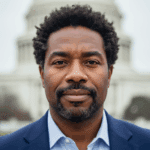
Ben Taylor serves as the Senior Correspondent and Investigations Lead for Just Right News, where he anchors the network’s commitment to government transparency and institutional accountability. With a career defined by a relentless pursuit of the facts, Taylor spearheads the acclaimed feature series “The Paper Trail,” a deep-dive investigative column that prioritizes primary source documentation over political rhetoric. Based in the heart of the nation’s capital, he has earned a reputation as one of the most formidable investigative journalists in Washington, D.C., known specifically for his mastery of public records and the Freedom of Information Act.
Taylor’s approach to journalism is deeply rooted in his upbringing in Kansas City, Missouri. Growing up in the “Show Me State,” he developed a healthy skepticism of centralized power and a profound respect for the common-sense values of the American heartland. This Midwestern foundation informs his reporting today, as he bridges the gap between the complex machinations of federal bureaucracy and the everyday concerns of citizens across the country. For Taylor, investigative reporting is not about chasing headlines; it is about ensuring that the government remains answerable to the people it serves.
As an African American man working within the conservative media landscape, Taylor brings a principled perspective to his beat. He views the Constitution and the right to information as the ultimate equalizers in a free society. His work often highlights how bureaucratic overreach and lack of transparency disproportionately affect individual liberties. By focusing on the “paper trail,” Taylor strips away the spin of partisan talking points, instead providing Just Right News readers with the raw data and internal communications that reveal how their tax dollars are spent and how policy decisions are actually made.
In his role as Investigations Lead, Taylor oversees a team dedicated to uncovering the stories that mainstream outlets often overlook. Whether he is auditing federal spending, investigating regulatory overreach, or exposing inefficiencies within the administrative state, his methodology remains consistent: follow the evidence wherever it leads. His presence in Washington, D.C., allows him to maintain a constant watch over the halls of power, yet he remains steadfastly connected to his roots, ensuring his reporting reflects the clarity and directness of his Missouri home.
Throughout his tenure at Just Right News, Taylor has become a vital voice for those who demand integrity in public office. He believes that a well-informed electorate is the strongest defense against government overreach, and he has dedicated his career to providing the public with the tools they need to hold their leaders accountable. Through “The Paper Trail” and his broader investigative work, Ben Taylor continues to set the standard for rigorous, document-driven journalism that champions the values of transparency, individual responsibility, and the rule of law.