

Higher education institutions are launching specialized AI degrees and professional mentorship tracks to align academic curricula with the rapidly evolving demands of the modern workforce.
American higher education is currently navigating a period of profound identity crisis, caught between two competing visions: one that views the university as a sanctuary for intellectual exploration and another that sees it as a high-tech engine for the modern workforce. As students increasingly question the return on investment for their degrees, institutions are responding with programs designed to bridge the gap between the classroom and the corporate office.
Syracuse University is leading a new wave of specialized technical training with the launch of its Bachelor of Science in Artificial Intelligence Science, scheduled for Fall 2026. Unlike general computer science degrees, this 120-credit program forces students to choose between software or hardware tracks, the latter focusing on AI processor architecture, silicon design, and FPGA acceleration. By starting AI-specific coursework in the second year—earlier than most comparable programs—and requiring a three-course senior capstone with regional industry partners, the university is signaling a shift toward human capital development that mirrors the immediate needs of defense, robotics, and embedded systems employers.
This institutional pivot is not limited to traditional undergraduate paths. Syracuse has expanded its portfolio to include a B.S. in Integrative Artificial Intelligence and an online Bachelor of Professional Studies in AI in Business Process Automation. The latter is explicitly marketed as a career-focused credential for those seeking roles as digital transformation specialists. However, this aggressive expansion comes at a time of broader institutional pressure. Local reports indicate that Syracuse created these degrees amid a drop in overall enrollment, suggesting that specialized vocational training is becoming a survival strategy for universities facing a shrinking pool of traditional applicants.
Despite these efforts, student skepticism remains high. A recent report from Fast Company suggests that many students question whether faculty and academic curricula can keep pace with an industry that evolves faster than academic bureaucracy. There is a growing concern that by the time a four-year degree is completed, the specific technical skills taught may already be obsolete. This skepticism highlights a demand for practical, market-aligned results over institutional prestige, placing pressure on administrators to prove their programs provide a tangible path to upward mobility.
Princeton University is attempting to address these “real-world challenges” through a different lens. On September 4, the university hosted an information session for Beyond College, a mentorship program led by Christian professionals from companies like SpaceX, Google, and Meta. The program focuses on the “5 C’s”—Career, Competency, Character, Connection, and Calling—to help students navigate finances, study habits, and career planning. By partnering with working professionals to offer virtual small-group tracks and one-on-one coaching, the university acknowledges that traditional academic advising may no longer be sufficient to prepare students for the complexities of the modern economy.
Standing in contrast to this trend is the traditionalist view championed by Michael S. Roth. In a guest essay for the New York Times, Roth argued that the “real point of college” is the practice of freedom and civic formation rather than mere job training. He suggests that focusing too heavily on immediate workforce alignment risks losing the transformative power of liberal arts inquiry. This tension defines the current state of higher education policy. While institutions like Syracuse and Princeton lean into technical competency and professional networking, the broader debate remains: should a degree be a certificate of technical skill or a credential of character? For now, the market seems to be pushing universities toward the former, as students look for reliable ways to secure their place in an increasingly automated world.
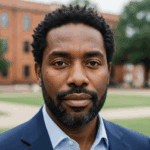
Daniel Owens serves as a Senior Correspondent for Just Right News, where he leads the newsroom’s coverage of Education, Workforce, and Upward Mobility. In an era where the national conversation often overlooks the practical foundations of success, Owens brings a principled perspective to the forefront of the media landscape. His work is defined by a commitment to the idea that a strong society is built on the pillars of quality education, a robust work ethic, and the removal of bureaucratic barriers to individual achievement.
Born and raised in Cleveland, Ohio, Owens’s worldview was shaped by the industrial landscape of the Midwest. Growing up in a city known for its grit and resilience, he witnessed firsthand the transformative power of steady employment and the devastating effects of economic stagnation. This background instilled in him a deep respect for the American worker and a healthy skepticism toward top-down government solutions that often fail to reach the communities they intend to help. As an African American man who has navigated the path to professional success, Owens approaches his beat with a nuanced understanding of how meritocracy and personal responsibility intersect with opportunity. He frequently draws on his roots to highlight the importance of family stability and community-led initiatives in fostering the next generation of leaders.
At Just Right News, Owens is the architect of the acclaimed feature series, “The Learning Curve.” Through this platform, he explores the evolving landscape of American schooling, from the rise of the school choice movement to the revitalization of trade schools and vocational training. He frequently challenges the status quo of higher education, advocating for a return to academic rigor and the practical alignment of degrees with market demands. For Owens, education is not merely about obtaining credentials; it is about equipping young people with the tools necessary to lead self-sufficient, meaningful lives. His reporting on “The Learning Curve” has become essential reading for parents and policymakers who believe that educational competition and parental rights are the keys to a brighter future.
Now based in Raleigh, North Carolina, Owens finds himself at the heart of one of the nation’s most dynamic regions for innovation and growth. Raleigh’s unique blend of traditional values and a fast-paced economy provides the perfect backdrop for his reporting on the modern workforce. From the tech hubs of the Research Triangle to the rural communities of the South, he tracks how shifts in the economy are impacting families and local industries. His reporting often highlights the success stories of entrepreneurs and workers who are thriving by embracing the values of hard work and innovation.
Throughout his career, Daniel Owens has remained a steadfast voice for the student seeking a better path and the worker striving for a better life. His reporting for Just Right News serves as a vital resource for readers who value common-sense solutions to the challenges of the 21st-century economy. By focusing on the intersection of policy and the human spirit, Owens continues to provide a roadmap for how individuals and communities can achieve lasting upward mobility.