

Record numbers of students are navigating grade deflation and alternative learning paths as traditional education systems face increased scrutiny over workforce readiness and individual achievement.
The annual release of Leaving Cert results serves as a stark reminder of the shifting landscape in human capital development. Today, a record 70,411 students across Ireland received their marks, navigating a system that is intentionally pulling back from the grade inflation of the pandemic era. Data from the State Examinations Commission indicates a 1.8 percent drop in overall grades, with top-tier H1 marks falling from 12.1 percent in 2025 to 10.1 percent today. H2 marks also saw a decline, dropping from 19.5 percent to 17.8 percent. This return to rigorous standards is a necessary correction for a workforce that requires clear signals of competency and individual effort.
While the Irish Department of Education and Youth has established national helplines to assist students through this transition, the real story lies in how individuals are adapting to the modern educational marketplace. The Central Applications Office (CAO) is set to issue Round One offers on Wednesday, August 26, starting at 14:00. This follows a robust Round Zero on August 6, which already saw 16,052 offers issued to 12,297 applicants, including mature students and those from further education backgrounds. The system is processing a record-high number of candidates, yet the tightening of grade distributions suggests a move away from the top-down leniency of recent years.
One notable example of this shift is a student who left formal schooling in her second year, choosing instead to self-study using paid online grinds and free resources like YouTube. By taking personal responsibility for her own curriculum and funding her studies through work, she achieved a maximum score of 625 points. This level of achievement outside the traditional bureaucratic framework underscores a growing reality: motivated individuals no longer require a physical seat in a state-run classroom to master complex material. It highlights a pivot toward human capital being developed through private initiative rather than institutional dependency.
However, the broader economic picture remains mixed, presenting a challenge for these new graduates. While the Conference Board Leading Economic Index for the U.S. showed a modest 0.2 percent increase in July to 99.5, the Ludwig Institute reports that functional unemployment has risen for four consecutive months as of August 20. This disconnect suggests that while students are working harder for their credentials, the alignment between academic output and workforce participation requires further refinement. The market is rewarding specialized skills, as seen in the tech sector where FaceTec recently secured its 50th patent for biometric security, and Music IP Holdings launched a new licensing framework for AI music creation.
Institutional responses to these workforce needs are becoming more localized and practical. SunShare, for instance, recently completed a community solar project in Santa Fe and donated $7.2 million to Navajo Technical University and other local organizations, focusing on community-based development. In the research sector, San Jose State University continues to demonstrate the value of specialized academic rigor, with new findings regarding the slip rates of the San Andreas Fault providing critical data for regional infrastructure planning. These examples show that when education aligns with specific industry needs or critical research, the return on investment for human capital is clear.
As the CAO prepares to finalize university placements and students weigh their options before the September 1 acceptance deadline, the emphasis must remain on merit and practical outcomes. The rise of alternative learning paths and the reintroduction of grade discipline are positive steps toward a more transparent system. For the thousands of students viewing their scripts on the examinations.ie portal this week, the lesson is clear: in a competitive global economy, individual achievement and the removal of bureaucratic barriers are the most reliable drivers of upward mobility.
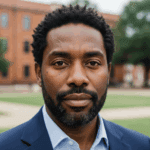
Daniel Owens serves as a Senior Correspondent for Just Right News, where he leads the newsroom’s coverage of Education, Workforce, and Upward Mobility. In an era where the national conversation often overlooks the practical foundations of success, Owens brings a principled perspective to the forefront of the media landscape. His work is defined by a commitment to the idea that a strong society is built on the pillars of quality education, a robust work ethic, and the removal of bureaucratic barriers to individual achievement.
Born and raised in Cleveland, Ohio, Owens’s worldview was shaped by the industrial landscape of the Midwest. Growing up in a city known for its grit and resilience, he witnessed firsthand the transformative power of steady employment and the devastating effects of economic stagnation. This background instilled in him a deep respect for the American worker and a healthy skepticism toward top-down government solutions that often fail to reach the communities they intend to help. As an African American man who has navigated the path to professional success, Owens approaches his beat with a nuanced understanding of how meritocracy and personal responsibility intersect with opportunity. He frequently draws on his roots to highlight the importance of family stability and community-led initiatives in fostering the next generation of leaders.
At Just Right News, Owens is the architect of the acclaimed feature series, “The Learning Curve.” Through this platform, he explores the evolving landscape of American schooling, from the rise of the school choice movement to the revitalization of trade schools and vocational training. He frequently challenges the status quo of higher education, advocating for a return to academic rigor and the practical alignment of degrees with market demands. For Owens, education is not merely about obtaining credentials; it is about equipping young people with the tools necessary to lead self-sufficient, meaningful lives. His reporting on “The Learning Curve” has become essential reading for parents and policymakers who believe that educational competition and parental rights are the keys to a brighter future.
Now based in Raleigh, North Carolina, Owens finds himself at the heart of one of the nation’s most dynamic regions for innovation and growth. Raleigh’s unique blend of traditional values and a fast-paced economy provides the perfect backdrop for his reporting on the modern workforce. From the tech hubs of the Research Triangle to the rural communities of the South, he tracks how shifts in the economy are impacting families and local industries. His reporting often highlights the success stories of entrepreneurs and workers who are thriving by embracing the values of hard work and innovation.
Throughout his career, Daniel Owens has remained a steadfast voice for the student seeking a better path and the worker striving for a better life. His reporting for Just Right News serves as a vital resource for readers who value common-sense solutions to the challenges of the 21st-century economy. By focusing on the intersection of policy and the human spirit, Owens continues to provide a roadmap for how individuals and communities can achieve lasting upward mobility.