

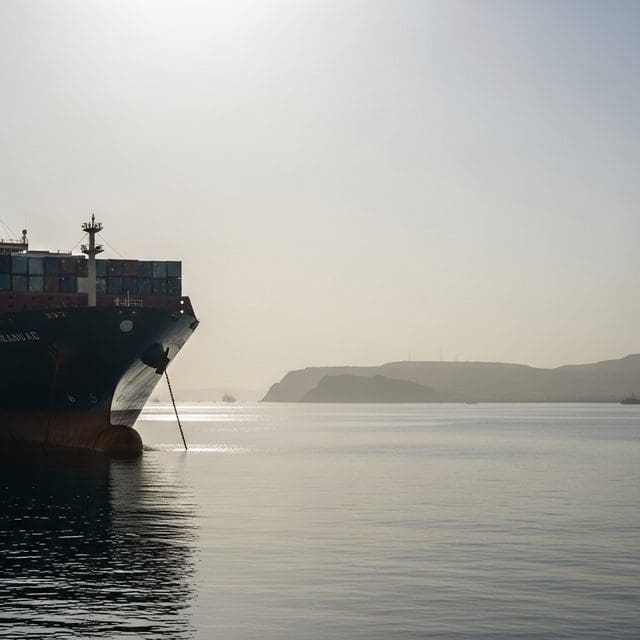
Despite political assurances of a reopening, the Strait of Hormuz remains effectively closed to commercial traffic, stranding vessels and threatening the cost of American consumer goods.
The promise of a seamless global flow of goods is colliding with the harsh realities of geopolitical instability. As of August 16, 2026, the Strait of Hormuz remains effectively shuttered to commercial shipping, marking 168 days since a formal closure was declared. While political leaders previously signaled a breakthrough via a memorandum of understanding involving sanctions relief and toll-free transit, the physical reality at sea tells a different story. At least 41 carrier vessels remain stranded inside the Gulf, unable to secure the war-risk insurance necessary to move. The cost of this insurance has spiked to levels that industry analysts describe as beyond the reach of most commercial operators, effectively pricing out the movement of essential cargo.
For the American blue-collar worker and the domestic consumer, this is not merely a distant maritime dispute. The Strait is a primary artery for the energy and raw materials that fuel global manufacturing. Data from Kpler indicates that vessel transits have plummeted to single-digit daily counts, dropping to just eight or nine ships per day compared to the pre-war average of twelve or more. This bottleneck acts as a hidden tax on every stage of production. When shipping traffic hits a standstill, the cost of moving components from origin to shelf rises, eventually manifesting as inflation at the local hardware store or grocery aisle. The longer these ships sit idle, the more pressure builds on the American family budget.
The situation has been further complicated by the reimposition of U.S. naval blockade measures in early August. These actions, taken in response to renewed attacks on August 14, underscore the fragility of trade deals that rely on the cooperation of hostile actors. While the initial memorandum promised a reopening without tolls, new discussions between Iran and Oman regarding coordinated fee systems and separate shipping lanes suggest that the era of free and open transit through these waters may be coming to a permanent end. The U.S. has warned it could maintain its blockade indefinitely, adding another layer of permanence to what was once considered a temporary disruption. This shift from free transit to a potential coordinated fee system introduces a dangerous precedent for global trade governance, where access to international waters becomes a pay-to-play scheme.
Major shipping carriers are already voting with their rudders. Four of the nine largest global operators have ceased using the Strait entirely, opting for longer, more expensive routes or pausing operations altogether. This shift is not just a logistical headache; it is a fundamental restructuring of the Asia-Europe and Trans-Pacific supply chains. As the European Central Bank notes, states are increasingly ramping up industrial subsidies in strategic sectors like semiconductors and electric vehicles to mitigate these vulnerabilities. The deepening global trade imbalances are a direct result of this fracturing, as nations realize that corporate efficiency cannot come at the expense of national security.
The dignity of the American workforce depends on a supply chain that is not held hostage by overseas conflicts. When the journey of a product is interrupted by a blockade thousands of miles away, it exposes the risks of extreme globalist policies that prioritize low-cost labor over local resilience. As long as the Strait remains a site of instability, the argument for bringing manufacturing back to American soil gains strength. True sovereignty is found in the ability to produce what we need, where we live, without waiting for the permission of foreign powers to clear the sea lanes. A factory in the Midwest is a far more reliable partner than a shipping lane in a war zone.

Sean Bradley serves as the Senior Correspondent for Trade, Supply Chains, and Global Labor at Just Right News, where he brings a principled, clear-eyed perspective to the complex systems that power the modern world. With a focus on the economic forces that impact the American household, Bradley has distinguished himself as a leading voice in explaining how global shifts in manufacturing and logistics translate to the kitchen table.
Growing up in Long Beach, California, Bradley’s interest in the movement of goods was forged against the backdrop of one of the nation’s most vital maritime gateways. Raised in a community where the towering cranes of the port were a constant fixture on the horizon, he developed an early appreciation for the blue-collar industries that form the backbone of the American economy. This upbringing instilled in him a profound respect for the dockworkers, truckers, and laborers who keep the country moving, a sentiment that remains a cornerstone of his reporting today. For Bradley, trade is not merely a series of abstract figures on a spreadsheet; it is a human endeavor that sustains families and defines the strength of a nation.
Now based in Seattle, Washington, Bradley occupies a strategic vantage point in another of the country’s most significant trade hubs. His location allows him to witness firsthand the intersection of traditional industry and the evolving technological landscape of global logistics. From the Pacific Northwest, he monitors the flow of goods across the ocean, providing Just Right News readers with timely insights into how international tensions, regulatory hurdles, and labor disputes affect the availability and cost of essential goods.
His signature feature series, “The Journey of Things,” has become a staple for readers seeking to understand the intricate path products take from raw materials to the retail shelf. Through this series, Bradley pulls back the curtain on the global marketplace, often highlighting the risks of over-reliance on foreign adversaries and the importance of domestic manufacturing resilience. His reporting consistently emphasizes the conservative values of national sovereignty, free-market competition, and the protection of the American worker from unfair global practices.
As a journalist of Irish heritage, Bradley maintains a deep-seated respect for the dignity of the individual worker and the importance of community stability. He approaches his beat with a commitment to transparency, often questioning the status quo of globalist policies that prioritize corporate efficiency over local prosperity. Whether he is reporting from a warehouse floor or analyzing a new international trade agreement, his goal remains the same: to provide the American public with the truth about where their products come from and what it costs to get them there.
Throughout his tenure at Just Right News, Bradley has remained a steadfast advocate for economic common sense. His work serves as a vital resource for those who believe that a strong nation is built on secure borders, robust trade, and a respected workforce. By combining his local roots in Long Beach with his professional experience in Seattle, Bradley continues to offer a unique and necessary perspective on the forces that shape the American way of life.