

Infrastructure delays and rising geopolitical tensions in the Strait of Hormuz are squeezing the U.S. energy sector, complicating the transition to battery storage while keeping gasoline prices elevated.
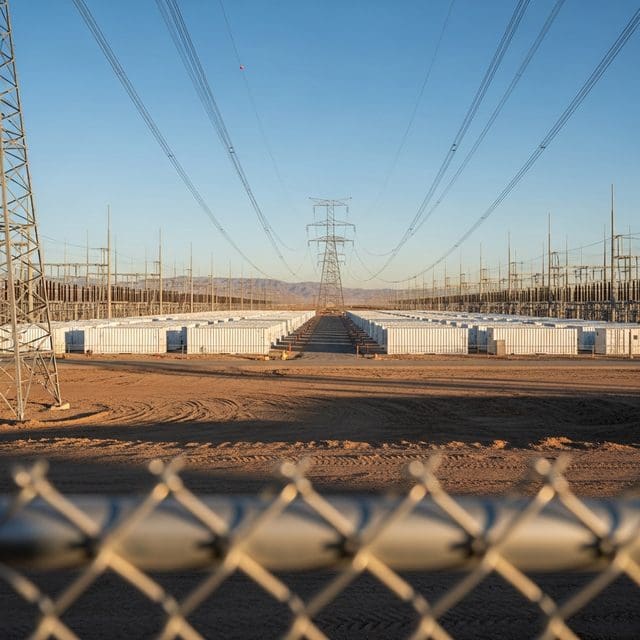
The American energy landscape is currently defined by a stark contrast between ambitious technological capacity and the grinding reality of infrastructure and geopolitical friction. While developers plan to add a record 24 gigawatts of utility-scale battery storage to the U.S. grid in 2026—a significant jump from the 15 gigawatts added in 2025—a large portion of these projects remains stalled in interconnection queues. Utilities and grid operators are struggling to complete the transmission and substation upgrades necessary to bring these assets online, creating a bottleneck that threatens both reliability and emissions targets. This backlog leaves gigawatts of planned storage waiting for years, effectively neutralizing the near-term benefits of these capital-intensive investments.
This infrastructure lag is particularly acute as regional disparities in grid flexibility widen. Fresh data from the Energy Information Administration indicates that 80 percent of new 2026 battery capacity is concentrated in just three states: Texas, California, and Arizona. While other regions are attempting to catch up, the timelines are long. In Illinois, a new Power Agency program is moving into its launch phase to procure 3 gigawatts of standalone battery storage. However, while the first procurement is legally required by late August 2026, the actual projects are not slated to be finalized until late 2029. This slow pace of deployment highlights the difficulty of modernizing a legacy grid to handle intermittent renewable sources, even as quarterly storage installations show a 32 percent year-over-year increase.
On the consumer side, the financial impact of energy policy and maintenance is coming into sharper focus. National Grid has proposed a gas delivery rate freeze for approximately two million customers in New York City and Long Island through March 2028. However, the proposal includes roughly $1.7 billion in capital spending that would be recouped from customers after the freeze expires, along with property taxes and site maintenance costs. Watchdogs and public advocates have expressed skepticism, characterizing the move as a deferred price hike that masks the true cost of infrastructure upkeep. The Public Service Commission, which is accepting public comments through August 24, 2026, has noted that any future cost recovery would face strict caps and limits, yet the long-term burden on the taxpayer remains a central concern.
Market stability is further complicated by international volatility and the shifting risk profile of global trade. In the Middle East, Iran remains defiant regarding security in the Strait of Hormuz, a critical chokepoint for global energy supplies. President Trump has recently signaled that Americans should accept higher gasoline prices as a necessary cost of confronting Iranian influence, framing the expense as a matter of national security. Analysts note that the current market pressure stems more from a geopolitical risk premium on shipping and refined products rather than an immediate physical supply cutoff. Nevertheless, the result for the American consumer is a persistent inflationary pressure at the pump that defies traditional inventory-based market logic.
Amidst these challenges, integrated operators like BKV are drawing analyst attention for their operational execution in natural gas and power. During recent Q2 earnings calls, analysts pressed BKV leadership on hedging strategies and exposure to gas price volatility rather than headline revenue misses. This focus reflects a broader market shift toward valuing stability and execution risk in power projects over speculative growth. As the S&P 500 reaches new highs driven by AI growth and tech confidence, the energy sector remains the fundamental anchor, balancing the promise of technological innovation from firms like Bloom Energy against the tangible constraints of physical infrastructure, grid reliability, and global diplomacy.

Mark Davis serves as the Senior Correspondent for Energy, Climate, and Resource Economics at Just Right News. In an era where the conversation around the environment is often dominated by alarmism and top-down mandates, Mark provides a vital, market-oriented perspective on the complex forces shaping our world. As the lead voice behind the acclaimed feature series “Power and the Planet,” he explores the intersection of environmental policy, global energy markets, and the fundamental economic principles that sustain modern civilization.
Mark’s pragmatic approach to resource management was forged in the high desert of his hometown, Albuquerque, New Mexico. Growing up in a region defined by both its breathtaking natural beauty and its rugged, resource-dependent landscape, he developed an early appreciation for the delicate balance between conservation and utilization. New Mexico’s unique position as a hub for both traditional energy production and cutting-edge scientific research provided Mark with a front-row seat to the evolution of the American energy sector. This upbringing instilled in him a deep-seated belief that true environmental stewardship is inseparable from economic prosperity and technological innovation.
Now based in Boulder, Colorado, Mark operates from the heart of the nation’s climate research community. While Boulder is often seen as a bastion of environmental idealism, Mark utilizes his post to provide a necessary counterweight, grounded in the realities of resource economics. He understands that energy policy does not exist in a vacuum; it has tangible consequences for the American taxpayer, the stability of the national power grid, and the strength of the domestic manufacturing sector. By reporting from the front lines of the climate debate, he is able to challenge prevailing narratives with hard data and a commitment to the principles of the free market.
Throughout his tenure at Just Right News, Mark has distinguished himself by focusing on the “Resource Economics” aspect of his beat. He frequently highlights the hidden costs of rapid energy transitions and advocates for an “all-of-the-above” energy strategy that prioritizes American energy independence. His work often shines a light on the geopolitical implications of resource scarcity, arguing that a secure nation must first be an energy-secure nation. Whether he is analyzing the impact of federal land-use regulations or investigating the supply chains required for new technologies, Mark remains focused on how policy decisions affect the lives and livelihoods of everyday citizens.
In “Power and the Planet,” Mark continues to bridge the gap between complex scientific concepts and the economic realities facing the country. He rejects the false choice between a healthy environment and a thriving economy, instead seeking out solutions that leverage American ingenuity and private-sector competition. For Mark, reporting on the climate is not about following the latest trends, but about ensuring that the conversation remains tethered to the foundational values of liberty, property rights, and fiscal responsibility. His contributions ensure that Just Right News readers receive a comprehensive, clear-eyed view of the challenges and opportunities defining the future of our planet.