

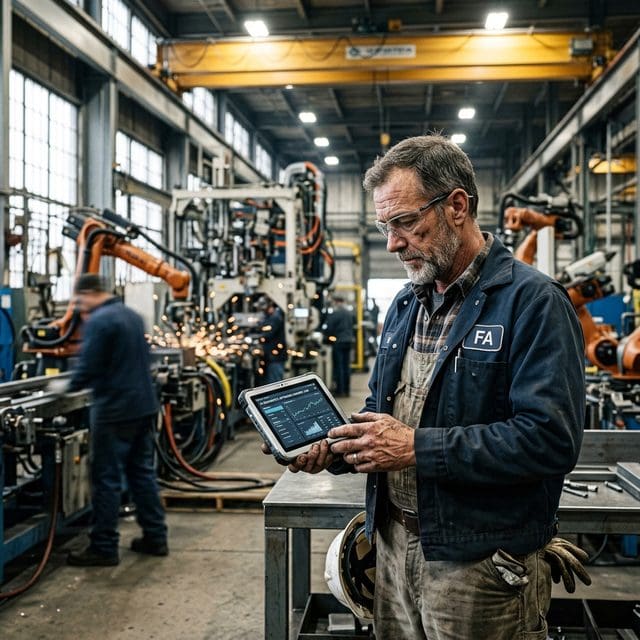
Industrial strikes and new AI deployments highlight a growing tension between technological efficiency and the fundamental stability of the American worker.
The American labor market is navigating a volatile intersection of rapid technological deployment and traditional industrial friction. As of late September 2026, the push for automation has moved from the server room to the pocket, with Meta unveiling its Muse Charm handheld AI and OpenAI launching its ‘dots’ agent. While these tools are marketed as productivity boosters, recent findings from the University of Bath suggest a hidden cost: ‘epistemic de-skilling.’ This erosion of human judgment among managers poses a long-term threat to the quality of American workplace leadership, suggesting that over-reliance on algorithms may hollow out the expertise that built these industries.
Data indicates that workers are already integrating these tools at their own expense to survive. Recent reports show that 17% of employees personally pay for AI subscriptions to keep pace with production demands, often without employer knowledge. This ‘shadow AI’ usage suggests that while corporate balance sheets may not reflect the full cost of automation, the burden of staying relevant is shifting to the individual. On average, these workers save 70 minutes per week, but they do so by subsidizing their own employment costs, a trend that erodes the real value of take-home pay.
On the industrial front, the struggle for physical safety remains paramount. Amazon warehouse workers at the SWF1 facility in Rock Tavern, New York, launched an unfair labor practice strike on September 29, citing dangerous conditions. This walkout underscores a persistent reality: no matter how sophisticated software becomes, the physical backbone of the economy relies on men and women working in environments that must remain humane. The strike at Rock Tavern serves as a reminder that the ‘efficiency’ promised by automation often comes at the cost of the worker’s physical well-being.
The aerospace sector faces similar instability. Boeing’s largest white-collar union is scheduled to vote on a sweetened contract offer on September 30. A rejection would likely trigger a strike, further delaying critical aircraft programs and deliveries. This comes as the manufacturer secured a $20 billion Navy contract for next-generation fighter aircraft (F/A-XX). The tension highlights a recurring theme: massive federal investments are frequently announced while the stability of the workforce required to execute them remains in question.
Trade policy is also shifting the landscape for domestic production. The International Trade Commission recently issued an affirmative final injury determination regarding trailers imported from Canada, China, and Mexico. This move to address antidumping duties is a necessary step in protecting local manufacturing from unfair global competition. Similarly, the toy industry is seeing broad tariff relief, which may provide breathing room for retailers, though the long-term impact on domestic jobs remains to be seen.
Amidst these shifts, localized efforts show the value of workforce participation. The Gateway Association reported success in placing workers with disabilities, generating over $3 million in wages through hundreds of employer partnerships. These results demonstrate that the dignity of work is best preserved through community-focused recruitment rather than top-down mandates. As the Trump administration and AI executives sign voluntary safety accords, the focus must remain on the shop floor. Whether resisting the ‘de-skilling’ of management or ensuring AI agents do not breach sensitive portals—as seen in the recent Australian Medicare breach—the priority must be the stability of the American family and the protection of manual trades.

Tom Blake serves as the Senior Correspondent for Labor, Wages, and Automation at Just Right News, where he brings a grounded, principled perspective to the most pressing economic issues facing the American heartland. As the lead voice behind the acclaimed feature series “The Price of Work,” Tom focuses his reporting on the intersection of traditional industry and the rapidly evolving technological landscape, always prioritizing the dignity of the individual worker and the health of the American family.
Tom’s deep understanding of the labor market is not merely academic; it is rooted in his upbringing in Detroit, Michigan. Growing up in the shadow of the automotive industry, he witnessed firsthand the triumphs and tribulations of the American blue-collar workforce. He saw how the stability of a manufacturing job could build a community and, conversely, how the erosion of those industries could tear the social fabric apart. This background instilled in him a lifelong respect for the trades and a healthy skepticism toward economic policies that prioritize globalist interests over the well-being of local communities.
Now based in Pittsburgh, Pennsylvania, Tom continues to report from the front lines of the shifting economy. Pittsburgh, a city that has reinvented itself while maintaining its gritty, industrious spirit, provides the perfect vantage point for his beat. From the steel mills that remain to the high-tech robotics labs reshaping the city’s future, Tom explores how automation is changing the nature of employment. His reporting often highlights the tension between innovation and tradition, arguing that while progress is inevitable, it must not come at the expense of the American worker’s ability to provide for their family through honest, meaningful labor.
In his role at Just Right News, Tom has become a vital voice for those who feel overlooked by mainstream economic coverage. He rejects the notion that the decline of American manufacturing is an unavoidable casualty of the modern era. Instead, his work often examines how regulatory overreach, rising energy costs, and the unchecked rise of automation impact the take-home pay of everyday citizens. Through “The Price of Work,” Tom delves into the true cost of economic shifts, looking beyond the raw data to tell the stories of the people behind the statistics.
Tom’s reporting is characterized by a commitment to the conservative values of self-reliance, fiscal responsibility, and the preservation of the American dream. He believes that a strong nation is built on a foundation of stable jobs and fair wages, and his work seeks to hold both government and corporate entities accountable to that standard. Whether he is interviewing a shop floor manager about the implementation of new AI technology or analyzing the impact of wage inflation on small businesses, Tom provides a clear-eyed analysis that resonates with readers who value hard work and common sense.
Through his dedicated coverage, Tom Blake remains a steadfast advocate for the American workforce, ensuring that the voices of those in the industrial heartland are heard loud and clear in the national conversation. His perspective is essential for anyone seeking to understand the complex realities of labor and automation in the twenty-first century.