

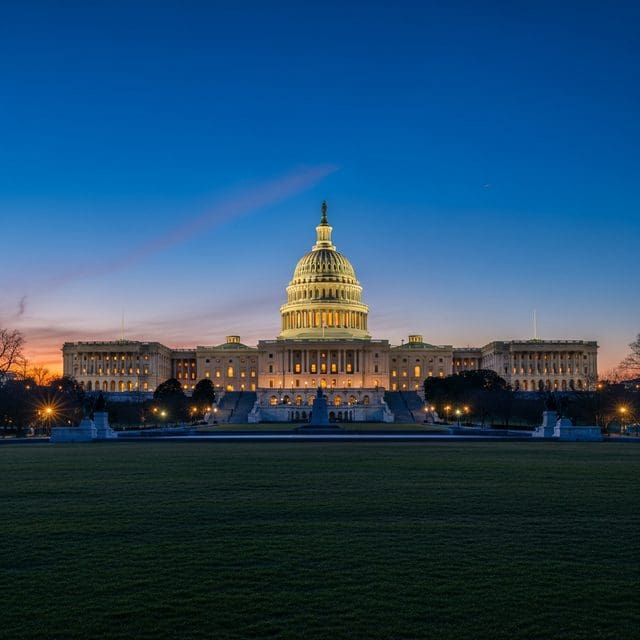
House Democrats expanded their 2026 target list to 58 Republican-held seats while Senate Republicans moved to hold Dr. Anthony Fauci in contempt of Congress.
The Democratic Congressional Campaign Committee (DCCC) has significantly expanded its 2026 offensive strategy, adding a dozen districts that President Donald Trump carried handily in the 2024 election to its target list. This expansion brings the total DCCC offensive map to 58 Republican-held seats. Notably, the DCCC is now contesting territory where Trump won by double-digit margins, reaching as high as 21 points in some areas. Fresh targets include high-profile Republican incumbents such as Lauren Boebert in Colorado’s 4th district, Victoria Spartz in Indiana’s 5th, and French Hill in Arkansas’s 2nd. The list even extends to the district of NRCC Chair Richard Hudson in North Carolina.
Internal DCCC memos frame this expansion as a response to Democratic overperformance in recent special elections. The committee argues that a “dramatically positive” environment makes even deep-red seats viable “Districts in Play.” Of the 72 total districts currently on the DCCC’s battlefield map—which includes Frontline, Red to Blue, and Districts in Play categories—56 were carried by Trump in 2024. This front-foot strategy signals a willingness to challenge the GOP in its own strongholds rather than merely defending Biden-Harris territory. To support this effort, the DCCC has already established “nominee fund” pages to channel grassroots resources to eventual Democratic candidates in these red districts.
On the other side of the Capitol, the Senate Homeland Security and Governmental Affairs Committee, chaired by Senator Rand Paul, scheduled a vote for Thursday, August 6, 2026, on a contempt of Congress resolution against Dr. Anthony Fauci. The resolution follows Fauci’s decision to invoke the Fifth Amendment more than 100 times during a recent COVID-19 hearing. Senate Republicans argue that a 2025 presidential pardon granted to Fauci by President Biden removes his protection against self-incrimination, rendering his refusal to testify legally unsupported. If approved by the committee, the report would be transmitted to the U.S. Attorney for D.C. via Vice President JD Vance in his capacity as president of the Senate.
This contempt push is part of a broader Republican effort to revisit COVID-era decisions and curtail the power of the federal health bureaucracy. The timing, roughly 100 days before the midterms, serves to energize the GOP base around themes of accountability. Simultaneously, the White House has made significant policy shifts regarding emerging technology. A new framework for testing artificial intelligence capabilities specifically excludes open-source models, focusing instead on “frontier models” that are closed-source and deemed to carry national security risks. This move has already prompted concerns in Congress regarding transparency and the future of the open-source ecosystem.
In foreign policy, President Trump announced on August 5 that a deal to reopen the Strait of Hormuz could be reached within 48 hours, following negotiations involving Iran and Oman. This potential interim agreement comes as the administration continues to utilize trade levers domestically. The President recently imposed a 25 percent tariff on imported quartz surface products, which increases to 50 percent if imports exceed 144,000 units. These economic maneuvers coincide with the latest ISM Services PMI data, which posted a reading of 54.1 in July. While business activity and new orders remain strong, the Employment Index at 47.4 indicates ongoing challenges in the labor market.
Additional domestic developments include the withdrawal of South Dakota Democratic Senate candidate Julian Beaudion, clearing a path for independent Brian Bengs to challenge Senator Mike Rounds. In the judicial sphere, a federal judge approved the Justice Department’s motion to drop criminal charges against eight members of the Oath Keepers, including founder Stewart Rhodes, despite their previous convictions related to the January 6 Capitol attack. Meanwhile, the Tennessee Department of Correction has implemented a statewide panic button system for employee safety, and the Foundation Group launched new services to help nonprofits meet IRS group tax exemption requirements ahead of a January 2027 deadline.
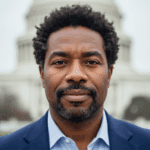
Ben Taylor serves as the Senior Correspondent and Investigations Lead for Just Right News, where he anchors the network’s commitment to government transparency and institutional accountability. With a career defined by a relentless pursuit of the facts, Taylor spearheads the acclaimed feature series “The Paper Trail,” a deep-dive investigative column that prioritizes primary source documentation over political rhetoric. Based in the heart of the nation’s capital, he has earned a reputation as one of the most formidable investigative journalists in Washington, D.C., known specifically for his mastery of public records and the Freedom of Information Act.
Taylor’s approach to journalism is deeply rooted in his upbringing in Kansas City, Missouri. Growing up in the “Show Me State,” he developed a healthy skepticism of centralized power and a profound respect for the common-sense values of the American heartland. This Midwestern foundation informs his reporting today, as he bridges the gap between the complex machinations of federal bureaucracy and the everyday concerns of citizens across the country. For Taylor, investigative reporting is not about chasing headlines; it is about ensuring that the government remains answerable to the people it serves.
As an African American man working within the conservative media landscape, Taylor brings a principled perspective to his beat. He views the Constitution and the right to information as the ultimate equalizers in a free society. His work often highlights how bureaucratic overreach and lack of transparency disproportionately affect individual liberties. By focusing on the “paper trail,” Taylor strips away the spin of partisan talking points, instead providing Just Right News readers with the raw data and internal communications that reveal how their tax dollars are spent and how policy decisions are actually made.
In his role as Investigations Lead, Taylor oversees a team dedicated to uncovering the stories that mainstream outlets often overlook. Whether he is auditing federal spending, investigating regulatory overreach, or exposing inefficiencies within the administrative state, his methodology remains consistent: follow the evidence wherever it leads. His presence in Washington, D.C., allows him to maintain a constant watch over the halls of power, yet he remains steadfastly connected to his roots, ensuring his reporting reflects the clarity and directness of his Missouri home.
Throughout his tenure at Just Right News, Taylor has become a vital voice for those who demand integrity in public office. He believes that a well-informed electorate is the strongest defense against government overreach, and he has dedicated his career to providing the public with the tools they need to hold their leaders accountable. Through “The Paper Trail” and his broader investigative work, Ben Taylor continues to set the standard for rigorous, document-driven journalism that champions the values of transparency, individual responsibility, and the rule of law.