

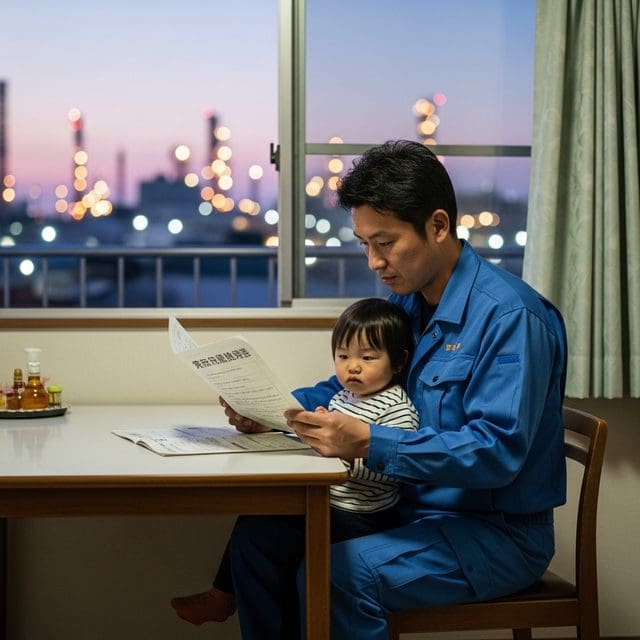
New regulations from Japan’s labor ministry force mid-sized firms to disclose paternity leave data, highlighting a growing divide between corporate policy and the daily grind of the working class.
The dignity of a hard day’s work is often measured by the stability it provides for the family at home. In Japan, a nation long defined by a grueling salaryman culture, the Ministry of Health, Labour and Welfare is attempting to force a shift in that balance through aggressive regulatory expansion. Recent July 2026 updates to labor regulations now mandate that mid-sized firms—those employing between 300 and 1,000 workers—must publicly disclose their childcare leave uptake data. This move expands a requirement previously reserved for only the largest corporations, signaling a push to make the domestic lives of workers a matter of public record.
On paper, the progress looks significant. The latest ministry survey indicates that the proportion of working men taking parental leave in Japan has topped 50% for the first time, reaching 50.9%. In some elite sectors, the numbers are even more striking. Private staffing firms like Persol Career report that nearly 92% of their male employees took leave in the 2025 fiscal year, with two-thirds of those men taking at least one month off. The average duration has climbed to nearly 80 days, suggesting that in certain corporate bubbles, the stigma of stepping away from the desk to raise a child is finally fading. This trend is bolstered by new legal duties that rename child nursing leave to cover broader situations, such as school closures due to infectious diseases or entrance ceremonies, extending eligibility until a child finishes third grade.
However, for the average worker outside of high-end white-collar firms, the reality remains far more rigid. Despite these statutory reforms, Japan continues to rank near the bottom of the OECD work-life balance index, scoring a meager 3.4 out of 10. Legal overtime caps still allow for up to 100 hours of extra work in a single month under special provisions. For the man on the factory floor or the technician in a local shop, a policy written in a government office in Tokyo often fails to translate into a manageable schedule when the production line is running thin and the culture of the shop floor remains unchanged. The gap between statutory reform and everyday practice remains a chasm that many families cannot cross.
Beyond childcare, the 2026 reforms introduce a “reasonable efforts” clause requiring employers to accommodate workers undergoing medical treatments. This includes provisions for hourly leave, staggered shifts, and telework. While these are common-sense protections for the sick, they add a new layer of regulatory complexity for small and medium-sized businesses. This comes at a precarious time globally; as of July 30, 2026, one in five small and medium businesses is on track to run short on cash within 90 days. While large entities like Amazon see stock surges driven by cloud growth, the smaller firms that form the backbone of local industry are being squeezed by both rising administrative burdens and tightening credit.
As automation and artificial intelligence continue to reshape the global labor market, the value of the human worker must be protected through more than just spreadsheets and disclosure forms. While the Japanese government is pushing for a more inclusive workforce by requiring firms with over 101 employees to disclose gender pay gaps and female management shares starting April 2026, the true test of these policies is whether they improve the life of the laborer. Transparency is a useful tool, but it cannot replace the necessity of a workplace that respects the physical and familial limits of its people. The shift toward longer male leave periods is a start, but without addressing the underlying culture of extreme overtime, these mandates risk becoming mere window dressing for a workforce that is increasingly stretched to its breaking point.

Tom Blake serves as the Senior Correspondent for Labor, Wages, and Automation at Just Right News, where he brings a grounded, principled perspective to the most pressing economic issues facing the American heartland. As the lead voice behind the acclaimed feature series “The Price of Work,” Tom focuses his reporting on the intersection of traditional industry and the rapidly evolving technological landscape, always prioritizing the dignity of the individual worker and the health of the American family.
Tom’s deep understanding of the labor market is not merely academic; it is rooted in his upbringing in Detroit, Michigan. Growing up in the shadow of the automotive industry, he witnessed firsthand the triumphs and tribulations of the American blue-collar workforce. He saw how the stability of a manufacturing job could build a community and, conversely, how the erosion of those industries could tear the social fabric apart. This background instilled in him a lifelong respect for the trades and a healthy skepticism toward economic policies that prioritize globalist interests over the well-being of local communities.
Now based in Pittsburgh, Pennsylvania, Tom continues to report from the front lines of the shifting economy. Pittsburgh, a city that has reinvented itself while maintaining its gritty, industrious spirit, provides the perfect vantage point for his beat. From the steel mills that remain to the high-tech robotics labs reshaping the city’s future, Tom explores how automation is changing the nature of employment. His reporting often highlights the tension between innovation and tradition, arguing that while progress is inevitable, it must not come at the expense of the American worker’s ability to provide for their family through honest, meaningful labor.
In his role at Just Right News, Tom has become a vital voice for those who feel overlooked by mainstream economic coverage. He rejects the notion that the decline of American manufacturing is an unavoidable casualty of the modern era. Instead, his work often examines how regulatory overreach, rising energy costs, and the unchecked rise of automation impact the take-home pay of everyday citizens. Through “The Price of Work,” Tom delves into the true cost of economic shifts, looking beyond the raw data to tell the stories of the people behind the statistics.
Tom’s reporting is characterized by a commitment to the conservative values of self-reliance, fiscal responsibility, and the preservation of the American dream. He believes that a strong nation is built on a foundation of stable jobs and fair wages, and his work seeks to hold both government and corporate entities accountable to that standard. Whether he is interviewing a shop floor manager about the implementation of new AI technology or analyzing the impact of wage inflation on small businesses, Tom provides a clear-eyed analysis that resonates with readers who value hard work and common sense.
Through his dedicated coverage, Tom Blake remains a steadfast advocate for the American workforce, ensuring that the voices of those in the industrial heartland are heard loud and clear in the national conversation. His perspective is essential for anyone seeking to understand the complex realities of labor and automation in the twenty-first century.