

Elite institutions are abandoning traditional grading and restructuring student support as they struggle to balance academic standards with a growing mental health crisis.
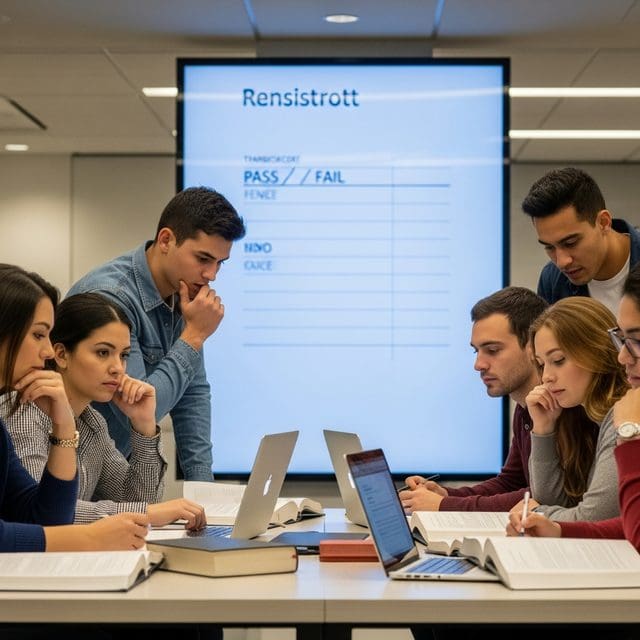
A fundamental shift is occurring within the halls of American higher education, as the traditional pursuit of academic excellence is increasingly being weighed against the psychological well-being of the student body. The University of Michigan’s College of Literature, Science, and the Arts has announced a pilot policy for the Fall 2027 semester that will fundamentally alter the freshman experience. Under this new mandate, first-semester transcripts will show only pass or no-credit marks. While internal letter grades will still be recorded, they will be excluded from the official GPA, a move explicitly designed to curb what administrators describe as a campus mental health crisis.
This policy is not an isolated experiment but the culmination of a post-2021 overhaul of campus strategy. By following recommendations from the Student Mental Health Innovative Approaches Review Committee, Michigan is pivoting toward a model that emphasizes the reduction of academic stressors. The university is investing in wellness coaches and faculty training, yet the decision to mask grades has sparked a necessary debate over the purpose of a degree. Critics argue that by removing the pressure of the first semester, the university is failing to prepare students for the high-stakes environment of the modern workforce, where performance is measured and accountability is non-negotiable.
At Princeton University, the landscape is even more complex as the institution grapples with fiscal realities and the rise of generative AI. Despite its prestige, Princeton is facing significant cost pressures, with leadership warning units to prepare for multi-year budget cuts. These cuts follow earlier trims of 5 to 7 percent and are exacerbated by a projected federal endowment tax that could reach $286.8 million by 2030. Even as the university expands its AI-related research through Department of Energy grants, it has simultaneously reduced pay for some students’ outside therapists and psychiatrists, drawing sharp criticism regarding student access to off-campus care.
The integrity of the classroom is also under siege. Princeton is moving back to fully proctored, in-person exams as a direct response to the threat of AI-driven cheating. This return to traditional assessment methods stands in stark contrast to the trend of grade-masking seen elsewhere, highlighting a tension between maintaining academic standards and managing the stress those standards produce. The university continues to celebrate its scientific lineage, recently opening the ‘Genesis of Paleo’ exhibit to showcase 150 years of vertebrate paleontology, yet the administrative focus remains fixed on the modern challenges of digital equity and academic honesty.
Beyond the Ivy League, the push for institutional efficiency is going global. Calicut University has launched ‘Suvega,’ a 24/7 online platform intended to streamline student services and reduce dropout risks. While such digital tools offer convenience, they raise questions about whether technology can truly replace the human support systems that students in crisis require. Meanwhile, in the professional world, the American Society for Clinical Pathology recently named Alexandra Brown, MD, as its new CEO, and the Conference Board Employment Trends Index rose to 107.71 in July 2026. These indicators suggest that while universities may be softening their internal requirements, the external labor market remains as demanding as ever.
For the American worker and student, these developments represent a crossroads. As institutions prioritize wellness over the clear signaling of academic merit, the responsibility for proving one’s human capital falls increasingly on the individual. The removal of bureaucratic barriers and the promotion of school choice may offer some relief, but the core question remains: can a university maintain its status as a driver of upward mobility if it refuses to measure the very achievement it is meant to foster?
Daniel Owens serves as a Senior Correspondent for Just Right News, where he leads the newsroom’s coverage of Education, Workforce, and Upward Mobility. In an era where the national conversation often overlooks the practical foundations of success, Owens brings a principled perspective to the forefront of the media landscape. His work is defined by a commitment to the idea that a strong society is built on the pillars of quality education, a robust work ethic, and the removal of bureaucratic barriers to individual achievement.
Born and raised in Cleveland, Ohio, Owens’s worldview was shaped by the industrial landscape of the Midwest. Growing up in a city known for its grit and resilience, he witnessed firsthand the transformative power of steady employment and the devastating effects of economic stagnation. This background instilled in him a deep respect for the American worker and a healthy skepticism toward top-down government solutions that often fail to reach the communities they intend to help. As an African American man who has navigated the path to professional success, Owens approaches his beat with a nuanced understanding of how meritocracy and personal responsibility intersect with opportunity. He frequently draws on his roots to highlight the importance of family stability and community-led initiatives in fostering the next generation of leaders.
At Just Right News, Owens is the architect of the acclaimed feature series, “The Learning Curve.” Through this platform, he explores the evolving landscape of American schooling, from the rise of the school choice movement to the revitalization of trade schools and vocational training. He frequently challenges the status quo of higher education, advocating for a return to academic rigor and the practical alignment of degrees with market demands. For Owens, education is not merely about obtaining credentials; it is about equipping young people with the tools necessary to lead self-sufficient, meaningful lives. His reporting on “The Learning Curve” has become essential reading for parents and policymakers who believe that educational competition and parental rights are the keys to a brighter future.
Now based in Raleigh, North Carolina, Owens finds himself at the heart of one of the nation’s most dynamic regions for innovation and growth. Raleigh’s unique blend of traditional values and a fast-paced economy provides the perfect backdrop for his reporting on the modern workforce. From the tech hubs of the Research Triangle to the rural communities of the South, he tracks how shifts in the economy are impacting families and local industries. His reporting often highlights the success stories of entrepreneurs and workers who are thriving by embracing the values of hard work and innovation.
Throughout his career, Daniel Owens has remained a steadfast voice for the student seeking a better path and the worker striving for a better life. His reporting for Just Right News serves as a vital resource for readers who value common-sense solutions to the challenges of the 21st-century economy. By focusing on the intersection of policy and the human spirit, Owens continues to provide a roadmap for how individuals and communities can achieve lasting upward mobility.