

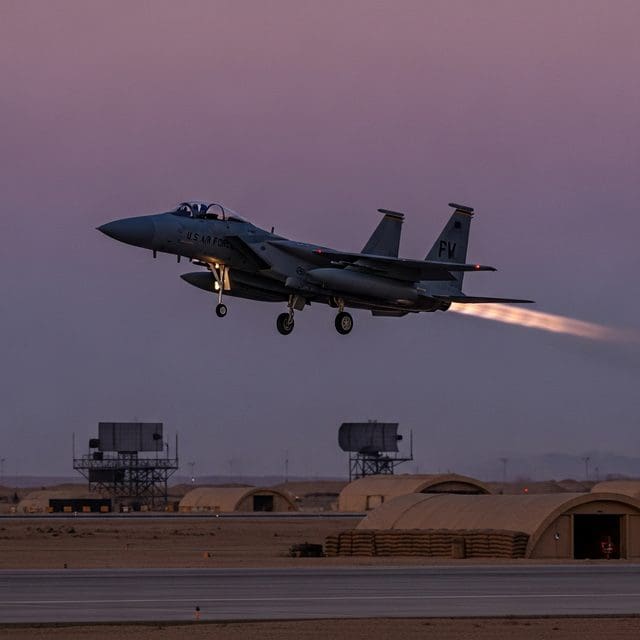
The United States and Saudi Arabia launched joint airstrikes against IRGC-directed militias in Iraq, triggering an Iranian ballistic missile response and a vow of further retaliation from President Trump.
The strategic landscape of the Middle East shifted toward open confrontation this week as U.S. Central Command confirmed joint precision airstrikes with Saudi Arabian forces against Iran-aligned militias in eastern Iraq. The operation, conducted between July 28 and 29, targeted multiple logistics and weapons sites belonging to groups directed by the Islamic Revolutionary Guard Corps (IRGC). This coordinated action followed a volatile 72-hour window in which more than 30 drone attacks targeted U.S. personnel and Saudi energy infrastructure, signaling a breakdown in regional deterrence.
Iraq’s Popular Mobilization Forces reported at least 20 fighters killed and 32 wounded in the strikes, which hit several bases across the country. Baghdad characterized the operation as an assault on units integrated into the Iraqi security apparatus, warning of a potential escalation. However, CENTCOM officials justified the intervention by citing a sustained tempo of aggression, noting that Iran-backed proxies attempted over 600 attacks on U.S. facilities between February and April 2026. The Pentagon maintains these strikes were a necessary response to protect American lives and global energy corridors.
Tehran responded rapidly, escalating the conflict beyond proxy warfare. The IRGC claimed responsibility for firing several ballistic missiles at a U.S. air base and a Central Command facility in Jordan. While CENTCOM reported that all incoming missiles were intercepted and U.S. forces remain on high alert, the event marks the first direct Iranian strike on American positions since President Trump briefly paused operations last Friday. The exchange impacted global markets, with Brent crude jumping 7% as traders price in the risk of a wider regional war involving the world’s primary oil producers.
President Trump issued a public vow to hit Iran hard in response to the Jordan attacks. Defense Secretary Pete Hegseth confirmed that CENTCOM is preparing to target critical facilities within Iran proper, signaling a shift from targeting regional proxies to direct engagement with Iranian sovereign assets. This posture suggests the era of strategic patience has concluded, replaced by a doctrine that holds Tehran directly accountable for the actions of its regional affiliates.
The involvement of Saudi Arabia marks a significant development in regional defense architecture. Saudi officials confirmed they intercepted drones from Iraqi-based militias for a second consecutive day, tying their military participation to the protection of national energy security. This deepening of the U.S.-Saudi security partnership suggests a move toward a formal regional coalition designed to contain Iranian influence. By operating alongside the U.S. Air Force, Riyadh has signaled its willingness to engage in offensive operations to secure the Arabian Peninsula against IRGC-backed incursions.
As the administration balances these Middle Eastern tensions, the domestic focus remains split. While President Trump manages the fallout from the Jordan strikes, he also met with Ukrainian President Volodymyr Zelenskyy in Washington. Zelenskyy’s visit, primarily for the funeral of Senator Lindsey Graham, included discussions on the late senator’s final act: a sanctions agreement targeting nations purchasing Russian energy exports. This agreement remains a cornerstone of the effort to squeeze the resources of the Russo-Iranian axis.
In South Carolina, the political vacuum left by Graham’s death is being filled as his sister, Darline Graham Nordone, was appointed to serve the remainder of his term. She has announced her candidacy for a full term in the upcoming special primary on August 11. This domestic transition occurs as the Trump administration also navigates friction with Senate Majority Leader John Thune over the legislative calendar. Despite these internal matters, the Pentagon remains focused on the escalating theater in West Asia, where the risk of a broader conflict remains at its highest point in years.

Olivia Kendall serves as the Senior Correspondent for Geopolitics, Defense, and Foreign Policy at Just Right News, where she provides a principled, conservative perspective on the complex forces shaping the global stage. With a career dedicated to deconstructing the intricacies of international relations, Kendall has become a trusted voice for readers who value national sovereignty, a robust military, and a foreign policy that prioritizes American interests above all else.
A native of Washington, D.C., Kendall’s professional journey is deeply rooted in her upbringing within the nation’s capital. Growing up in the epicenter of American political life, she developed an early and profound understanding of how policy is crafted and, more importantly, how it often fails to account for the values of the American heartland. This unique vantage point allowed her to witness firsthand the rise of globalist bureaucracies, fueling her commitment to reporting that champions the constitutional foundations of the United States. Her background as a British White American further informs her worldview, providing her with a keen appreciation for the Western tradition and the enduring importance of the “Special Relationship” in maintaining global stability.
Now based in Arlington, Virginia, Kendall operates from the doorstep of the Pentagon and the heart of the nation’s defense establishment. Her proximity to the decision-makers in the military and intelligence communities allows her to provide boots-on-the-ground reporting that is both timely and deeply informed. For Kendall, Arlington is more than just a base of operations; it is a daily reminder of the sacrifices made by the men and women in uniform. This connection to the defense community drives her rigorous coverage of military readiness and her advocacy for a “peace through strength” approach to diplomacy.
At Just Right News, Kendall is perhaps best known for her acclaimed feature series, “The World’s Shadow on America.” In this ongoing project, she explores the direct correlation between international developments and the daily lives of American citizens. Whether she is analyzing the encroachment of foreign adversaries in domestic supply chains or the impact of international treaties on local economies, Kendall’s work serves as a vital bridge between distant geopolitical shifts and their consequences at home. She rejects the notion that foreign policy is an abstract concern for elites, instead proving that what happens in the corridors of power in Brussels or Beijing has a tangible “shadow” that falls across every American doorstep.
Throughout her tenure, Kendall has remained a steadfast critic of international overreach and a vocal proponent of a clear-eyed, realistic foreign policy. She brings a sharp analytical mind to her beat, often challenging the prevailing narratives of the mainstream media to uncover the underlying truths that affect national security. Her reporting is characterized by a refusal to compromise on the truth and a dedication to the idea that a strong, secure America is the world’s best hope for liberty. As a Senior Correspondent, Olivia Kendall continues to lead the charge in providing the essential context and conservative insight necessary to navigate an increasingly volatile world.