

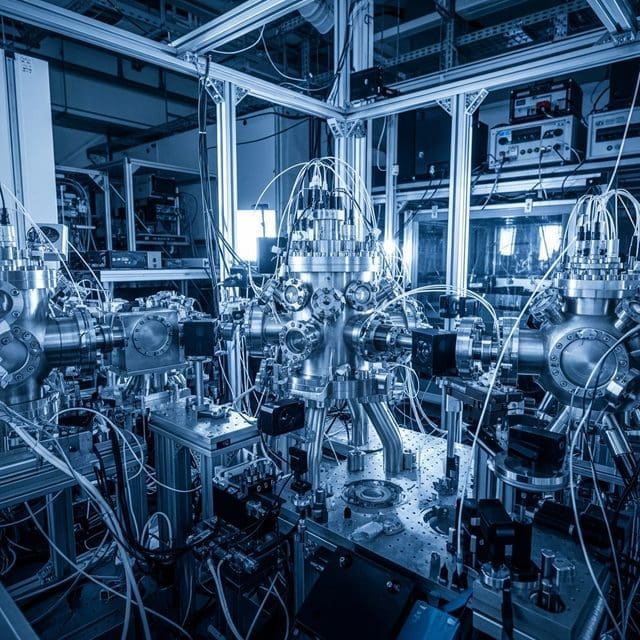
Researchers at Heidelberg University have unified two competing models of quantum behavior, proving that even nearly motionless particles undergo subtle movements that stabilize complex quantum systems.
In the pursuit of understanding the fundamental building blocks of our physical reality, scientists have long been forced to choose between two conflicting maps of the quantum world. This week, a research team at Heidelberg University’s Institute for Theoretical Physics announced they have finally bridged that divide, resolving a decades-old puzzle that has hindered our mastery of quantum matter. The breakthrough, led by Professor Richard Schmidt and doctoral candidate Eugen Dizer, provides a single, cohesive framework for how individual particles behave when submerged in a crowded environment.
At the heart of the conflict are “impurities”—single atoms or electrons dropped into a dense sea of fermions, such as electrons, protons, or neutrons. For years, physicists used the “Fermi polaron” model to describe mobile impurities that travel through this crowd. In this scenario, the impurity effectively carries neighboring particles with it as it moves, creating a combined entity that behaves like a single particle. This quasiparticle model has become a cornerstone for understanding strongly interacting systems, from the semiconductors in our pockets to the dense nuclear matter found in the hearts of distant stars. According to Dizer, this model is a fundamental tool for exploring ultracold atomic gases and solid-state materials.
However, a very different and seemingly incompatible picture emerged when the impurity was extremely heavy and essentially unable to move. In these instances, a phenomenon known as Anderson’s orthogonality catastrophe took over. Rather than producing an orderly quasiparticle, the heavy, stationary impurity changed the quantum system so dramatically that the wave functions of the surrounding fermions lost their original form. The resulting complex background prevented the coordinated motion needed for quasiparticles to exist. For decades, the scientific community lacked a theory that could explain how these two contradictory descriptions of nature could coexist within the same physical laws.
The Heidelberg team’s research, published in Physical Review Letters, demonstrates that the distinction between “moving” and “stationary” is less absolute than previously thought. By using advanced analytical techniques, the researchers discovered that even the heaviest impurities undergo minute, nearly imperceptible recoils. As the surrounding environment adjusts to the presence of the impurity, these tiny motions create a “mass gap” in the energy spectrum. This gap provides the necessary stability for quasiparticles to emerge even in systems that were previously thought to be too chaotic to support them. This recoil-induced mass gap reconciles the previously incompatible pictures of a well-defined Fermi polaron versus a strongly disrupted many-body state.
This discovery is not merely an academic exercise in mathematical bookkeeping; it is a vital step toward the next generation of technological independence. As companies like Quantum Secure Encryption Corp. expand operations to meet government mandates for quantum-resistant security, the underlying physics of these systems must be beyond reproach. The ability to predict how impurities interact within two-dimensional materials and novel semiconductors will likely dictate which nations lead the next industrial revolution. The Heidelberg framework naturally explains how quantum systems transition between polaronic and molecular states, offering a more reliable manual for manipulating quantum states in real-world applications.
Looking ahead, the Quantum Matter Theory working group is already extending this framework to Dirac materials and semiconductor excitons. Professor Schmidt noted that the theory is directly relevant to ongoing experiments with ultracold atomic gases and exotic quantum simulators. Recent work from the group, including an arXiv preprint from July 2026, predicts three distinct Fermi polaron branches—attractive, repulsive, and Dirac-Fermi polarons. By reconciling these competing worlds of quantum theory, the researchers have cleared a path for more stable quantum computing architectures. In an era where centralized bureaucracies often stifle decentralized innovation, such fundamental breakthroughs in our understanding of natural law serve as the bedrock for the principled, independent development of future frontiers.

Mason Reed serves as a Staff Writer for Just Right News, where he spearheads the Future Frontiers & Special Projects desk. In an era defined by rapid technological shifts and evolving social landscapes, Mason provides a steady, principled voice, examining the innovations of tomorrow through the lens of traditional American values. His work is most prominently featured in his signature series, “The Next Horizon,” where he explores the intersection of emerging technology, national sovereignty, and the preservation of individual liberty.
A native of San Diego, California, Mason’s worldview was shaped by the unique culture of his hometown. Growing up in a region defined by its strong military presence and its history of maritime industry, he developed a deep-seated respect for the institutions that provide national stability and the entrepreneurial spirit that drives the American economy. This upbringing instilled in him a belief that true progress is not found in discarding the past, but in building upon a foundation of proven principles. His reporting often reflects this San Diego influence, emphasizing the importance of a robust national defense and the necessity of maintaining a competitive edge in the global marketplace.
Now based in San Francisco, Mason operates from the heart of the world’s technological engine. Living and working in the Bay Area provides him with a front-row seat to the advancements—and the ideological challenges—emanating from Silicon Valley. While many in the region embrace a “move fast and break things” mentality, Mason’s reporting serves as a vital counterweight. He offers Just Right News readers a “boots on the ground” perspective, documenting how radical local policies and the concentration of tech power impact the everyday lives of citizens. His proximity to the industry allows him to cut through the marketing jargon of big tech to uncover the real-world implications for privacy, free speech, and the nuclear family.
In his “Future Frontiers” beat, Mason tackles complex subjects ranging from the ethics of artificial intelligence to the burgeoning private space race. He approaches these topics with a healthy skepticism toward centralized bureaucracy, championing instead the decentralized innovations that empower individuals. Through “The Next Horizon,” he highlights the pioneers and thinkers who are working to ensure that the future remains a place where human dignity and constitutional rights are protected. He believes that the rapid pace of change requires more than just technical expertise; it requires a moral compass rooted in the Western tradition.
Throughout his tenure at Just Right News, Mason has remained committed to the idea that the future is something to be shaped, not merely accepted. His writing is characterized by a rigorous defense of American exceptionalism and a belief that the country’s best days lie ahead, provided it remains true to its founding ideals. Whether he is investigating the impact of automation on the American workforce or profiling the next generation of aerospace engineers, Mason Reed ensures that his readers are equipped with the insights they need to navigate a changing world with confidence and clarity.