

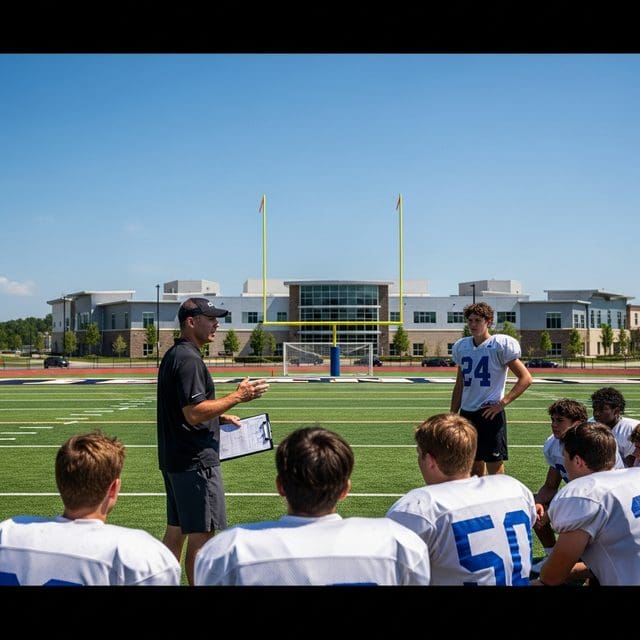
As Alabama honors coaching legends and Waldorf education enters the global spotlight, the focus on human capital shifts toward character-driven mentorship and practical industry alignment.
The transition from the classroom to the professional workforce is increasingly defined by the strength of local institutions and the specialized paths they offer. In Alabama, the connection between high school athletics and character development remains a cornerstone of the state’s educational landscape. The Alabama Football Coaches Association (ALFCA) recently announced that three coaching veterans—Terry Curtis, Danny Powell, and Curtis Coleman—will receive Lifetime Achievement Awards in January 2026. These honors underscore a broader reality: for many young men, the football field serves as a primary laboratory for the discipline, personal responsibility, and teamwork required in the modern economy.
This athletic pipeline is supported by a robust network of collegiate partnerships that bridge the gap between secondary education and higher learning. The ALFCA’s 21st annual convention recently drew over 900 coaches to hear from speakers including Kalen DeBoer of Alabama and Alex Golesh of Auburn. This synergy ensures that the state’s human capital is not just being scouted for physical talent, but is being developed through a consistent philosophy of leadership. As scouting reports for the 2026 season begin to circulate, the focus remains on how these programs prepare students for the rigors of both college and the workforce. The upcoming January awards will also recognize Coaches of the Year such as Eric Scott and Scott Basden, cementing the prestige of these developmental roles.
On the international stage, the acquisition of the documentary “House of Hope” by New Mountain Films brings renewed attention to the Waldorf pedagogical model. Centered on a pacifist school in the West Bank, the film’s North American release will likely spark debate over alternative education. Waldorf schools, known for their emphasis on holistic development and creative problem-solving over standardized testing, offer a contrast to top-down mandates. For parents seeking to opt out of bureaucratic school systems, such models represent a market-aligned solution to fostering individual achievement through specialized, value-based learning environments.
Domestically, the practicalities of the academic calendar are coming back into focus. In Metro Atlanta and North Georgia, school districts have begun releasing start-date guides, prompting families to navigate the logistical hurdles of the back-to-school season. These administrative milestones are often the first test of a district’s ability to provide a stable environment for learning. Simultaneously, the financial reality of the “empty nest” is gaining attention from advisors, who note that the average family spends over $241,000 raising a child to age 18. The conclusion of college costs represents a massive cash-flow event that many families squander without a clear plan for long-term stability.
In higher education, the University of Kentucky is demonstrating how academic expertise can directly serve regional industries. Agricultural economist Kenny Burdine is providing the cattle industry with critical data on herd rebuilding, utilizing university research to guide market decisions. This alignment between university output and economic needs illustrates the ideal role of higher learning: acting as a catalyst for industry stability rather than a mere repository for student debt. As the academic year approaches, the focus for both parents and policymakers remains on whether these institutions will prioritize practical, meritocratic outcomes over administrative expansion.
Daniel Owens serves as a Senior Correspondent for Just Right News, where he leads the newsroom’s coverage of Education, Workforce, and Upward Mobility. In an era where the national conversation often overlooks the practical foundations of success, Owens brings a principled perspective to the forefront of the media landscape. His work is defined by a commitment to the idea that a strong society is built on the pillars of quality education, a robust work ethic, and the removal of bureaucratic barriers to individual achievement.
Born and raised in Cleveland, Ohio, Owens’s worldview was shaped by the industrial landscape of the Midwest. Growing up in a city known for its grit and resilience, he witnessed firsthand the transformative power of steady employment and the devastating effects of economic stagnation. This background instilled in him a deep respect for the American worker and a healthy skepticism toward top-down government solutions that often fail to reach the communities they intend to help. As an African American man who has navigated the path to professional success, Owens approaches his beat with a nuanced understanding of how meritocracy and personal responsibility intersect with opportunity. He frequently draws on his roots to highlight the importance of family stability and community-led initiatives in fostering the next generation of leaders.
At Just Right News, Owens is the architect of the acclaimed feature series, “The Learning Curve.” Through this platform, he explores the evolving landscape of American schooling, from the rise of the school choice movement to the revitalization of trade schools and vocational training. He frequently challenges the status quo of higher education, advocating for a return to academic rigor and the practical alignment of degrees with market demands. For Owens, education is not merely about obtaining credentials; it is about equipping young people with the tools necessary to lead self-sufficient, meaningful lives. His reporting on “The Learning Curve” has become essential reading for parents and policymakers who believe that educational competition and parental rights are the keys to a brighter future.
Now based in Raleigh, North Carolina, Owens finds himself at the heart of one of the nation’s most dynamic regions for innovation and growth. Raleigh’s unique blend of traditional values and a fast-paced economy provides the perfect backdrop for his reporting on the modern workforce. From the tech hubs of the Research Triangle to the rural communities of the South, he tracks how shifts in the economy are impacting families and local industries. His reporting often highlights the success stories of entrepreneurs and workers who are thriving by embracing the values of hard work and innovation.
Throughout his career, Daniel Owens has remained a steadfast voice for the student seeking a better path and the worker striving for a better life. His reporting for Just Right News serves as a vital resource for readers who value common-sense solutions to the challenges of the 21st-century economy. By focusing on the intersection of policy and the human spirit, Owens continues to provide a roadmap for how individuals and communities can achieve lasting upward mobility.