

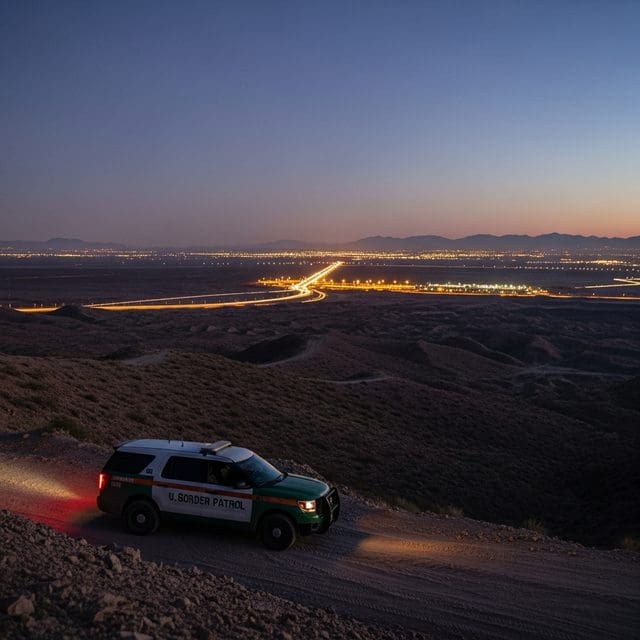
The collapse of the U.S.-Iran memorandum and renewed conflict in the Strait of Hormuz are creating fresh pressures on international migration and domestic enforcement priorities.
The fragile stability of the Middle East, once bolstered by a series of high-stakes diplomatic memorandums, has deteriorated significantly in late July 2026, creating new challenges for U.S. border enforcement and long-term migration policy. As the June 17 memorandum of understanding (MOU) between the U.S. and Iran frays, the resulting regional volatility is expected to influence refugee flows and asylum applications from the Levant and Gulf regions, testing the integrity of the American social contract and the rule of law.
Initial optimism followed the April 17 ceasefire between Israel and Lebanon, which was initially scheduled for ten days but later extended for three weeks on April 23. However, by early July, the framework began to collapse under the weight of conflicting regional interests. Reporting indicates two overlapping and contradictory Lebanon arrangements: a Lucerne ceasefire involving Iran and Hezbollah, and a Washington ceasefire between Israel and Lebanon. The latter explicitly excluded Iran and Hezbollah, allowing for a continued Israeli presence in southern Lebanon until Hezbollah is fully disarmed. This lack of a unified enforcement mechanism has left key issues unresolved and politically contested.
On July 8, the Iranian presidency declared the ceasefire effectively over, leading to renewed military exchanges that disrupt the safety of local populations. For U.S. immigration officials, such prolonged conflict historically correlates with increased pressure on the asylum system as displaced persons seek safety outside of active combat zones. The broad wording of the June MOU has only fueled accusations of violations by both Washington and Tehran, leaving the conditions for Israeli withdrawal and the safety of civilian corridors in a state of flux.
This instability is compounded by the deteriorating status of the Strait of Hormuz. While the June memorandum promised a toll-free, open waterway for 60 days, Iran restricted transit again on June 22, citing ceasefire violations in southern Lebanon. Subsequent strikes between U.S. and Iranian forces on missile, drone, and radar sites have further destabilized the region. These fresh exchanges of strikes, including Revolutionary Guard attacks on commercial shipping, raise serious questions about how secure transit really is in one of the world’s most vital maritime arteries.
The economic ripple effects are also substantial and direct. Though oil prices initially dropped 10% following the April ceasefire announcement, they surged past $100 a barrel on July 23, 2026, as the conflict intensified. This 6% surge in a single day reflects heightened market anxiety and renewed upward pressure on global energy curves. For the U.S. government, this economic volatility often impacts the resources available for domestic border security operations. High fuel costs increase the operational overhead for patrol vehicles and aircraft, while the broader economic strain can shift federal budget priorities away from demographic research and toward international defense commitments.
Domestically, the focus remains on maintaining the integrity of the border while navigating these international shifts. The nomination of Jay Clayton as Director of National Intelligence on June 11 suggests an emphasis on legal expertise in the intelligence community, yet the ground reality in the Middle East continues to shift faster than policy can often adapt. As the 60-day extension tied to the original memorandum nears its end, the lack of a clear enforcement mechanism for shipping safety and regional disarmament remains a primary driver of potential displacement. For the U.S., preserving community character and local stability depends on a predictable migration environment—a goal currently undermined by the deteriorating situation abroad.

Julie Harris serves as a Staff Writer for Just Right News, where she tackles some of the most pressing and complex issues facing the nation today. As the lead reporter for the Migration, Demographics & Cultural Shifts beat, Julie provides a grounded, principled perspective on how the movement of people and the changing makeup of communities are reshaping the American landscape. Her work is defined by a commitment to exploring the long-term consequences of social change, prioritizing the stability of local institutions and the preservation of national identity.
Her deep understanding of these issues is rooted in her upbringing in Tucson, Arizona. Growing up in a prominent border state, Julie witnessed firsthand the intricate realities of migration and the profound impact it has on local infrastructure, law enforcement, and the social fabric. This early exposure instilled in her a respect for the rule of law and a keen awareness of the challenges that arise when federal policies fail to align with the needs of border communities. Her reporting often reflects this lived experience, bringing a necessary level of nuance to topics that are often treated with abstraction in coastal newsrooms.
Now based in Santa Fe, New Mexico, Julie continues to report from the heart of the American Southwest. Her location provides a unique vantage point to observe the intersection of traditional regional cultures and the modern shifts brought about by both internal and external migration. In Santa Fe, a city defined by its rich history and distinct cultural heritage, she finds a perfect environment to explore how communities strive to maintain their character while navigating the pressures of a rapidly changing world. This perspective allows her to bridge the gap between policy debates in Washington and the reality of life in the high desert.
At Just Right News, Julie’s work is characterized by a dedication to examining the data and the human stories that define the “New Mosaic” of America. Her signature feature series, “The New Mosaic,” has become a cornerstone of her reporting. Through this series, Julie explores the evolving social architecture of the United States, documenting how shifts in population affect everything from local economies to the political landscape. She brings a critical eye to the narrative of demographic inevitability, instead asking how these shifts impact the average citizen’s sense of belonging and the integrity of the American social contract.
Julie’s background and her dedication to conservative principles make her a vital voice in contemporary journalism. She understands that demographics are more than just numbers on a spreadsheet; they represent the future of the American family and the nation’s enduring legacy. Through her diligent reporting and insightful analysis, Julie Harris ensures that her readers are informed about the forces shaping their world, providing a perspective that is as thoughtful as it is necessary for the modern era.