

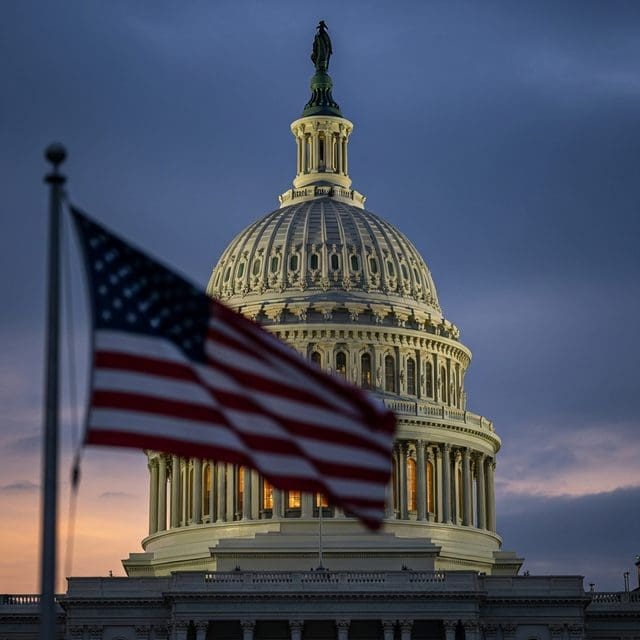
The death of Senator Lindsey Graham and escalating military strikes in Iran have triggered a high-stakes succession battle while deepening ideological fractures within the Democratic Party over Middle East policy.
The constitutional balance of power faces a rigorous test as the Trump administration intensifies military operations in the Middle East while the Senate grapples with the sudden vacancy left by the late Senator Lindsey Graham. Following the deaths of two U.S. service members and the disappearance of a third during Iranian strikes on bases in Jordan, the White House authorized eight consecutive nights of retaliatory strikes. President Trump has since called on Congress to honor Graham’s legacy by attaching Iran sanctions to an existing bipartisan Russia sanctions bill, a move that forces the legislature to reconcile executive military action with statutory authority.
In the wake of Graham’s passing, Governor Henry McMaster appointed the late senator’s sister, Darline Graham Nordone, to serve the immediate remainder of the term. However, the political vacuum has already drawn active contenders. Representative Ralph Norman announced a bid for the seat, signaling a potential shift in the Senate’s institutional character. As the administration seeks support for its ‘Operation Epic Fury’ campaign, the composition of the Senate Foreign Relations Committee—where Graham was a dominant voice—remains a critical variable for future war powers oversight and military appropriations.
The conflict has exposed a widening schism within the Democratic caucus. Senator John Fetterman has emerged as a vocal critic of his own party, warning he may depart the Democratic fold if it continues what he describes as an ‘increasingly hostile’ posture toward Israel. Fetterman’s alignment with the administration’s hawkish Iran policy stands in contrast to a growing contingent of House Democrats who recently voted to curtail military aid to Israel. This internal friction is reflected in recent polling showing 69% of Democrats disapprove of Fetterman’s performance, while 77% of Republicans approve. Fetterman has positioned himself as the ‘last man standing’ in his party on Israeli security, even as younger voters drive a shift toward skepticism regarding the Iran war.
Simultaneously, the administration is navigating domestic policy contradictions. While the President recently highlighted ‘shocking’ vulnerabilities in U.S. election infrastructure, his latest budget proposal includes a $700 million reduction for the Cybersecurity and Infrastructure Security Agency (CISA). This discrepancy between rhetoric and fiscal allocation will likely serve as a primary flashpoint during upcoming appropriations hearings, as Congress weighs federal oversight against the administration’s broader deregulatory agenda. The administration further expanded this agenda by cancelling automatic protections for imperiled species on July 18, opting for individualized plans that grant the executive branch greater discretion.
Further complicating the landscape, the White House has moved to halt offshore wind developments on national security grounds, a decision intersecting with the confirmation process for Attorney General nominee Todd Blanche. Blanche testified before the Senate Judiciary Committee on July 15, where focus remained on the legal frameworks governing executive overreach and the administration’s use of memorandum agreements. Iran’s Supreme Leader Mojtaba Khamenei has already dismissed such agreements as ‘worthless,’ accusing the U.S. of breaching ceasefire terms. As the Senate prepares for the transition of Graham’s seat, it must decide whether to follow the President’s lead on expanded sanctions or assert its role as a check on an increasingly assertive executive branch managing both regional conflict and a massive overhaul of the administrative state.

Miles Harrington serves as the Senior Correspondent for Federal Systems & Executive Power at Just Right News, where he brings a disciplined, constitutionalist lens to the inner workings of the American government. With a focus on the mechanics of the federal bureaucracy and the limits of executive authority, Harrington has established himself as a vital voice for readers who value transparency, accountability, and the preservation of the separation of powers.
A native of Richmond, Virginia, Harrington’s perspective is deeply rooted in the traditions of the Old Dominion. Growing up in a city defined by its historical significance and its role as a center of American jurisprudence, he developed an early appreciation for the foundational principles of the Republic. His upbringing in Richmond—a place where the legacy of the Founding Fathers is woven into the landscape—instilled in him a belief that the federal government should remain within its constitutional bounds. This background informs his skepticism of centralized overreach and his commitment to reporting on the ways in which the administrative state impacts the lives of everyday citizens.
In his current role, Harrington specializes in the complexities of federal systems. He doesn’t just report on the headlines of the day; he digs into the structural shifts within the executive branch that often go unnoticed by the mainstream press. Whether he is analyzing the implications of a new federal regulation or investigating the expansion of agency jurisdiction, his work is characterized by a rigorous adherence to the facts and a dedication to the rule of law.
Harrington is perhaps best known for his signature feature series, “How Washington Works.” Through this ongoing project, he demystifies the often-opaque processes of the nation’s capital, pulling back the curtain on the “Deep State” and the unelected officials who wield significant influence over national policy. By breaking down complex legislative maneuvers and executive orders, he empowers Just Right News readers to understand the true levers of power in Washington. His reporting serves as a necessary check on the federal government, ensuring that the actions of those in power are held up to the light of public scrutiny.
Now based in Washington, D.C., Harrington operates at the epicenter of the political world, yet he remains intentionally distanced from the “Beltway bubble.” His proximity to the halls of power allows him to maintain a robust network of sources across the federal landscape, but his heart remains in the principled conservatism of his Virginia roots. He views his role not merely as a reporter, but as a steward of the public trust, dedicated to providing the clarity and context that conservative voters need to navigate an increasingly complex political environment.
Through his sharp analysis and unwavering commitment to the truth, Miles Harrington continues to be a cornerstone of the Just Right News team. His work ensures that the principles of limited government and executive restraint remain at the forefront of the national conversation, providing a crucial service to those who believe in a government that is truly of, by, and for the people.