

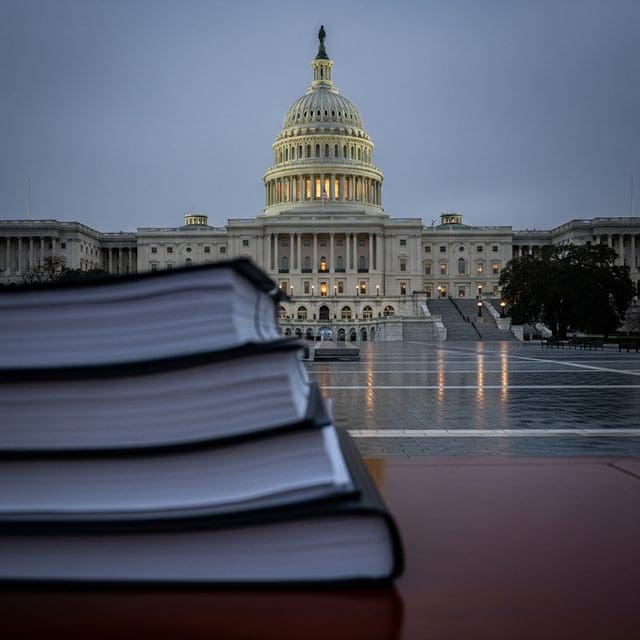
The 21st Century ROAD to Housing Act took effect Sunday via constitutional default after President Trump declined to sign the bipartisan package, while the White House launched a leak probe.
In a rare exercise of the constitutional mechanism for legislative enactment, the 21st Century ROAD to Housing Act officially became law at midnight on July 12, 2026, without the signature of President Donald Trump. The bill, which reached the Resolute Desk on June 29 after passing with overwhelming bipartisan majorities—85–5 in the Senate and 358–32 in the House—took effect following the expiration of the 10-day period during which the President must either sign or veto a measure while Congress is in session. This automatic enactment occurs under Article I, Section 7 of the Constitution, marking a significant moment where the administrative state expanded despite the Chief Executive’s public reluctance to endorse the specific terms of the compromise.
The legislation represents a massive shift in federal housing policy, spanning roughly 380 pages and authorizing billions in grants for jurisdictions that adopt federal model zoning frameworks and ease environmental reviews. Key provisions include the expansion of financing for Accessory Dwelling Units (ADUs) and the modernization of federal standards for manufactured housing, moves intended to spark a construction boom. While the American Planning Association and other industry groups have praised the act as a necessary catalyst for affordability, the White House remained notably silent during the final days of the signing window. Reports suggest the President may have used the housing package as unsuccessful leverage to secure movement from Senate Republicans on the SAVE America Act, a separate voting-restriction bill, before ultimately allowing the housing measure to pass into law by default.
Senator Elizabeth Warren, the ranking member of the Senate Banking Committee, issued a sharp critique on Sunday, characterizing the President’s inaction as a dereliction of duty. Warren alleged that the President sat on the landmark bill for more than two weeks because it lacked personal incentives for his administration, specifically pointing to the bill’s constraints on private equity’s role in the single-family housing market. Her statement questioned why the President would delay a bill described as the most significant housing legislation in over 30 years, framing the conflict as a struggle between congressional intent and executive caprice. As the law takes effect, federal agencies must now begin the complex task of reallocating billions in grants to local municipalities that meet the new federal density requirements.
Simultaneously, the administration has shifted its focus toward internal security and the press. On July 11, the Justice Department issued a flurry of subpoenas to several New York Times journalists following reports concerning security vulnerabilities in a new Air Force One aircraft—a Qatari-donated plane that reportedly lacks standard defensive countermeasures. Sources indicate that FBI Director Kash Patel personally oversaw the investigation from the White House on Friday, spending eight hours in the building rather than at FBI headquarters. This move has been characterized by observers as a major departure from the traditional independence maintained between the Bureau’s operational leadership and the Executive Mansion, signaling a more direct hand in leak investigations by the President’s top loyalists.
This aggressive posture toward the media coincides with heightened tensions in the Middle East and domestic law enforcement controversies. On July 11, the U.S. issued a formal demand for Iran to affirm the Strait of Hormuz remains open to shipping traffic. The President has recently stated that he has authorized unprecedented military responses, including 1,000 missiles “locked and loaded,” should Tehran follow through on alleged assassination plots against him. Domestically, the administration faces scrutiny over an ICE shooting in Texas on July 8 involving Lorenzo Salgado Araujo, a homebuilder with no criminal record, which has been identified as a case of mistaken identity. As the ROAD to Housing Act moves into the implementation phase, the administration’s focus appears increasingly divided between domestic regulatory shifts and an escalating confrontation with both the fourth estate and foreign adversaries.

Miles Harrington serves as the Senior Correspondent for Federal Systems & Executive Power at Just Right News, where he brings a disciplined, constitutionalist lens to the inner workings of the American government. With a focus on the mechanics of the federal bureaucracy and the limits of executive authority, Harrington has established himself as a vital voice for readers who value transparency, accountability, and the preservation of the separation of powers.
A native of Richmond, Virginia, Harrington’s perspective is deeply rooted in the traditions of the Old Dominion. Growing up in a city defined by its historical significance and its role as a center of American jurisprudence, he developed an early appreciation for the foundational principles of the Republic. His upbringing in Richmond—a place where the legacy of the Founding Fathers is woven into the landscape—instilled in him a belief that the federal government should remain within its constitutional bounds. This background informs his skepticism of centralized overreach and his commitment to reporting on the ways in which the administrative state impacts the lives of everyday citizens.
In his current role, Harrington specializes in the complexities of federal systems. He doesn’t just report on the headlines of the day; he digs into the structural shifts within the executive branch that often go unnoticed by the mainstream press. Whether he is analyzing the implications of a new federal regulation or investigating the expansion of agency jurisdiction, his work is characterized by a rigorous adherence to the facts and a dedication to the rule of law.
Harrington is perhaps best known for his signature feature series, “How Washington Works.” Through this ongoing project, he demystifies the often-opaque processes of the nation’s capital, pulling back the curtain on the “Deep State” and the unelected officials who wield significant influence over national policy. By breaking down complex legislative maneuvers and executive orders, he empowers Just Right News readers to understand the true levers of power in Washington. His reporting serves as a necessary check on the federal government, ensuring that the actions of those in power are held up to the light of public scrutiny.
Now based in Washington, D.C., Harrington operates at the epicenter of the political world, yet he remains intentionally distanced from the “Beltway bubble.” His proximity to the halls of power allows him to maintain a robust network of sources across the federal landscape, but his heart remains in the principled conservatism of his Virginia roots. He views his role not merely as a reporter, but as a steward of the public trust, dedicated to providing the clarity and context that conservative voters need to navigate an increasingly complex political environment.
Through his sharp analysis and unwavering commitment to the truth, Miles Harrington continues to be a cornerstone of the Just Right News team. His work ensures that the principles of limited government and executive restraint remain at the forefront of the national conversation, providing a crucial service to those who believe in a government that is truly of, by, and for the people.