

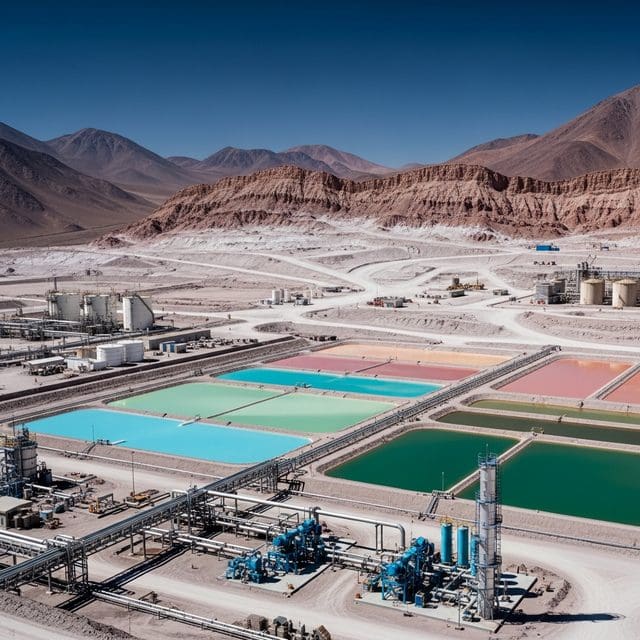
Eni SpA has invested $225 million in Chilean lithium production to secure battery supply chains, while U.S. natural gas futures climb due to summer heat and record export demand.
The global energy landscape is witnessing a strategic pivot as traditional oil majors secure critical minerals while domestic gas markets face seasonal volatility. Eni SpA has finalized a $225 million investment for a 25% stake in EnergyX’s Chilean subsidiary, Black Giant SpA. This move secures Eni’s position as a primary offtaker for battery-grade lithium, a commodity essential for the electric vehicle transition and grid-scale storage.
The Black Giant project in Antofagasta utilizes proprietary Direct Lithium Extraction (DLE) technology. Unlike traditional evaporation ponds, EnergyX’s LiTAS suite aims for higher recovery rates with a smaller environmental footprint. EnergyX estimates the project could support $1.1 billion in annual revenue once fully operational. For Eni, this partnership is a cornerstone of its 2026–2030 strategy to integrate minerals alongside its petroleum and biofuels portfolio. EnergyX has outlined up to $5 billion in planned Chilean investments over the next decade, positioning the region as a central hub for global battery supply chains.
In the United States, natural gas futures have climbed to approximately $3.27 per mmBtu, a 14% increase for the quarter. This price action is driven by record-high LNG feedgas flows and a persistent heat wave boosting power-sector demand. While domestic supply remains robust, the increased reliance on gas-fired generation to stabilize the grid during peak loads puts upward pressure on the price curve. Traders are monitoring weather patterns closely, as sustained heat could deplete inventories ahead of the winter season.
Geopolitical tensions are also shifting. Negotiators in Doha resumed talks on July 1 regarding the Strait of Hormuz, leading to a modest easing of the risk premium on crude. Brent has stabilized in the low-$70s per barrel, while WTI remains just under $70. Consequently, OPEC+ agreed on July 6 to a modest production increase, contingent on the continued reopening of maritime corridors and diplomatic progress within a 60-day window.
These developments highlight the pragmatic reality of the energy transition. While firms like Eni are securing the raw materials for a low-carbon future, the immediate reliability of the power grid remains tethered to natural gas and crude oil. The intersection of DLE innovation and gas market pressures underscores the challenge of balancing long-term sustainability with immediate economic stability for the taxpayer. As computing power also begins to commoditize through new marketplaces like Ornn, the demand for reliable, affordable energy across all sectors remains paramount.

Mark Davis serves as the Senior Correspondent for Energy, Climate, and Resource Economics at Just Right News. In an era where the conversation around the environment is often dominated by alarmism and top-down mandates, Mark provides a vital, market-oriented perspective on the complex forces shaping our world. As the lead voice behind the acclaimed feature series “Power and the Planet,” he explores the intersection of environmental policy, global energy markets, and the fundamental economic principles that sustain modern civilization.
Mark’s pragmatic approach to resource management was forged in the high desert of his hometown, Albuquerque, New Mexico. Growing up in a region defined by both its breathtaking natural beauty and its rugged, resource-dependent landscape, he developed an early appreciation for the delicate balance between conservation and utilization. New Mexico’s unique position as a hub for both traditional energy production and cutting-edge scientific research provided Mark with a front-row seat to the evolution of the American energy sector. This upbringing instilled in him a deep-seated belief that true environmental stewardship is inseparable from economic prosperity and technological innovation.
Now based in Boulder, Colorado, Mark operates from the heart of the nation’s climate research community. While Boulder is often seen as a bastion of environmental idealism, Mark utilizes his post to provide a necessary counterweight, grounded in the realities of resource economics. He understands that energy policy does not exist in a vacuum; it has tangible consequences for the American taxpayer, the stability of the national power grid, and the strength of the domestic manufacturing sector. By reporting from the front lines of the climate debate, he is able to challenge prevailing narratives with hard data and a commitment to the principles of the free market.
Throughout his tenure at Just Right News, Mark has distinguished himself by focusing on the “Resource Economics” aspect of his beat. He frequently highlights the hidden costs of rapid energy transitions and advocates for an “all-of-the-above” energy strategy that prioritizes American energy independence. His work often shines a light on the geopolitical implications of resource scarcity, arguing that a secure nation must first be an energy-secure nation. Whether he is analyzing the impact of federal land-use regulations or investigating the supply chains required for new technologies, Mark remains focused on how policy decisions affect the lives and livelihoods of everyday citizens.
In “Power and the Planet,” Mark continues to bridge the gap between complex scientific concepts and the economic realities facing the country. He rejects the false choice between a healthy environment and a thriving economy, instead seeking out solutions that leverage American ingenuity and private-sector competition. For Mark, reporting on the climate is not about following the latest trends, but about ensuring that the conversation remains tethered to the foundational values of liberty, property rights, and fiscal responsibility. His contributions ensure that Just Right News readers receive a comprehensive, clear-eyed view of the challenges and opportunities defining the future of our planet.